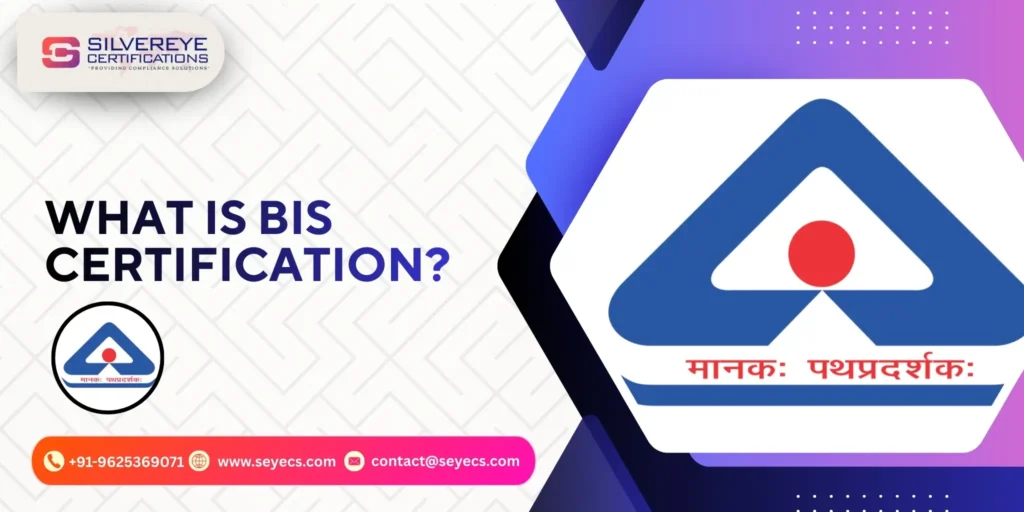
- What is BIS Certification? It is India’s primary quality standard. It is mandatory for products ranging from steel to electronics, ensuring they meet strict safety and quality benchmarks.
- Application Options: Manufacturers can apply directly via the official portal bis.gov.in. However, due to complex testing and documentation requirements, many businesses choose expert consultants to ensure approval.
- What This Guide Covers: We explain the full process, including cost breakdowns, timelines, and the key differences between the ISI Mark and CRS Registration.
Introduction
You have just manufactured a batch of high-quality LED lights or imported a container of steel valves. You are ready to distribute them across India. But suddenly, your shipment is seized at Customs, or your factory receives a legal notice. Why? Because you missed a small but powerful mark on your product—the BIS Standard Mark.
In the Indian industrial landscape, the Bureau of Indian Standards (BIS) isn't just a regulatory body; it is the gatekeeper of the Indian market. For many businesses, "compliance" feels like a headache, but in reality, it is your license to sell. Without it, your product technically doesn't exist for the Indian consumer.
Whether you are a startup in Bangalore or a foreign manufacturer in China, understanding BIS certification is no longer optional. It is the difference between a thriving business and a warehouse full of dead stock. This guide cuts through the legal jargon to explain exactly what you need to do to get certified in 2025.
What is BIS Certification? Meaning & Importance
BIS Certification is a quality assurance license issued by the Bureau of Indian Standards (BIS), the National Standards Body of India. It acts as a third-party guarantee that a product has been tested and meets specific Indian Standards (IS) for safety, quality, and reliability.
In simple terms, BIS Certification is the "Gatekeeper of the Indian Market." Just as a passport is required to travel internationally, a BIS license (marked by the ISI Mark or CRS Registration number) is required to sell specific products in India.
Why is it Critical?
The Government of India has made this certification mandatory for various high-risk and mass-consumption products—such as electronics, steel, chemicals, toys, and tyres—under Quality Control Orders (QCOs).
- Without BIS Certification: It is illegal to manufacture, import, or sell these mandatory products in India.
- With BIS Certification: Your product earns the "Trust Seal" (ISI Mark), proving to customers and customs authorities that it is safe and compliant.
Why is BIS Certification Mandatory in India?
The Bureau of Indian Standards (BIS) was established under the BIS Act 2016. While voluntary for some products, the government has made it mandatory for critical sectors to protect the "Indian Consumer."
Ensuring Consumer Safety and Product Quality
At its core, BIS acts as a shield. Think about the pressure cooker in your kitchen or the helmet you wear while biking. If these fail, lives are at risk. BIS standards (IS Codes) ensure that a helmet won't crack under impact or that a chemical solvent doesn't contain toxic impurities. When you see the ISI mark, it signals that the product has passed rigorous testing in an NABL-accredited lab.
Understanding QCOs (Quality Control Orders)
This is where most businesses get caught off guard. The Government of India frequently issues Quality Control Orders (QCOs). A QCO instantly moves a product from the "Voluntary" list to the "Mandatory" list.
- Example: Recently, products like Footwear, Bolts/Nuts, and Wood-Based Boards were brought under mandatory certification.
- The Rule: Once a QCO is implemented, no manufacturer (domestic or foreign) can manufacture, import, store, or sell that product without a valid BIS license.
Legal Penalties for Selling Non-Certified Products
Ignoring a QCO is dangerous. Under the BIS Act, 2016, the penalties for non-compliance are severe:
- Seizure of Stock: BIS enforcement officers can raid your warehouse and seize all non-marked goods.
- Imprisonment: Jail time of up to two years.
- Heavy Fines: A minimum fine of ₹2 Lakhs, but it often scales up to ten times the value of the seized goods.
Key Benefits of Obtaining BIS Certification
Beyond avoiding jail time, getting certified offers tangible business advantages. Here is how BIS certification directly impacts your growth:
| Benefit Category | Business Impact |
| Market Access | Essential for selling in government tenders and large retail chains which mandate certified products. |
| Brand Trust | The ISI mark is a "Trust Seal" for Indian consumers. It proves your product is high-quality and safe. |
| Legal Protection | Protects you from legal notices, raids, and stock seizures by enforcement authorities. |
| Export Advantage | Many developing nations recognize BIS standards, opening doors to markets like Nepal, Bhutan, and Africa. |
| Quality Assurance | The testing process forces you to upgrade your manufacturing standards, reducing defect rates in the long run. |
Eligibility Criteria: Who Can Apply?
A common misconception is that anyone can apply for BIS. This is incorrect. BIS licenses are granted to the factory, not the brand office or the trader.
- Who CAN Apply:
- Manufacturers: The physical factory where the final product is produced.
- Foreign Manufacturers: Factories located outside India (under FMCS scheme).
- Who CANNOT Apply:
- Traders / Importers: You cannot get a license in your name if you do not own the factory. However, you can act as the Authorized Indian Representative (AIR) for a foreign factory.
- Retailers: You can only sell goods that are already certified by the manufacturer.
The Different Types of BIS Certification Schemes
Many clients come to us asking for "BIS Registration," not realizing there are distinct schemes depending on the product category.
Scheme-I: The ISI Mark (Product Certification Scheme)
This is what most people picture when they hear "BIS." It involves the classic ISI logo.
- Applicable Products: Cement, Steel, Food Products, Chemicals, Tyres, Glass, and Toys.
- Key Feature: Requires both product testing AND a factory inspection.
Scheme-II: CRS (Compulsory Registration Scheme)
Streamlined for the tech sector by MeitY.
- Applicable Products: Laptops, Mobile Phones, Power Adapters, Smart Watches, LED Lights, and Solar Cells.
- Key Feature: No factory inspection usually required. License granted based on safety testing reports.
FMCS: Foreign Manufacturers Certification Scheme
If your factory is located outside India (e.g., China, Vietnam, Germany) but you want to sell in India.
- Requirement: You must appoint an Authorized Indian Representative (AIR).
Documents Required for BIS Registration
To avoid queries and rejection, ensure you have this checklist ready before starting:
- Business Proof: Factory License / MSME Certificate / Certificate of Incorporation.
- Identity Proof: Aadhar Card / PAN Card of the authorized signatory.
- Manufacturing Process Flowchart: A step-by-step diagram of how your product is made.
- List of Machinery: Details of all production equipment installed in the factory.
- List of Testing Equipment: In-house testing tools (with valid calibration certificates).
- Trademark Registration: Copy of the Brand Name/Trademark registration.
- Authorized Indian Representative (AIR) Form: (Only for Foreign Manufacturers).
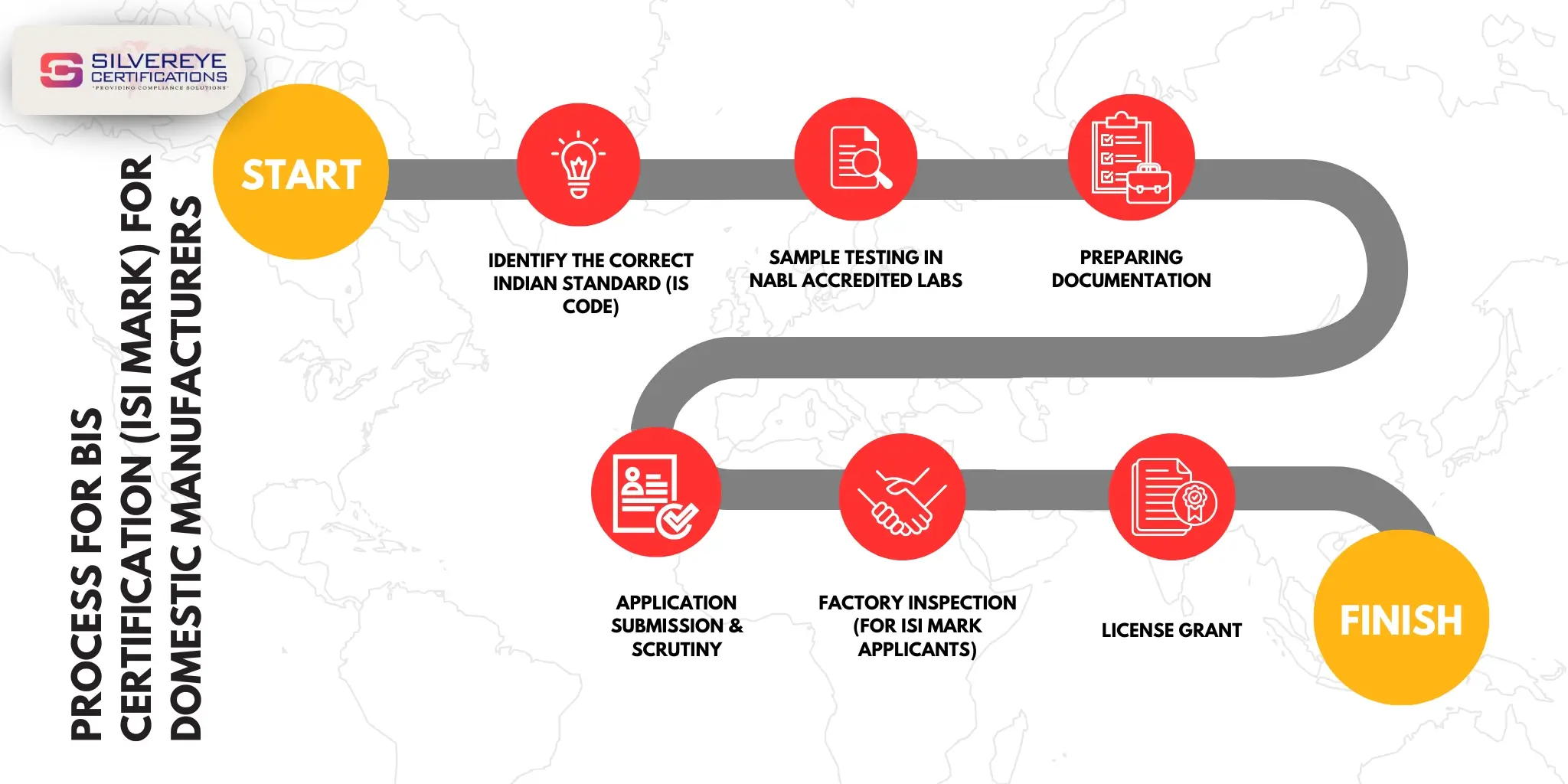
Step-by-Step: How to Obtain BIS Certification
Step 1: Identifying the Correct Indian Standard (IS Code)
You must apply under the exact IS code (e.g., IS 14268 for High Tensile Steel). Selecting the wrong code voids the application.
Step 2: Sample Testing in NABL Accredited Labs
Send physical samples to a BIS-recognized (NABL) lab. You cannot use internal factory reports; independent testing is mandatory.
Step 3: Preparing Documentation
Compile the technical documents listed above. This is where most errors happen—ensure your machinery list matches your capacity.
Step 4: Factory Inspection (For ISI Mark Applicants)
A BIS scientist visits your factory to verify machinery and Quality Control (QC) competence. They will draw a sample for independent testing.
Step 5: License Grant
Once test reports are clear and documents verified, BIS grants the CM/L number (for ISI) or R-number (for CRS).
BIS Certification Costs Breakdown
"How much will it cost?" is the most common question. The cost is split into three parts: Government, Lab, and Professional fees.
| Cost Component | Approximate Expense (INR) | Notes |
| Application Fee | ₹1,000 | Paid to BIS (Non-refundable). |
| License Fee | ₹1,000 (Minimum) | Calculated based on annual production volume. |
| Lab Testing Fee | ₹20,000 – ₹2,00,000+ | Variable. Depends entirely on the product complexity (e.g., a simple switch is cheap; a Lithium battery is expensive). |
| Official Inspection Fee | ₹7,000 per day | Only for Scheme-I (ISI Mark) factory audits. |
| Consultancy Fee | Variable | For document preparation, lab liaison, and query resolution by SEYECS. |
Timeline, Validity, and Renewal
Planning your product launch? Here is the realistic timeline you should account for.
- Timeline for Grant of License:
- CRS (Electronics): 20 – 30 Working Days.
- ISI Mark (Steel/Chemicals): 3 – 4 Months (due to factory inspection and longer testing cycles).
- Validity:
- The license is typically valid for 1 to 2 Years initially.
- Renewal:
- You can renew the license for up to 5 Years at a time.
- Renewal Condition: You must pay the marking fee and submit production returns. No re-testing is usually required unless the standard itself has changed.
DIY vs. Professional Consultancy: Which Should You Choose?
When seeking certification, business owners often face a dilemma: "Can I do this myself, or do I need a consultant?" Transparency is core to our values at SEYECS, so here is an honest comparison.
Can I Apply Directly on the BIS Website?
Yes. As a manufacturer, you are entitled to apply directly through the official government portal.
- Official Website: Visit www.bis.gov.in to access forms and pay statutory fees directly.
- Cost Implication: Applying directly avoids professional service fees, meaning you only pay government and lab charges.
Common Challenges When Applying Independently
- Wrong IS Code Selection: Leads to immediate rejection.
- Lab Coordination: Finding a lab with the right "scope" and managing sample logistics is complex.
- Documentation Queries: Technical errors in factory layouts or test equipment lists often stall applications for months.
How SEYECS Streamlines Your Compliance Journey
We act as your technical partner to ensure "First-Time-Right" submission.
- Pre-Compliance Audit: We review your documents before submission.
- Lab Management: We handle sample submission and follow-ups.
- Query Resolution: We draft technical responses to BIS officers to clear objections fast.
Conclusion: Your Pathway to the Indian Market
Securing BIS certification is your passport to the Indian market. It proves to buyers and government tenders that your product is safe, tested, and reliable. However, the path to compliance—involving strict IS Codes, NABL testing, and documentation—can be complex and prone to delays.
You have two choices: navigate the official government portal at bis.gov.in yourself, or partner with experts for a faster, error-free experience.
At Silvereye Certifications (SEYECS), we handle the entire technical process, from sample logistics to final approval, so you can focus on your business. Don't let regulatory hurdles keep your inventory stuck at the border.
Ready to launch with confidence? Stop worrying about rejections and start selling. Contact SEYECS Today for a free compliance assessment.
Frequently Asked Questions
Is BIS certification mandatory for all products in India?
No, it is only mandatory for products listed under Quality Control Orders (QCOs), such as electronics, steel, toys, and chemicals. If your product is on this list, you cannot manufacture or import it without a license.
What is BIS Certification?
IS Certification is a license issued by the Bureau of Indian Standards (BIS) that guarantees a product's quality, safety, and reliability. It proves that the product has been tested in a certified lab and meets the specific Indian Standard (IS) required by law.
How much does BIS certification cost?
The cost varies by product. It includes a government application fee (approx. ₹1,000), an annual license fee, and lab testing charges, which range from ₹20,000 to over ₹2 Lakhs depending on the product's complexity.
Can I import goods without BIS certification?
No. If a product falls under mandatory certification, Customs will seize it if it lacks a valid BIS license. Foreign manufacturers must obtain an FMCS license before shipping goods to India.
How long does the BIS certification process take?
It depends on the scheme. CRS (Electronics) typically takes 20–30 days, while ISI Mark (Industrial goods) takes 3–4 months because it requires a physical factory inspection.
What is the difference between ISI Mark and CRS?
ISI Mark (Scheme-I) requires both product testing and a factory audit (e.g., for steel, cement). CRS (Scheme-II) usually requires only safety testing in a lab (e.g., for laptops, phones).
How do I check if a BIS certificate is genuine?
Use the BIS Care App or visit bis.gov.in. Enter the CM/L Number (for ISI) or R-Number (for CRS) printed on the product. If the status is "Active," the license is valid.
What documents are required for BIS registration?
Key documents include your Business License (proof of address), a list of manufacturing machinery, a list of in-house testing equipment (with calibration), and the final test report from an NABL-accredited lab.
Is the BIS license valid for a lifetime?
No. A BIS license is initially valid for 1 to 2 years. You must renew it before expiry. Renewals can be granted for up to 5 years if marking fees and production returns are up to date.
Can I apply for BIS certification myself online?
Yes, you can apply directly at bis.gov.in. However, due to the strict technical requirements for lab testing and documentation, many businesses hire a consultant to ensure first-time approval.