- Mandatory regulatory compliance for Indian market access is not optional; Indian Customs and e-commerce platforms now integrate directly with government databases like BIS and WPC to block non-compliant goods.
- Failure to secure mandatory product certification India (such as BIS ISI, CRS, or WPC ETA) leads to immediate customs seizures, heavy fines, and marketplace delisting.
- A holistic compliance strategy covering Safety (BIS), Connectivity (WPC/TEC), Packaging (LMPC), and Sustainability (EPR) is the only way to ensure long-term brand protection.
Introduction: The Gateway to India
India represents one of the most lucrative consumer markets globally, but it is effectively a fortress for the unprepared. The days of simply shipping a container, paying duties, and selling on Amazon India are over.
Here is the reality check: Indian Customs, the Bureau of Indian Standards (BIS), and major e-commerce platforms have synchronised their systems. When a shipment arrives at Nhava Sheva or Delhi Air Cargo, officers don't just check the invoice; they verify your regulatory license numbers against a live government database. If your product lacks a valid registration number, it doesn't just get delayed—it gets seized.
Ensuring mandatory regulatory compliance for Indian market access is no longer just about ticking a bureaucratic box. It is a fundamental layer of brand protection. Compliance shields your inventory from confiscation, your bank account from non-compliance fines India regulations, and your brand reputation from public recall notices.
What is Mandatory Regulatory Compliance for Indian Market Access?
Mandatory regulatory compliance for Indian market access refers to the specific set of government certifications, registrations, and safety standards that foreign and domestic manufacturers must secure before they can legally import, sell, or distribute products in India.
Unlike "voluntary" certifications (which are for marketing), these are legal requirements enforced by Indian Customs and various ministries.
In Simple Terms:
It is the "Entry Visa" for your products. Just as a person needs a visa to enter India, a product needs a license (like BIS, WPC, or TEC) to cross the border and be sold on shelves or online platforms like Amazon/Flipkart.
Why is it mandatory?
The Indian government has issued Quality Control Orders (QCOs). These orders dictate that specific products (e.g., laptops, steel, toys, routers) cannot enter the Indian market without testing and certification.
- Customs Seizure: Goods are blocked at the port.
- Marketplace Ban: E-commerce listings are deactivated.
- Legal Penalties: Heavy fines and potential imprisonment.
Physical & Quality Safety (BIS Certification)
For most manufacturers targeting India, the Bureau of Indian Standards (BIS) is the first hurdle. BIS is the National Standards Body of India, and for many product categories, certification is not voluntary—it is a prerequisite for mandatory product certification India.
The Three Critical Schemes
Understanding the difference between the registration schemes is vital for importers to avoid application rejections.
1. BIS CRS (Compulsory Registration Scheme)
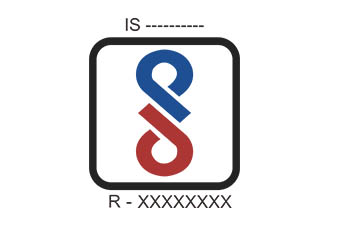
This is the dominant requirement for the IT and electronics sector (Scheme II).
- The Standard: Most IT goods must adhere to IS 13252 (Part 1) or equivalent.
- The Process: Testing must be conducted in BIS-recognized labs within India.
- Why it matters: Without the R-Number (Registration Number) printed on your product, customs will not clear the shipment. We have seen cases where consignments were held up simply because the font size of the "Standard Mark" was incorrect.
2. BIS ISI Mark (Scheme I)
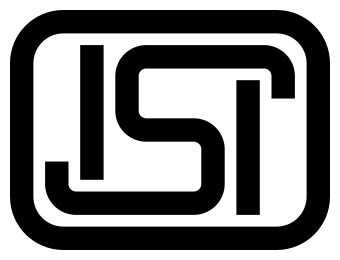
This applies to heavy industrial goods, kitchen appliances, and construction materials like steel and cement.
- The Perception: For an Indian consumer, the ISI mark is a non-negotiable trust signal. A pressure cooker or helmet without an ISI mark is viewed as dangerous.
- The Scope: It covers hundreds of products under Mandatory Certification.
3. BIS FMCS (Foreign Manufacturers Certification Scheme)

This is the pathway for manufacturers located outside India who need the ISI Mark.
- The Rigor: It mandates a physical factory inspection by BIS officers who travel to your foreign unit to audit your production line.
- The Requirement: You must appoint an Authorized Indian Representative (AIR).
- The Challenge: It is time-intensive, but it is the only legal route for foreign factories to tap into the Indian industrial market.
The Brand Protection Angle:
If you are caught selling without certification, the penalty for selling without a BIS mark is severe—confiscation of goods and potential jail time.
Pro Tip: Don't assume your international certification (CE, FCC, UL) is enough. India does not accept foreign test reports for BIS. You must test in India.
Wireless & Telecom Security (WPC & TEC)
As devices become smarter, the regulatory landscape becomes denser. India market entry regulations for connected devices focus on national security and frequency interference.
WPC (Wireless Planning & Coordination)
If your product has a radio component—Bluetooth, Wi-Fi, RFID, or NFC—you need approval.
- The Requirement: Equipment Type Approval (ETA) is mandatory.
- The Risk: WPC ETA customs delays are notoriously common. Customs officers look for the ETA certificate specifically for the precise model number being imported.

TEC (Telecommunication Engineering Centre)
While WPC handles frequency, TEC ensures the equipment talks to the Indian telecom network safely.
- MTCTE Scheme: Covers routers, modems, smart cameras, and PON devices.
- Security: Recent updates have added strict "Security Testing" requirements to prevent data espionage.
Consumer Transparency & Packaging (LMPC)

You might have a BIS-certified product, yet your shipment could still be rejected due to the packaging label. Indian compliance requirements for importers place immense weight on the Legal Metrology Packaged Commodities (LMPC) rules.
The "Silent Killer" of Imports
LMPC violations are the #1 reason for small-scale customs seizures. The label must clearly display:
- MRP (Maximum Retail Price): In INR, inclusive of taxes.
- Country of Origin: "Made in [Country]".
- Net Quantity: Weight or unit count.
- Customer Care Details: Indian phone number and email address.
- Date of Import/Manufacture: Month and Year.
Silvereye Insight: A missing "Customer Care" email on a label can lead to a customs seizure India compliance issue that takes weeks to resolve.
Health & Sustainability (CDSCO, EPR & BEE)
Modern regulations focus on environmental impact and public health.
1. CDSCO (Medical Devices & Cosmetics)
- Medical Devices: Products like thermometers or oximeters require registration. You must appoint an Authorized Indian Representative (AIR) with a wholesale license.
- Cosmetics: Importing beauty products requires a Registration Certificate (Form 43). Customs actively reject shipments containing prohibited ingredients or those tested on animals.
2. EPR (Extended Producer Responsibility)
The "Polluter Pays" principle applies here. You must register on the CPCB portal and purchase recycling credits.
- E-Waste: Mandatory for electronics.
- Battery Waste: Applies to all types of batteries.
- Plastic Waste: Covers your packaging (wrappers, bubble wrap).
- Tyre Waste: Applies if you import new tyres.
- Risk: Massive non-compliance fines India regulations if targets are not met.
3. BEE (Bureau of Energy Efficiency)
Mandatory Star Rating labels for appliances like ACs and refrigerators. It is a vital marketing tool as consumers look for energy savings.
The High Cost of Non-Compliance
Business owners often ask, "Can we risk it for the first shipment?" The answer is a resounding no.
- Financial Hemorrhage: WPC ETA customs delays lead to demurrage charges that can exceed the product's value.
- Marketplace Delisting: Amazon/Flipkart algorithms instantly suppress listings with invalid or expired R-numbers.
- Legal Action: Product recall rules India require you to buy back and destroy non-compliant stock at your own cost.
Cost of Compliance vs. Cost of Negligence
| Factor | Compliant Brand (Silvereye Partner) | Non-Compliant Brand |
| Market Entry | Seamless clearance in 3-5 days | Stuck in customs for 30+ days |
| Customs Risk | Green channel clearance | Customs seizure India compliance check |
| Marketplace | "Prime" badge eligibility | Immediate delisting/Ban |
| Reputation | High trust (ISI/BIS Mark) | Public shaming & Recalls |
The Compliance Roadmap: How Long Does It Take?
One of the most common questions we hear at Silvereye is, "When can I start shipping?" The answer depends on the complexity of your product and the specific scheme it falls under. Compliance is not an overnight process; it requires strategic planning 3 to 6 months before your launch date.
Estimated Timelines by Service:
- BIS CRS (IT & Electronics): 4 – 6 Weeks. (Includes sample shipping, local testing, and registration).
- BIS FMCS (Industrial & ISI): 4 – 6 Months. (Includes application, visa processing, and factory inspection by BIS officers).
- WPC ETA (Wireless): 2 – 3 Weeks. (Assuming RF test reports are available and valid).
- TEC MTCTE (Telecom): 8 – 12 Weeks. (Dependent on the number of parameters like Safety, EMI/EMC, and Security testing).
- CDSCO (Medical Devices): 4 – 9 Months. (Subject to audit and detailed technical file review).
Silvereye Strategy: Do not wait for the final product to be boxed. Start the compliance process while you are finalizing your packaging design. This parallel approach saves you months of lost revenue.
Essential Documents Checklist for Indian Customs
When your shipment lands in India, the Customs Officer will demand a specific "KYC" for your product. Missing even one of these can trigger a "query" that stalls your cargo.
Ensure your freight forwarder has these documents ready before the ship docks:
- Bill of Entry (BOE): The legal document filed by importers.
- Certificate of Conformity (CoC): The actual BIS or WPC certificate copy.
- Test Reports: While not always asked, having the Indian test report handy resolves technical queries instantly.
- Declarations: A specialized "Control Order" declaration stating the goods comply with specific QCOs (e.g., "Steel and Steel Products QCO").
- LMPC Declaration: A letter confirming that packaging meets Legal Metrology standards.
- EPR Certificate: Proof of registration for E-waste or Plastic waste.
Beyond the Border: Market Surveillance & Renewals
Many brands make the mistake of thinking, "We got the certificate, we are safe." In reality, getting the license is just step one. The Bureau of Indian Standards (BIS) and other agencies actively conduct Market Surveillance.
What is Market Surveillance?
BIS officers randomly purchase certified products from the open market (retail shops or Amazon/Flipkart) and send them to the lab for re-testing.
- If it passes: Business continues as usual.
- If it fails: You receive a show-cause notice, your license may be cancelled, and you may be forced to recall the entire batch.
Managing Renewals
Indian certifications are not lifetime awards.
- BIS CRS: Valid for 2 years (Renewable).
- BIS ISI: Valid for 1 year (Renewable).
- WPC ETA: Generally lifetime (for the specific model), but rules can change.
At Silvereye Certifications, we monitor these cycles for you. We alert you 90 days before expiration to file renewals, ensuring your supply chain never faces a "stop-sale" gap.
Why You Need a Strategic Consultant, Not Just an Agent
In the complex web of Indian regulations, many businesses make the mistake of hiring a "filing agent"—someone who merely submits papers. However, with regulations changing weekly (new QCOs, updated EPR portals, revised testing parameters), you need more than data entry. You need a Strategic Compliance Consultant.
The Silvereye Advantage: Beyond Paperwork
At Silvereye Certifications (SEYECS), we position ourselves as your regulatory intelligence partner. Here is why top brands choose us over generic agents:
- Pre-Compliance Audits: Before you even manufacture, we audit your specs. We tell you beforehand if your label will fail LMPC or if your circuit design needs tweaking for BIS testing.
- The "AIR" Service: For foreign manufacturers (FMCS/CDSCO), we don't just file; we can act as your Authorized Indian Representative, bridging the legal gap between your global HQ and Indian authorities.
- Lifecycle Management: Compliance isn't a one-time event. Licenses expire. Standards update. We track your entire portfolio to ensure you never face a "stop-sale" due to a lapsed certificate.
We don't just help you get the certificate; we help you keep your market access.
Conclusion: Your Partner in Compliance
Navigating BIS, WPC, TEC, and LMPC simultaneously is a complex orchestration. A mistake in your LMPC label can render your valid BIS certificate useless at customs. You cannot treat these as isolated tasks; they are a connected ecosystem of mandatory regulatory compliance for Indian market access.
You need a strategy that looks at your product holistically.
The Silvereye Solution
At Silvereye Certifications, we act as your regulatory bridge to India. From pre-compliance audits to handling final testing in accredited labs, we ensure your launch is boring—boring because there are no surprises, no seizures, and no delays.
Don't let a missing document stop your launch.
Partner with Silvereye Certifications for a seamless, 360-degree compliance strategy. Contact us today to secure your Indian Market Access and protect your brand from costly delays.
Frequently Asked Questions
What exactly is "Mandatory Indian Market Access"?
It refers to the non-negotiable government certifications (like BIS, WPC, TEC, and EPR) required by Indian law. Without these specific licenses, your product cannot legally clear customs or be sold in the Indian market.
Can I use my existing CE, FCC, or UL certificates instead of BIS?
No. India does not accept foreign test reports for BIS certification. You must send product samples to BIS-recognized labs within India for testing and obtain a separate Indian license.
Who is the license holder: the foreign manufacturer or the Indian importer?
For BIS and TEC, the manufacturer (factory) holds the license, even if located abroad. However, they must appoint an Authorized Indian Representative (AIR). The importer uses this license number to clear customs but cannot apply for it themselves.
What happens if my shipment arrives without a valid license?
Customs will detain the shipment. You face three risks: paying heavy demurrage (storage) charges, paying a penalty of up to 5 times the goods' value, or having the entire consignment re-exported or destroyed at your cost.
What is the difference between BIS CRS and BIS ISI?
BIS CRS (Compulsory Registration Scheme) is for IT/Electronics (Laptops, Mobiles) and relies on self-declaration after testing.
BIS ISI (Scheme I) is for industrial goods (Steel, Toys, Cement) and requires a stricter process, including a physical factory inspection by BIS officers.
My product uses a standard Bluetooth module. Do I still need WPC approval?
Yes. WPC Equipment Type Approval (ETA) is model-specific. Even if the internal module is approved, the final finished product (e.g., a smart speaker) needs its own ETA certificate to be sold legally.
What are the mandatory LMPC labeling requirements?
Before arriving in India, your retail package must display: Maximum Retail Price (MRP in INR), Country of Origin, Net Quantity, Month/Year of Import, and Customer Care details (Phone & Email). Missing any one of these can lead to seizure.
Is EPR registration mandatory for small importers?
Yes. If you import electronics, batteries, or products with plastic packaging, you are classified as a "Producer." You must register on the CPCB portal and meet waste recycling targets, regardless of your business size.
Can I import samples for testing without a full license?
Yes, but with strict limits. You can import a limited number of units for R&D or testing purposes by submitting an undertaking to customs. These units cannot be sold in the market.
Why should I hire Silvereye Certifications instead of doing it myself?
Indian regulations change frequently. Silvereye acts as your strategic partner, handling everything from pre-compliance audits and local testing to acting as your Authorized Indian Representative (AIR), ensuring your goods clear customs without expensive surprises.