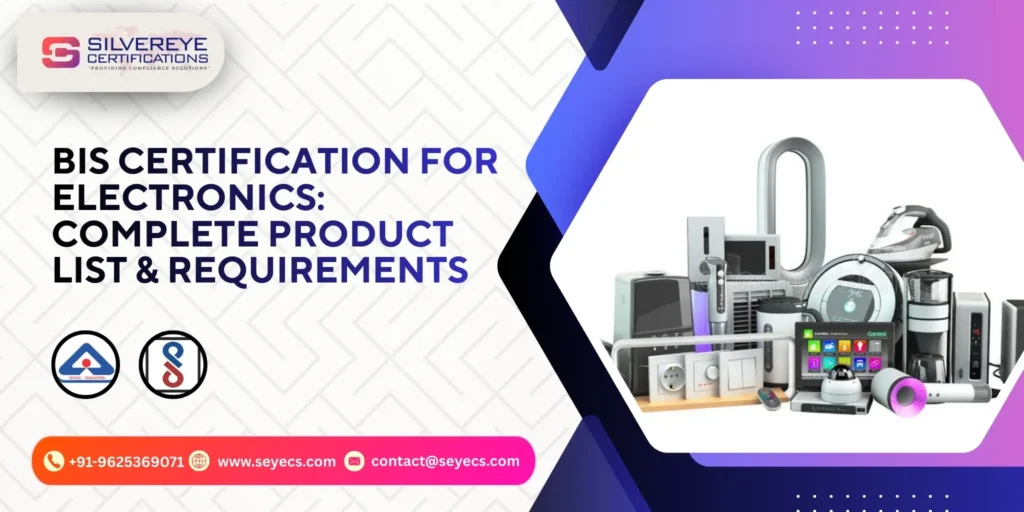
- BIS Certification for Electronics is mandatory for selling 75+ IT and audio-video products in India to ensure safety and quality.
- Foreign manufacturers must appoint a BIS Authorized Indian Representative to navigate the BIS registration process and legal compliance.
- Non-compliance leads to customs seizures and sales bans; this guide covers costs, the IS 13252 standard, and the 2025 product list.
Last month, a Bangalore-based electronics importer received a ₹5 lakh penalty notice. The reason? Selling LED bulbs without proper Bureau of Indian Standards (BIS) approval. The shipment was seized at customs, the business reputation took a hit, and months of investment disappeared overnight.
This isn't an isolated incident. With India's electronics market projected to reach $400 billion by 2025, regulatory bodies have tightened compliance norms. The BIS now actively monitors marketplaces, raids warehouses, and penalizes non-compliant sellers.
For anyone manufacturing, importing, or branding electronic products in India, understanding BIS Certification for Electronics isn't optional anymore—it's survival.
Whether you're launching wireless earbuds, importing laptop adapters, or manufacturing LED panels, this guide walks you through the entire Compulsory Registration Scheme (CRS) process, the new IS/IEC 62368-1 standard, and how to avoid costly seizures.
Introduction
The Bureau of Indian Standards (BIS) is the National Standards Body of India. Think of them as the gatekeepers of quality. For electronics, they operate primarily under the Compulsory Registration Scheme (CRS). Under this scheme, no one—be it Apple, Samsung, or a startup in Bangalore—can sell specific electronic products unless they are tested and registered.
Growing Demand for Safe and Reliable Electronic Gadgets
India is one of the world's largest electronics markets. But with high demand comes the risk of cheap, dangerous knock-offs. We’ve all heard stories of phone batteries exploding or chargers catching fire. The government uses BIS Certifications to filter out these unsafe products.
Why Compliance Builds Trust Among Indian Consumers
Indian consumers today are smart. They look for the standard mark (R-Number) on the back of the box. If your power bank or laptop adapter doesn't carry this mark, distributors won't stock it, and customers won't buy it. Compliance isn't just a legal hoop; it's a marketing asset.
What is BIS Certification for Electronics?
BIS Certification for Electronics is a guarantee that a product has successfully passed safety testing in a recognized laboratory. It proves that your product won't electrocute the user, explode, or start a fire under abnormal conditions.
The Role of the Bureau of Indian Standards
The BIS operates primarily under the Compulsory Registration Scheme (CRS) for electronics. Under this scheme, no one—be it Apple, Samsung, or a startup in Delhi—can sell specific electronic products unless they are tested and registered.
BIS CRS vs. ISI Mark: What’s the Difference?
Most people confuse the two. For electronics, you almost always need CRS (Scheme II).
- BIS ISI (Scheme I): Requires a Factory Audit + Testing. (Used for heavy appliances like Iron, Mixer Grinders, Switches).
- BIS CRS (Scheme II): Requires Testing + Self-Declaration (No Factory Audit). (Used for Laptops, Mobiles, Adapters, Smartwatches).
What is CRS Certification?
Most people use "ISI Mark" and "CRS" interchangeably, but they are slightly different. For electronics, the Ministry of Electronics and Information Technology (MeitY) notified the Compulsory Registration Scheme (CRS). Under CRS, you don't need a factory inspection for every product; you rely on testing and self-declaration.
Difference Between BIS and CRS Certification
- BIS ISI (Scheme I): Requires factory audit + testing (e.g., for switches, cables, milk powder).
- BIS CRS (Scheme II): Requires only testing + registration (e.g., for Laptops, Mobiles, LED Lights). This is what 90% of electronics manufacturers need.
Which Electronic Products Come Under CRS?
The BIS CRS product list is huge. It includes:
- Laptops, Tablets, and Mobile Phones.
- Power Adapters and Chargers.
- LED Lights and Drivers.
- Smart Watches and Bluetooth Speakers.
- CCTV Cameras (Recent addition).
The 2025 Regulatory Shift: IS/IEC 62368-1
Warning: If you are developing a new product in 2025, do not just rely on the old standards.
Historically, IT products (Laptops) used IS 13252 and Audio-Video products (Speakers) used IS 616.
New Update: India is migrating to the unified standard IS/IEC 62368-1:2023. This single standard now covers both IT and AV equipment. While there is a transition period, smart brands are already preparing for this to future-proof their compliance.
Why is BIS Certification Important for Electronic Gadgets?
Safety standards like IS 13252 (for IT equipment) or IS 616 (for Audio/Video) ensure the device can handle Indian voltage fluctuations (which can be erratic) without failing.
Legal Compliance to Avoid Penalties
If you sell non-certified goods:
- Seizure: Authorities can seize your entire stock.
- Deformation: They often destroy the seized goods.
- Fines: Heavy penalties are levied under the BIS Act.
Building Brand Reputation and Customer Trust
When a customer sees the BIS registration number on your product, it signals that a third-party authority has verified your claims. It separates a "branded" product from a "grey market" item.
Enhancing Market Acceptance and Sales
Large retail chains (like Croma or Reliance Digital) and e-commerce giants (Amazon, Flipkart) will block your listing if you cannot provide a valid BIS certificate. You literally cannot access the mainstream market without it.
Is BIS Certification Mandatory for Electronic and IT Products?
Yes. The "Electronics and Information Technology Goods (Requirement for Compulsory Registration) Order, 2012" makes it illegal to manufacture, import, or store for sale any notified product without registration.
Categories of Products Under Mandatory Certification
Currently, over 75+ categories are mandatory. If you are launching a new gadget, always check the latest Quality Control Orders (QCOs) to see if your category is included.
What Happens If You Sell Without BIS Approval?
Beyond fines, the biggest risk is business continuity. If Customs holds your shipment because you lack the BIS Certifications, you pay demurrage charges daily. Often, the cost of holding the goods exceeds the profit margin, forcing you to abandon the shipment.
Eligibility Criteria for Electronic Products Sold in India
Who Needs BIS Certification? Manufacturers, Importers & Brand Owners
The license is always granted to the Manufacturer (the factory location), not the importer. However, the importer acts as the trade face in India.
For Foreign Manufacturers (China, Vietnam, Taiwan)
If your factory is located outside India, you cannot apply directly. You must legally appoint an Authorized Indian Representative (AIR).
- The AIR must be an Indian resident.
- They accept legal liability for the product's compliance in India.
For Indian Startups (Rebranding/White Labeling)
If you are buying generic products from China and putting your brand on them:
- Option A: The Chinese factory already has a BIS license. They must apply to add your Brand Name to their existing license.
- Option B: The factory has no license. You must pay for the testing and registration from scratch (in their name).
Requirements to Get Certification for Electronic Products
Technical Standards Compliance Requirements
Your product must meet specific Indian Standards (IS). For example:
- IS 13252 (Part 1): Information Technology Equipment (Safety).
- IS 16046: Cells and Batteries.
- IS 302: Safety of Household appliances.
Product Testing Requirements
You cannot test this in your own lab. You must send samples to a BIS-recognized laboratory in India. They will torture-test your device (heat, humidity, voltage spikes) to ensure it complies.
Factory and Manufacturing Requirements
While CRS doesn't usually require a physical site visit by a BIS officer, you must prove you have the necessary manufacturing machinery and testing arrangements at your factory location.
Benefits of Getting Certification for Electronic Products
Legal Protection and Hassle-Free Market Entry
With a certificate in hand, Customs clearance becomes a breeze. You file the Bill of Entry, show the BIS number, and your goods move.
Boost in Customer Confidence and Brand Loyalty
In B2B deals (like selling servers to a corporate client), BIS compliance is a non-negotiable tender requirement.
Competitive Edge in Indian Market
Many cheap competitors skip this step and get caught eventually. By being compliant from Day 1, you play the long game and survive when crackdowns happen.
Long-Term Business Growth and Credibility
Certification enables you to apply for other government tenders and prevents sudden "Stop Sale" orders from regulators.
BIS CRS Certification Mandatory Product List
The "Electronics and Information Technology Goods (Requirement for Compulsory Registration) Order, 2012" now covers 75+ categories.
1. IT & Computing
- Laptops, Tablets, and Notebooks.
- Printers, Plotters, and Scanners.
- Automatic Data Processing Machines (Servers).
2. Audio & Video
- Bluetooth Speakers & TWS Earbuds (Case requires battery testing).
- Smart TVs and LED Monitors (Up to 32" and above).
- Electronic Video Games.
3. Power & Accessories
- Power Adapters (for IT and AV).
- Power Banks.
- USB Type-C Chargers (New standard imminent).
4. Critical 2025 Additions
- CCTV Cameras & Recorders: Now require "Essential Requirements (ER)" testing for cybersecurity in addition to basic safety.
- Solar Inverters: Mandatory for the renewable energy sector.
- Smart Watches: Explicitly added to the notified list.
Required Documents for Electronic Products Certification
Getting the paperwork right is half the battle. Here is what you need:
Manufacturer and Business Documents
- Certificate of Incorporation (Business License) of the factory.
- ISO Certificate (if available).
- Trademark Registration Copy (Brand proof).
Technical and Product Test Documents
- PCB Layout and Circuit Diagram.
- User Manual and Critical Component List (CCL).
- Schematic Diagrams.
Importers / Foreign Manufacturer Documents
- AIR Nomination Form: Appointing your Indian Representative.
- Affidavit cum Undertaking (legal document).
Pro Tip: Ensure the factory address in your documents matches exactly with the address on the business license. Even a comma difference can cause rejection.
Process of Electronic Products Certifications
Step 1 – Product Testing in BIS Approved Lab
You submit samples to a lab in India. The lab tests them against standards like IS 13252 standard. This takes 10–15 days.
Step 2 – Filing Application on BIS Portal
Once the lab generates the Test Report, you (or your consultant) create a profile on the BIS portal and upload the report along with all documents.
Step 3 – Verification and Approval by BIS
BIS officers review the application. They check if the Test Report matches the documents. If they find errors, they raise queries.
Step 4 – Grant of BIS Registration Certificate
Once satisfied, BIS grants the Registration Number. You can now download the certificate and start printing the mark on your products.

Timeline and Cost of Electronic Products Certifications
Estimated Processing Time
- Testing: 2–3 weeks (depending on product complexity).
- BIS Processing: 1–2 weeks.
- Total: Expect roughly 30–45 working days if all goes well.
Testing Cost Breakdown
Labs charge based on the product.
- Simple Adapter: ₹25,000 – ₹40,000.
- Laptop/Mobile: ₹60,000 – ₹1,00,000.
- Battery: ₹1,50,000+.
BIS Government Fee Structure
As of 2025, the government fees are roughly:
- Application Fee: ₹1,000
- Processing Fee: ₹25,000
- Registration Fee: ₹2,000 (for 2 years)
- Total Govt Fee: ~₹28,000 + GST.
Factors Affecting Cost and Time
Delays usually happen due to sample failure (the product fails the test) or incorrect documentation.
Why Applications Get Rejected
- Critical Component List (CCL) Mismatch: The battery or capacitor used in the sample doesn't match the Bill of Materials (BOM) submitted.
- PCB Layout Changes: The schematic diagram doesn't match the actual board inside the sample.
- Soft Copy vs. Hard Copy: The address on the business license differs from the test report (even a spelling mistake like "Road" vs "Rd" causes rejection).
Validity and Renewal of Electronic Products Certifications
How Long BIS Certificate Remains Valid?
The initial registration is valid for 2 years.
Renewal Procedure and Documents Required
Renewal is easier than fresh registration. You don't need re-testing unless the standard has changed. You simply pay the renewal fee and submit a production report.
Why is Timely Renewal Important?
If you miss the expiry date, you have to start from scratch—new testing, new application, full costs.
Why Do You Need a Consultant to Get BIS Certification for Electronic Products?
Expert Guidance to Avoid Rejection
BIS rejections are common due to minor clerical errors. A consultant knows exactly how to format the "Critical Component List" to please the officers.
End-to-End Support from Documentation to Approval
At Silvereye Certifications, we handle the AIR nomination, sample movement to labs, and follow-ups with BIS officers so you don't have to running around government offices.
Saving Cost, Time, and Effort
A failed test costs money. We pre-verify your technical specs to ensure your product has a high chance of passing the electronics testing requirements India demands.
Peace of Mind While You Focus on Your Business
You focus on sales; we handle compliance.
Conclusion
BIS Certification for Electronics isn't just a legal mandate; it is the baseline for quality in the Indian market. It protects your business from legal action and protects your customers from unsafe products.
Don't let compliance hurdles delay your product launch.
Ready to get your electronics certified?
Contact Silvereye Certifications today. Whether you need a BIS Authorized Indian Representative or guidance on the new IS/IEC 62368-1 transition, our team is ready to help you navigate the regulations smoothly.
Contact Silvereye for a Free Compliance Audit
Frequently Asked Questions
Is BIS mandatory for all electronics?
Yes, for over 75+ notified categories (Laptops, Mobiles, Adapters, etc.). Selling without it is a criminal offense.
Can I sell first and certify later?
No. The R-Number must be on the product before it enters India. Customs will seize non-compliant goods.
What is the IS 13252 standard?
It is the safety standard for IT equipment. Your product must pass tests for temperature, electric shock, and fire resistance under this standard.
Does a foreign brand need an Indian office?
No, but you must legally appoint an Authorized Indian Representative (AIR) to represent you.
How long is the certificate valid?
It is valid for 2 years and can be renewed easily without re-testing (unless standards change).
What is the cost for a mobile phone?
Expect ₹75,000 - ₹1,20,000 for lab testing, plus ~₹28,000 in government fees.
Can I group multiple models?
Yes. If models share the same PCB and circuit design, they can be grouped in a "Series" to save testing costs.
How do I check if a certificate is real?
Use the BIS Care App or BIS website and enter the 8-digit R-Number to verify validity.
Why do products fail testing?
Common reasons: Poor quality power cords, failure in high-voltage tests, or components not matching the CCL.
What is the penalty for non-compliance?
Seizure of stock, fines starting from ₹2 Lakhs, and potential imprisonment under the BIS Act.