
EMI EMC Testing Services for Product Compliance & Market Approval

EMI EMC Testing ensures electronic products do not emit or malfunction due to electromagnetic interference.
It is mandatory under Indian and global EMC regulatory frameworks for market access.
Early EMI EMC testing reduces redesign cost, approval delays, and compliance risks.

Introduction: Where Most Products Fail Before the Market

A few years ago, a mid-sized Indian electronics manufacturer approached us after their shipment was held at a European port. The product worked perfectly in India—but failed EMC regulatory checks overseas. The issue? EMI emissions beyond permitted limits. Months of redesign followed, costing far more than early testing would have.

This is exactly where EMI EMC testing stops being a “technical checkbox” and becomes a business-critical compliance requirement.

Whether you manufacture, import, or export electronic products, EMI/EMC compliance directly impacts:

  • Market approval
  • Product safety
  • Legal liability
  • Brand reputation

This guide explains EMI EMC testing in India, standards, process, cost, timelines, and how to approach compliance strategically—not reactively.

What Is EMI/EMC Testing?

EMI/EMC testing is a set of technical evaluations carried out on electronic and electrical products to ensure they operate safely and reliably in real-world electromagnetic environments—without causing or being affected by electromagnetic disturbances.

In simple terms, EMI/EMC testing checks two critical things:

  • Whether your product emits electromagnetic interference that could disturb other devices
  • Whether your product can function correctly when exposed to external electromagnetic interference

Both aspects are mandatory under EMC regulatory frameworks in India and globally.

What is EMI Testing?

EMI – Electromagnetic Interference

EMI testing measures the unwanted electromagnetic energy emitted by a device during operation.

EMI is typically evaluated through:

  • Conducted emissions (interference through power lines)
  • Radiated emissions (interference through air)

What is EMC Testing?

EMC – Electromagnetic Compatibility

EMC testing verifies that a product can continue to operate normally when exposed to electromagnetic disturbances.

This ensures the product is:

  • Reliable in real-world conditions
  • Safe for users and surrounding equipment

Why EMI and EMC Are Tested Together?

Regulatory authorities require both EMI and EMC compliance to confirm overall electromagnetic compatibility.

Why EMI/EMC Testing Is Mandatory for Your Product

EMI/EMC testing is mandatory because modern electronic products do not operate in isolation.

1. Regulatory Compliance in India and Global Markets

Products must comply with EMC regulatory requirements before they can be legally sold, imported, or exported.

For manufacturers and importers, EMI/EMC testing is a precondition for certification, registration, and market approval.

2. Safety and Functional Reliability

EMI/EMC testing directly protects end users, nearby equipment, and public infrastructure.

3. Prevention of Interference With Other Devices

Regulators treat EMI violations as a public interference issue, not just a product defect.

4. Legal, Financial, and Brand Risk Mitigation

From a business perspective, EMI/EMC testing is a risk-control measure.

Role of EMI/EMC Testing in Product Certification

Without successful EMI/EMC testing, certification bodies will not proceed and approvals are delayed or denied.

Difference Between EMC and EMI Testing

Although EMI and EMC testing are closely related, they serve different regulatory and technical purposes.

The table below explains the key differences between EMI testing and EMC testing in a clear, practical way.

Parameter EMI Testing (Electromagnetic Interference) EMC Testing (Electromagnetic Compatibility)
Primary Focus Measures unwanted electromagnetic emissions from a product Evaluates a product’s ability to operate correctly in electromagnetic environments
Nature of Testing Emission-based Immunity-based
Objective Ensure the product does not interfere with other devices Ensure the product is not affected by external interference
Type of Interference Unintentional radiation or conducted noise External electromagnetic disturbances
Key Test Areas Conducted emissions, radiated emissions ESD, surge, EFT, RF immunity, voltage dips
Compliance Role Limits how much interference a product can emit Confirms product stability and functional reliability
Risk if Failed Product disrupts nearby equipment Product malfunctions under real-world conditions
Regulatory Requirement Mandatory for market approval Mandatory for functional safety and reliability

Products That Require EMI/EMC Testing

Any product that contains electronic circuitry or operates using electrical power can generate or be affected by electromagnetic interference. For this reason, EMI/EMC testing is mandatory for a wide range of products across consumer, industrial, and professional sectors.

Below is a clear, compliance-focused breakdown of products that typically require EMI/EMC testing in India and global markets.

Consumer Electronics

Consumer products are used in uncontrolled environments and must meet strict emission limits to avoid interference with nearby devices.

  • Televisions and audio-video equipment
  • Mobile chargers and adapters
  • Smart home devices
  • Wearables and personal electronics
  • Kitchen and household appliances

IT & Telecom Equipment

These products operate in sensitive electromagnetic environments and are subject to stringent EMC regulatory requirements.

  • Computers and peripherals
  • Networking devices (routers, switches, modems)
  • Servers and data-center equipment
  • Telecom transmission and access equipment

Medical Electrical Devices

Medical devices must meet higher EMC immunity standards to ensure patient safety and uninterrupted operation.

  • Diagnostic equipment
  • Patient monitoring systems
  • Laboratory instruments
  • Medical power supplies and controllers

Industrial Machinery & Automation Systems

Industrial environments are electrically noisy, making EMC immunity critical for operational reliability.

  • PLCs and control panels
  • Variable frequency drives (VFDs)
  • Industrial power converters
  • Factory automation equipment

Automotive Electronics

Modern vehicles rely heavily on electronics, requiring EMI/EMC testing to prevent functional interference.

  • Electronic control units (ECUs)
  • Infotainment systems
  • Sensors and communication modules
  • EV charging and battery management systems

LED Lighting & Power Supplies

Switch-mode power supplies are common sources of EMI and are closely regulated.

  • LED luminaires and drivers
  • External and internal power adapters
  • UPS systems and inverters

Household & Commercial Electrical Appliances

Even non-smart appliances can emit electromagnetic noise and must comply with EMC standards.

  • Washing machines and refrigerators
  • Air conditioners
  • Commercial kitchen equipment
  • Office electrical devices

EMI/EMC Testing Standards & Regulations

EMI/EMC testing is governed by a well-defined set of national and international standards. These standards ensure that electronic products are safe, reliable, and compatible with other equipment in real-world electromagnetic environments. Choosing the correct standard is critical—testing against the wrong regulation is one of the most common and costly compliance mistakes.

EMI/EMC Standards in India

In India, EMI/EMC compliance requirements are largely aligned with international frameworks and enforced through national regulations and certification schemes.

Role of Indian Regulatory Authorities

EMI/EMC testing in India is closely linked with certification and market access requirements governed by bodies such as the Bureau of Indian Standards. Products notified under mandatory certification schemes must demonstrate compliance with applicable EMC standards before approval.

Commonly Applied Indian EMC Standards

Indian EMC standards are primarily based on CISPR and IEC frameworks, adapted as Indian Standards (IS). These standards define:

  • Emission limits
  • Immunity test levels
  • Test setups and procedures

They apply to categories such as:

  • IT equipment
  • Household appliances
  • Industrial and medical electronics

International EMI/EMC Testing Standards

For export-oriented products, compliance must match the regulatory requirements of the destination country.

IEC & EN Standards (Global / Europe)

The International Electrotechnical Commission develops IEC standards that form the basis for most global EMC regulations. In Europe, these are adopted as EN standards under the EMC Directive.

IEC/EN standards cover:

  • Conducted and radiated emissions
  • Electrostatic discharge (ESD)
  • Electrical fast transients (EFT)
  • Surge immunity
  • Radiated and conducted RF immunity

FCC EMC Regulations (United States)

For the U.S. market, EMC compliance is governed by the Federal Communications Commission. FCC regulations primarily focus on EMI emissions, ensuring that electronic devices do not interfere with radio and communication services.

Products are classified based on:

  • Intended use (commercial or residential)
  • Frequency range and operating environment

Importance of Choosing the Right EMI/EMC Standard

Selecting the correct EMI/EMC testing standard depends on:

  • Product category
  • Intended application
  • Target market (domestic or export)
  • End-use environment

Testing a product to an incorrect or incomplete standard can result in:

  • Rejected certifications
  • Additional testing costs
  • Delayed market entry

From a compliance strategy perspective, standard selection should happen before product testing, ideally during the design or sourcing stage.

How Standards Impact Certification & Market Approval

EMI/EMC test reports are not standalone documents. They serve as technical evidence for:

  • Product certification
  • Regulatory registration
  • Import and export approvals

Without valid EMI/EMC testing aligned to the correct standard, certification bodies and regulators will not proceed with approvals.

EMI/EMC Testing for Manufacturers, Importers & Exporters

EMI/EMC testing impacts each stakeholder in the supply chain differently. Below is a clear, role-specific breakdown of why EMI/EMC compliance is critical for manufacturers, importers, and exporters.

For Manufacturers

  • Ensures products meet EMI/EMC standards before mass production
  • Prevents costly redesigns after market launch
  • Improves product reliability and field performance
  • Supports faster certification and regulatory approvals

For Importers

  • Mandatory for customs clearance of regulated electronic products
  • Avoids shipment holds, rejections, or penalties
  • Ensures imported products meet Indian EMC regulatory requirements
  • Protects importer liability under compliance laws

For Exporters

  • Required for market access in EU, US, and other global regions
  • Supports CE, FCC, and other international certifications
  • Reduces risk of port rejection and recall abroad
  • Builds trust with overseas buyers and regulators

EMI/EMC Testing vs Product Certification

EMI/EMC testing and product certification are closely linked, but they are not the same. Many compliance delays happen because businesses treat them as interchangeable. Understanding the difference helps plan approvals correctly and avoid unnecessary rework.

Key Differences at a Glance

Aspect EMI/EMC Testing Product Certification
Purpose Evaluates electromagnetic emissions and immunity Grants legal approval to sell the product
Nature Technical testing process Regulatory / administrative approval
Output EMI/EMC test report Certificate or registration number
Performed By Accredited EMC laboratory Government or notified certification body
Scope Product performance under EMC standards Overall product compliance with regulations
Mandatory Yes, for regulated electronics Yes, for notified products and markets

How EMI/EMC Testing Supports Certification

EMI/EMC testing provides technical evidence required for certification.
Certification bodies rely on EMC test reports to verify compliance.
Without a valid EMI/EMC report, certification applications cannot proceed.

Testing vs Approval Authority Roles

EMC laboratories conduct tests and issue reports based on standards.
Certification authorities review reports and issue approvals or registrations.
Laboratories do not grant market approval; authorities do not perform testing.

EMI/EMC Testing Process – Step-by-Step

The EMI/EMC testing process follows a structured, regulator-aligned workflow designed to identify electromagnetic issues early, validate compliance against the correct standards, and support certification without delays.

Step 1: Product Assessment & Standard Identification

The process starts with a detailed technical review of the product to determine:

  • Product category and end-use environment
  • Applicable EMI/EMC testing standards (Indian and/or international)
  • Target markets (India, EU, US, or others)

Step 2: Documentation Review

Before testing begins, technical documents are reviewed to ensure readiness and traceability.
This includes:

  • Electrical and functional specifications
  • Circuit and block diagrams
  • Product configuration details

Step 3: Pre-Compliance Testing (Strongly Recommended)

Pre-compliance testing is an early-stage evaluation conducted before formal laboratory testing.
Its purpose is to:

  • Identify emission and immunity risks
  • Detect design-level EMI issues
  • Reduce the chance of failure during final testing

Step 4: Formal EMI/EMC Laboratory Testing

The product is tested in a controlled EMC laboratory environment using calibrated equipment and standard test setups.
Testing typically includes:

  • Conducted emission testing
  • Radiated emission testing
  • Immunity tests such as ESD, surge, EFT, and RF exposure

All tests are performed strictly as per the selected EMI/EMC standard.

Step 5: Test Result Evaluation & Corrective Actions

If the product fails any test:

  • Root cause analysis is performed
  • Design or configuration changes are recommended
  • Re-testing is conducted only for affected parameters

Step 6: EMI/EMC Test Report Issuance

Once all requirements are met, a detailed EMI/EMC test report is issued. This report includes:

  • Test conditions and setups
  • Measured values and limits
  • Compliance verdict

The test report becomes a key compliance document for certification and regulatory approvals.

Step 7: Support for Certification & Market Approval

The final step involves using the EMI/EMC test report to support:

  • Product certification
  • Regulatory registration
  • Import or export approvals

Documents Required for EMI/EMC Testing

  • Product technical specifications
  • Circuit & block diagrams
  • User manual
  • Product photographs
  • Bill of Materials (BOM)
  • Manufacturer/importer details

Incomplete documentation is one of the top reasons for testing delays.

EMI/EMC Testing Cost in India

Testing Category / Service Typical Cost Range (INR) Notes
Basic EMI/EMC Test Package (single unit) 10,000 – 50,000 Suitable for simple emissions or entry-level compliance checks
Standard EMC Full Compliance Testing 50,000 – 300,000 Includes emissions + immunity tests for most electronic products
TEC/Standard EMC Tests (per test) ~10,000 – 68,000 per mode Prices vary by test type (e.g., ESD, RS, EFT), as per regulatory lab charges
Accredited Lab Full Certification Testing 150,000 – 500,000+ Includes full suite testing for CE/FCC style compliance reports (may vary widely)
Pre-compliance Testing (Component level) 5,000 – 50,000 Early-stage checks to reduce final lab failures

Time Required for EMI/EMC Testing

Testing Stage Estimated Time What Happens at This Stage
Product & Standard Assessment 1–2 working days Product category review, standard selection, test scope finalisation
Documentation Review 1–2 working days Verification of diagrams, manuals, configurations
Pre-Compliance Testing (Optional) 3–5 working days Early emission/immunity checks to identify risks
Formal EMI/EMC Laboratory Testing 5–10 working days Conducted & radiated emissions, immunity tests
Corrective Action & Re-testing (if needed) 3–7 working days Design fixes and targeted re-tests
EMI/EMC Test Report Issuance 2–3 working days Compilation and validation of final test report

Common EMI/EMC Testing Failures & How to Avoid Them

Poor PCB layout
Issue: Large loop areas and noisy trace routing
Avoid: Use solid ground planes and EMI-aware PCB design

Inadequate shielding
Issue: EMI leakage through enclosures and joints
Avoid: Use conductive enclosures and proper shielding gaskets

Improper grounding
Issue: Floating or inconsistent ground paths
Avoid: Follow correct single-point or multi-point grounding methods

Power supply noise
Issue: Switching noise from SMPS
Avoid: Add EMI filters, decoupling capacitors, and clean power routing

Cable and connector problems
Issue: Unshielded or long cables acting as antennas
Avoid: Use shielded cables and proper termination

Ignoring EMI at design stage
Issue: Compliance checked too late
Avoid: Plan EMI/EMC requirements during product design

Wrong test configuration
Issue: Tested setup differs from market version
Avoid: Test worst-case, user-manual-defined configuration

Benefits of Professional EMI/EMC Testing Services

Faster regulatory approvals
Expert-led testing ensures correct standards and configurations, reducing approval delays.

Reduced re-testing costs
Early issue identification prevents repeated lab visits and expensive redesigns.

Correct standard selection
Professionals map your product to the right Indian and international EMI/EMC standards.

Design-level EMI guidance
Technical support helps fix EMI issues at the PCB and system level, not just at the lab stage.

Access to accredited EMC laboratories
Coordination with NABL-accredited labs ensures reports are accepted by regulators and certifying bodies.

End-to-end compliance support
From assessment to test reports and certification assistance, the entire process is managed smoothly.

Market-ready products
Products enter domestic and global markets with confidence, compliance, and reduced legal risk.

Why Choose Us for EMI/EMC Testing Services

Expert EMI/EMC compliance consultants
Our team understands both technical testing and regulatory expectations, ensuring the right approach from day one.

Correct standard mapping
We identify the exact Indian and international EMI/EMC standards applicable to your product—no over-testing, no gaps.

NABL-accredited lab coordination
End-to-end coordination with accredited EMC laboratories for test slots, configurations, and report acceptance.

Design-level problem solving
We don’t just test—we help resolve EMI issues at the PCB, power, and system level to avoid repeat failures.

Transparent process & timelines
Clear scope, realistic timelines, and no hidden steps or unnecessary testing.

End-to-end compliance support
From product assessment and testing to certification and regulatory submissions, everything is handled under one roof.

High first-time pass rate
Our structured approach significantly improves the chances of passing EMI/EMC testing on the first attempt.

Conclusion: EMI EMC Testing Is a Compliance Strategy, Not a Formality

EMI EMC testing is a business-critical compliance step, not just a technical requirement. Products that plan EMI/EMC compliance early face fewer failures, faster approvals, and lower overall costs.

With Silvereye Certifications, EMI EMC testing becomes a structured strategy—covering correct standard selection, accredited lab testing, and end-to-end compliance support. This ensures your product is market-ready, legally compliant, and approval-focused from the start.

If your product uses electronics, EMI EMC testing with Silvereye Certifications helps you avoid delays, reduce risk, and move confidently toward domestic and global market access.

Frequently Asked Questions (FAQs) on EMI EMC Testing

Yes. EMI EMC testing is mandatory for many electronic and electrical products sold, imported, or manufactured in India, especially those covered under regulatory certification schemes.
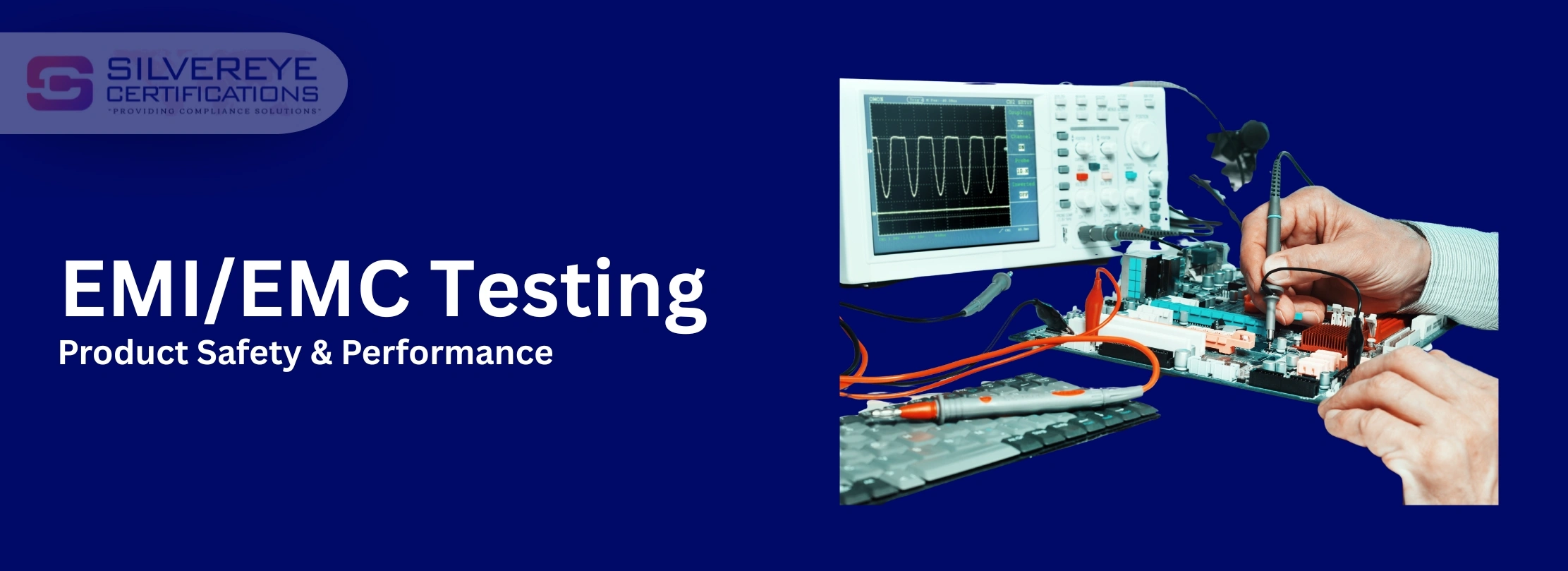
EMI testing checks how much electromagnetic interference a product emits, while EMC testing verifies whether the product can operate properly in electromagnetic environments. Both are required for full compliance.

Both. Manufacturers need EMI EMC testing before mass production, and importers must ensure imported products meet Indian EMC regulatory requirements before customs clearance.

Typically, EMI EMC testing takes 7–15 working days. Timelines may increase if the product fails initial tests or documentation is incomplete.

If a product fails, corrective actions such as PCB changes, shielding improvements, or filtering are required, followed by partial or full re-testing.

Pre-compliance testing is not mandatory but strongly recommended. It helps identify EMI issues early and significantly reduces failure risk during final EMC laboratory testing.

EMI EMC testing alone does not grant certification, but it is a mandatory technical requirement. Certification authorities rely on EMI EMC test reports to issue approvals.

The cost depends on product complexity, applicable standards, and test scope. Government and accredited lab charges are usually calculated per test parameter.

While possible, it is not advisable. Testing after launch increases the risk of recalls, penalties, and redesign costs if non-compliance is identified.

Silvereye Certifications provides end-to-end EMI EMC testing support, including standard identification, NABL-accredited lab coordination, failure mitigation, and certification assistance—ensuring faster approvals and reduced compliance risk.