
ESMS Framework Compliance Services for Environmental & Social Risk Management

ESMS Framework is a structured system to identify, manage, and monitor environmental and social risks across operations. It is critical for regulatory compliance, ESG alignment, and access to bank or IFC-linked funding. A well-implemented Environmental and Social Management System (ESMS) is ongoing, auditable, and risk-based.

Introduction

A few years ago, an Indian manufacturing exporter lost a confirmed overseas order—not because of pricing, quality, or delivery issues, but because the buyer’s bank asked a simple question: “Do you have an Environmental and Social Management System (ESMS) in place?” The company had environmental approvals and labour compliances, but no structured way to identify, manage, and monitor environmental and social risks. The deal stalled.

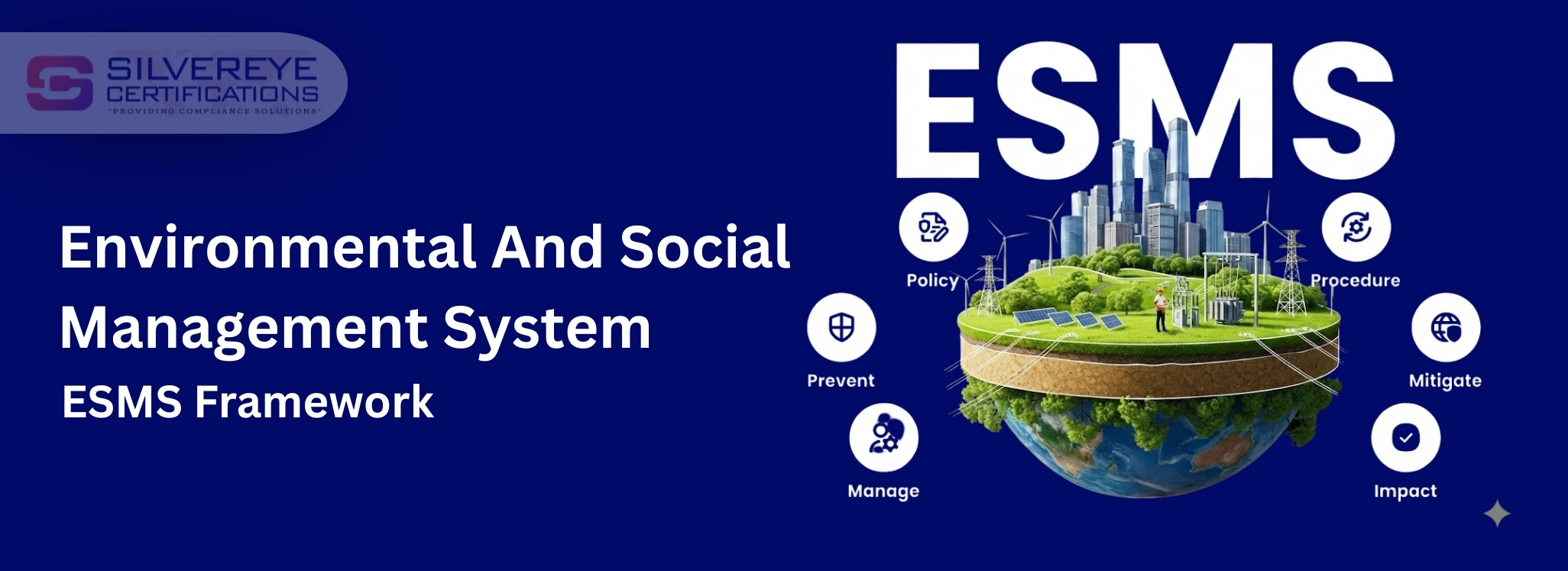
This is exactly where an ESMS Framework comes in. An Environmental and Social Management System (ESMS) is a structured, risk-based framework that helps organizations identify environmental and social risks arising from their operations, projects, or financing activities—and manage them in a consistent, documented, and auditable manner. Unlike one-time approvals or certifications, an ESMS is a living compliance system that evolves with the business, regulations, and stakeholder expectations.

What is ESMS Framework?

An ESMS Framework, or Environmental and Social Management System, is a structured management system used by organizations to identify, assess, manage, and monitor environmental and social risks arising from their operations, projects, or financing activities.

It provides a formal, documented approach to ensuring that environmental and social responsibilities are not handled on an ad-hoc basis, but are embedded into everyday business decision-making. An ESMS Framework is a structured set of policies, procedures, roles, and controls that helps an organization identify, manage, monitor, and improve environmental and social risks associated with its activities, projects, or lending decisions.

Purpose of Implementing an ESMS

  • Ensure ongoing environmental and social compliance, not one-time approvals
  • Identify and manage environmental and social risks before they escalate
  • Meet bank, lender, investor, and buyer requirements
  • Strengthen governance, accountability, and management oversight
  • Support ESG and sustainability commitments with real systems
  • Reduce operational, legal, and reputational risks
  • Build trust with regulators, employees, communities, and stakeholders
  • Enable continuous improvement through monitoring and reviews

Why ESMS Framework Is Important for Businesses

For many organizations, an ESMS Framework comes into focus only after a setback—such as a loan rejection, a failed buyer audit, or regulatory scrutiny. However, businesses that implement ESMS early are far better positioned to manage risks, maintain compliance, and sustain growth. ESMS shifts the approach from firefighting issues to structured, preventive risk management.

Key Business Drivers

  • Risk identification and mitigation: Systematically identifies environmental and social risks, helping prevent accidents, legal violations, operational disruptions, and plant shutdowns
  • Environmental and social compliance: Ensures operations remain aligned with applicable environmental laws, labour regulations, and permit conditions
  • Stakeholder trust: Demonstrates responsible business conduct to employees, local communities, regulators, customers, and supply-chain partners
  • Access to funding: Increasingly required by banks, development finance institutions (DFIs), and ESG-focused investors as part of due diligence
  • ESG alignment: Provides the operational foundation for credible ESG reporting and sustainability commitments

Key Components of an ESMS Framework

An effective ESMS Framework is built on a set of core components that work together to identify, manage, and monitor environmental and social risks in a structured and auditable way.

Environmental Risk Management

  • Identification and control of environmental risks linked to operations
  • Pollution prevention, waste management, and emissions control
  • Efficient use of energy, water, and raw materials
  • Management of climate-related and resource-efficiency risks

Social Risk Management

  • Compliance with labour laws and fair working conditions
  • Occupational health and safety management
  • Community health, safety, and engagement
  • Identification and mitigation of human rights risks

Governance & Management Commitment

  • Clearly defined environmental and social policies approved by top management
  • Assignment of roles, responsibilities, and accountability
  • Integration of ESMS into business decision-making and oversight processes

Together, these components ensure that environmental and social responsibilities are systematically managed, regularly reviewed, and continuously improved, rather than addressed only when issues arise.

Core Elements of an Effective ESMS Framework

An effective ESMS Framework is not built on policies alone. It functions as a management system where each element supports consistent compliance, risk control, and continuous improvement.

  • Policy commitment: A clear environmental and social policy approved by top management, setting expectations and accountability
  • Risk and impact assessment: Systematic identification and evaluation of environmental and social risks across activities and project
  • Management programs: Action plans and controls to mitigate identified risks and comply with legal and lender requirements
  • Organizational capacity & training: Defined roles, responsibilities, and regular training to ensure effective implementation
  • Monitoring and reporting: Ongoing tracking of performance, incidents, and compliance status through documented records
  • Continuous improvement: Periodic reviews, audits, and corrective actions to strengthen the ESMS over time

These core elements ensure the ESMS remains practical, auditable, and aligned with regulatory, financial, and ESG expectations.

ESMS Framework Structure (Step-by-Step)

The ESMS Framework follows a logical, step-by-step structure that ensures environmental and social risks are addressed systematically and remain under continuous control.

  • Gap assessment
    Review existing practices, approvals, and controls against regulatory, lender, and ESG requirements to identify gaps.
  • ESMS policy development
    Develop and approve an environmental and social policy that reflects the organization’s risk profile and compliance commitments.
  • Risk identification & categorization
    Identify environmental and social risks across operations and classify them (low, medium, or high impact).
  • Control and mitigation planning
    Define management programs, procedures, and controls to address identified risks and compliance obligations.
  • Implementation & training
    Assign responsibilities and train employees to ensure ESMS procedures are followed in day-to-day operations.
  • Monitoring, audits & reporting
    Track performance, conduct internal audits, record incidents, and report findings to management and stakeholders.
  • Review and improvement
    Periodically review ESMS effectiveness and update controls based on regulatory changes, incidents, or business expansion.

This structured approach ensures the ESMS remains effective, auditable, and aligned with evolving compliance and business needs.

ESMS Framework Requirements

An effective ESMS Framework is built on clearly defined requirements that ensure environmental and social risks are managed in line with regulatory and stakeholder expectations.

Legal and Regulatory Compliance

  • Identification of all applicable environmental, labour, health & safety, and social laws
  • Maintenance of compliance registers with periodic updates to reflect regulatory changes

Stakeholder Engagement

  • Formal worker grievance redressal mechanisms
  • Defined communication channels for engagement with local communities and other stakeholders

Documentation Requirements

  • Approved ESMS policy and supporting procedures
  • Documented environmental and social risk assessment records

Reporting and Disclosures

  • Regular internal reporting to management for oversight and decision-making
  • External reporting to banks, lenders, or investors as part of due diligence or monitoring

Emergency Preparedness

  • Incident and emergency response plans
  • Corrective and preventive action procedures to address non-compliances and incidents

These ESMS requirements form the minimum baseline for compliance, ensuring the system is auditable, credible, and aligned with regulatory, financial, and ESG expectations.

Industries That Require ESMS Framework

An ESMS Framework is increasingly required or strongly recommended across industries where environmental and social risks can impact operations, compliance, funding, or stakeholder trust.

  • Manufacturing
    Industries such as chemicals, textiles, engineering goods, pharmaceuticals, and food processing where environmental permits, labour compliance, and worker safety are critical.
  • Infrastructure & Construction
    Projects involving land use, resource consumption, contractor management, and community interaction often face high environmental and social risks.
  • Energy & Power
    Renewable and conventional energy projects require ESMS to manage environmental impacts, worker safety, and community concerns.
  • Financial Institutions & NBFCs
    Banks and lenders implement ESMS to assess and monitor environmental and social risks associated with their lending portfolios.
  • Export-Oriented Businesses
    Exporters supplying to global buyers or regulated markets often need ESMS to meet supply-chain, ESG, and buyer audit requirements.

ESMS Framework for Banks & Financial Institutions

For banks, NBFCs, and other financial institutions, an ESMS Framework is a critical tool for managing environmental and social risks at the portfolio level, not just at the individual project stage. Regulators, development finance institutions, and international investors increasingly expect lenders to demonstrate that these risks are systematically identified and controlled.

Key Expectations for Financial Institutions

  • Alignment with IFC Performance Standards
    ESMS frameworks are often designed to align with international benchmarks such as the IFC Performance Standards, ensuring consistency with global ESG and risk-management practices.
  • Environmental and Social Risk Categorization
    Borrowers and projects are classified as low, medium, or high risk based on their potential environmental and social impacts, guiding the level of due diligence required.
  • Ongoing Monitoring and Supervision
    Financial institutions are expected to monitor borrower compliance throughout the loan tenure, including periodic reviews, reporting, and corrective actions where needed.

Benefits of Implementing an ESMS Framework

Implementing an ESMS Framework delivers both compliance and business advantages by embedding environmental and social risk management into everyday operations.

  • Regulatory compliance
    Ensures continuous alignment with environmental laws, labour regulations, and permit conditions.
  • Reduced environmental and social risks
    Identifies potential risks early and applies controls to prevent incidents, violations, and operational disruptions.
  • Improved ESG performance and ratings
    Provides the operational foundation for credible ESG reporting and sustainability disclosures.
  • Investor and lender confidence
    Demonstrates structured risk management, improving access to bank financing, DFIs, and ESG-focused investors.
  • Stronger stakeholder trust
    Builds confidence among employees, communities, customers, and regulators through transparent and responsible practices.
  • Sustainable business growth
    Supports long-term resilience by integrating risk management into strategic and operational decision-making.

Overall, an ESMS Framework helps organizations move beyond basic compliance toward responsible, risk-aware, and sustainable business operations.

Common Challenges in ESMS Framework Implementation

While the ESMS Framework offers clear compliance and risk-management benefits, many organizations face practical challenges during implementation.

  • Lack of internal expertise
    Environmental and social risk management requires specialized knowledge that many organizations do not have in-house.
  • Complex and evolving regulations
    Interpreting and tracking environmental, labour, and social laws across jurisdictions can be difficult and time-consuming.
  • Overly complex documentation
    ESMS manuals that are too technical or generic often fail to translate into real operational practices.
  • Inadequate risk identification
    Organizations may overlook indirect or supply-chain-related environmental and social risks.
  • Weak monitoring and reporting systems
    Absence of clear indicators and records makes it difficult to demonstrate compliance during audits or due diligence.
  • Limited management engagement
    Without active leadership involvement, ESMS initiatives may remain theoretical and ineffective.

ESMS Framework Implementation Process

The ESMS Framework implementation process follows a structured, risk-based approach to ensure environmental and social risks are effectively managed and remain compliant over time.

  • Scoping and baseline review
    Understand the organization’s activities, locations, and risk exposure, and review existing environmental and social practices.
  • Gap assessment
    Compare current systems against regulatory, lender, and ESG requirements to identify compliance and risk gaps.
  • Policy and framework development
    Develop or update the ESMS policy, procedures, and governance structure aligned with business operations.
  • Risk identification and assessment
    Identify environmental and social risks and categorize them based on severity and likelihood.
  • Control and mitigation planning
    Define management programs, operational controls, and corrective actions to address identified risks.
  • Implementation and training
    Assign responsibilities and train employees to ensure effective execution of ESMS procedures.
  • Monitoring, audits, and reporting
    Track performance, conduct internal audits, document findings, and report to management and stakeholders.
  • Review and continuous improvement
    Periodically review the ESMS and update it based on regulatory changes, incidents, or business expansion.

ESMS Framework Documentation

A well-documented ESMS Framework ensures transparency, audit readiness, and consistent implementation across the organization. The following documents form the core ESMS documentation set:

  • ESMS policy
    Approved environmental and social policy outlining commitments, scope, and governance.
  • Environmental and social risk assessment reports
    Identification, evaluation, and categorization of risks across operations and projects.
  • Legal and compliance registers
    List of applicable environmental, labour, and social laws with compliance status and updates.
  • Management programs and procedures
    Action plans, operational controls, and mitigation measures to address identified risks.
  • Training and awareness records
    Evidence of ESMS-related training and capacity building for employees and contractors.
  • Monitoring and performance records
    Data, inspections, audits, and performance indicators related to environmental and social risks.
  • Incident and grievance logs
    Records of environmental incidents, workplace issues, complaints, and grievance resolution.
  • Corrective and preventive action reports
    Documentation of actions taken to address non-compliances and prevent recurrence.

ESMS Framework Cost & Timeline

Aspect Details
Factors Affecting ESMS Cost Industry risk level, scale of operations, number of locations, regulatory complexity, lender or investor requirements
Typical Cost Range Varies based on scope and risk profile (costs depend on customization and compliance depth)
Small & Low-Risk Businesses Lower implementation effort with focused documentation and basic monitoring systems
Medium-Risk Organizations Medium-Risk Organizations Moderate cost due to detailed risk assessments, training, and structured monitoring
High-Risk or Regulated Sectors Higher cost due to complex risk management, extensive documentation, and ongoing oversight
Typical Implementation Timeline 6–12 weeks for most organizations
Large or Financial Institutions Phased implementation over several months
Ongoing ESMS Maintenance Annual reviews, audits, and updates based on regulatory and operational changes
Cost vs Long-Term Value ESMS investment reduces compliance risks, supports funding access, and enhances ESG credibility

Why Choose Us for ESMS Framework Services

Choosing the right partner for ESMS Framework implementation is critical, as ESMS is not just documentation—it is a compliance and risk-management system that must work in real operations. Silvereye Certifications brings a practical, compliance-first approach tailored to your business needs.

  • Experienced ESMS consultants
    Our team has hands-on experience in environmental, social, and ESG compliance across multiple industries, ensuring accurate risk identification and control.
  • Industry-specific ESMS solutions
    We design customized ESMS Frameworks based on your sector, operational scale, and risk profile—never generic templates.
  • Alignment with international standards
    Our ESMS Frameworks align with IFC Performance Standards, lender expectations, and global ESG requirements.
  • End-to-end ESMS support
    From gap assessment and documentation to training, internal audits, and ongoing compliance support, we manage the complete ESMS lifecycle.
  • Audit- and lender-ready approach
    Our systems are built to withstand regulatory inspections, bank due diligence, and investor reviews with confidence.
  • Fast turnaround with expert guidance
    Silvereye Certifications ensures timely implementation without compromising compliance depth or quality.

Conclusion

An ESMS Framework is no longer just a regulatory or lender requirement—it is a strategic system that helps businesses manage environmental and social risks in a structured, defensible, and forward-looking manner. As regulatory scrutiny increases and ESG expectations become more stringent, organizations that rely only on fragmented compliances face higher operational and reputational risks.

A well-designed Environmental and Social Management System enables businesses to move from reactive compliance to proactive risk management. It strengthens governance, supports ESG commitments, improves access to funding, and builds long-term trust with regulators, investors, employees, and communities.

Frequently Asked Questions (FAQs) – ESMS Framework

An ESMS Framework (Environmental and Social Management System) is a structured system that helps organizations identify, manage, monitor, and improve environmental and social risks associated with their operations, projects, or financing activities.
ESMS is not mandated by a single standalone law in India, but it is increasingly required by banks, financial institutions, DFIs, global buyers, and ESG-focused investors as part of compliance and due diligence.

Manufacturers, infrastructure companies, energy projects, exporters, MSMEs seeking international funding, and banks or NBFCs commonly require an ESMS Framework to manage compliance and risk expectations.

EMS focuses only on environmental management, while ESMS covers both environmental and social risks, including labour conditions, health & safety, community impact, and governance, making it broader and more suitable for ESG and lender compliance.

Yes. Many banks, IFC-linked lenders, and development finance institutions require borrowers to have an operational ESMS Framework as part of loan approval, renewal, or monitoring.

ESMS does not have a fixed validity period. However, it requires continuous monitoring, annual reviews, audits, and updates to remain compliant and effective.

An ESMS Manual typically includes the ESMS policy, environmental and social risk assessments, compliance registers, management programs, monitoring records, incident and grievance logs, and corrective action reports.

For most organizations, ESMS implementation takes 6 to 12 weeks, depending on industry risk level, operational complexity, and regulatory or lender requirements.

Yes. ESMS can be scaled and customized for MSMEs, especially those seeking bank finance, export opportunities, or ESG-aligned growth.

Professional compliance consultants like Silvereye Certifications provide end-to-end ESMS services, including gap assessment, custom framework design, documentation, training, audits, and ongoing compliance support.