


EPR Certification is a mandatory approval that authorises producers, importers, and brand owners to comply with Extended Producer Responsibility rules for managing post-consumer waste in India.
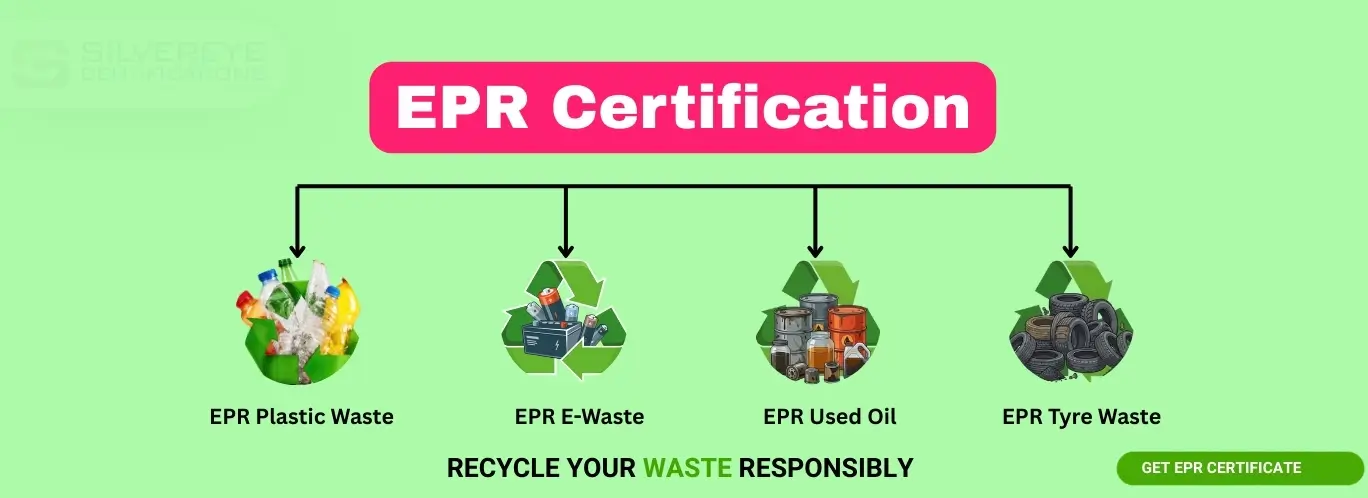
Extended Producer Responsibility (EPR) is a "cradle-to-grave" accountability framework mandated by the Ministry of Environment, Forest and Climate Change (MoEFCC). For Producers, Importers, and Brand Owners (PIBOs), EPR is no longer a voluntary "green" initiative; it is a critical legal license to operate within the Indian market.
Under the oversight of the Central Pollution Control Board (CPCB), businesses are now responsible for the end-of-life management of:
The EPR full form is Extended Producer Responsibility. It places the obligation of waste collection, recycling, and environmentally safe disposal on entities that introduce products into the market.
In simple terms: If you profit from a product, you must also manage its waste.
EPR is implemented under multiple waste-specific regulations in India, including:
All registrations, target tracking, and compliance reporting are carried out through the CPCB-managed EPR Portal, making the system fully digital and auditable.
The Central Pollution Control Board (CPCB) functions as:
EPR Certification issued through CPCB is legally required for continued business operations in regulated product categories.
Timely EPR Certification is essential to ensure regulatory compliance and uninterrupted market access.
| Entity Type | Applicability Under EPR Rules |
|---|---|
| Producers | Indian manufacturers placing EPR-regulated products or packaging into the domestic market are required to obtain EPR Certification and fulfil recycling obligations. |
| Importers | Any importer introducing EPR-covered products into India must obtain EPR Registration and comply with CPCB waste management and reporting requirements. |
| Brand Owners | Companies selling products under their own brand name are responsible for EPR compliance, regardless of whether manufacturing is done in-house or outsourced. |
| Online Sellers & Marketplaces | E-commerce platforms facilitating the sale of regulated products may be held accountable for ensuring EPR compliance of listed sellers. |
| Manufacturers & Assemblers | Entities assembling or manufacturing products, especially in the electronics and battery segments, must comply with EPR obligations based on product type and volume. |
EPR Certification is mandatory for any entity that introduces regulated products into the Indian market and places them in the hands of consumers.
| Type of EPR Certification | Applicable Products / Waste Category | Who Requires Registration |
|---|---|---|
| EPR Certification for Plastic Waste | Plastic packaging including rigid, flexible, multilayer, and compostable plastics | Plastic producers, importers, brand owners, and packaging users |
| EPR Certification for E-Waste | Electrical and electronic equipment such as TVs, mobiles, laptops, IT and consumer electronics | Manufacturers, importers, and brand owners of electronic products |
| EPR Certification for Battery Waste | Lithium-ion, lead-acid, portable, automotive, and EV batteries | Battery producers, importers, and battery-using OEMs |
| EPR Certification for Tyre Waste | New tyres, imported tyres, and tyres fitted on vehicles | Tyre manufacturers, importers, and vehicle importers |
| EPR Certification for Used Oil | Base oil, lubricating oil, and used oil generated from industrial and automotive use | Used oil producers, importers, and lubricant manufacturers |
Each type of EPR Certification has separate registration requirements, targets, and compliance obligations, all managed through the CPCB EPR Portal.
EPR Plastic Waste Management serves as a regulatory framework which mandates producers, importers and brand owners to collect and recycle and dispose of all plastic packaging waste which results from their products.
The Plastic Waste Management Rules require that recycling of plastic waste must be conducted at a rate which matches the amount of plastic packaging that businesses bring into the Indian market.
| Category | Type of Plastic Packaging |
|---|---|
| Category I | Rigid plastic packaging |
| Category II | Flexible plastic packaging |
| Category III | Multilayer plastic packaging |
| Category IV | Compostable plastic packaging |
Correct categorisation is critical, as EPR targets and compliance requirements vary for each category.
Plastic producers and brand owners must:
Plastic waste EPR targets are assigned annually based on sales volume and packaging category. These targets increase year-on-year and must be fulfilled either through authorized recyclers or valid recycling credits. Targets are non-transferable unless supported by CPCB-approved credit mechanisms.
The E Waste Management Rules establish requirements which apply to all manufacturers, importers and brand owners who operate in the electronic and electrical equipment market.
The rules require businesses to handle e-waste which they create after consumer use through environmentally responsible collection and recycling and disposal methods.
EPR Registration for e-waste is required for a wide range of products, including:
All collected e-waste must be channelized exclusively through authorized e-waste recyclers registered with the CPCB. Informal disposal, resale, or dismantling outside the approved system is not permitted under the EPR framework.
E-waste EPR targets are calculated based on the quantity of electronic products placed in the Indian market during the relevant financial year. Producers and importers are required to meet these targets annually and report compliance through the CPCB EPR Portal.
Non-fulfilment of targets can result in environmental compensation and regulatory action.
EPR Battery Waste Management is a mandatory compliance framework that requires producers, importers, and brand owners of batteries to ensure the collection, recycling, and environmentally sound management of battery waste generated after consumer use. The Battery Waste Management Rules govern the framework which the CPCB EPR Portal uses for its implementation.
Businesses who introduce batteries into the Indian market must fulfill their legal duty to achieve recycling targets which depend on their sales volume and battery type.
The Battery Waste Management Rules apply to:
Each battery category carries separate compliance and recycling obligations.
Producers and importers must:
Informal disposal or unregistered recycling is not permitted.
Battery EPR targets are assigned annually based on the quantity of batteries introduced into the market. Targets must be fulfilled through verified recycling or refurbishment certificates generated on the EPR Portal. Failure to meet assigned targets may result in penalties and environmental compensation charges.
EPR Tyre Waste Management is a regulatory requirement that obligates tyre producers, importers, and brand owners to ensure the collection, recycling, and environmentally safe disposal of end-of-life tyres generated in India. The framework is governed by the Tyre Waste Management Rules and enforced through the CPCB’s EPR Portal.
Any entity introducing new tyres into the Indian market is responsible for managing tyre waste in proportion to the quantity placed on the market.
EPR Registration for tyre waste is mandatory for:
Compliance applies regardless of whether tyres are sold individually or as part of a finished product.
End-of-life tyres must be collected and processed only through CPCB-authorized recyclers using approved recycling methods such as material recovery or regulated pyrolysis. Informal disposal is not permitted.
Tyre EPR targets are assigned annually based on the weight of tyres introduced into the market. These targets increase progressively each year and must be fulfilled within the prescribed compliance period to avoid penalties.
EPR Used Oil Management is a mandatory environmental compliance requirement that applies to producers and importers of base oil and lubricating oil in India. Under this framework, businesses are responsible for ensuring the collection, recycling, and environmentally sound management of used oil generated after consumption. The regulations are enforced through the CPCB’s EPR Portal.
EPR Registration for used oil is mandatory for:
Used oil must be collected and channelized only through CPCB-authorized recyclers. Recycling certificates generated by these recyclers are used to fulfil EPR targets on the EPR Portal.
Producers and importers are required to meet assigned EPR targets annually and submit compliance reports through the CPCB EPR Portal. Failure to comply may result in environmental compensation charges and regulatory action.
EPR Certification protects businesses from compliance risks while promoting responsible environmental practices.
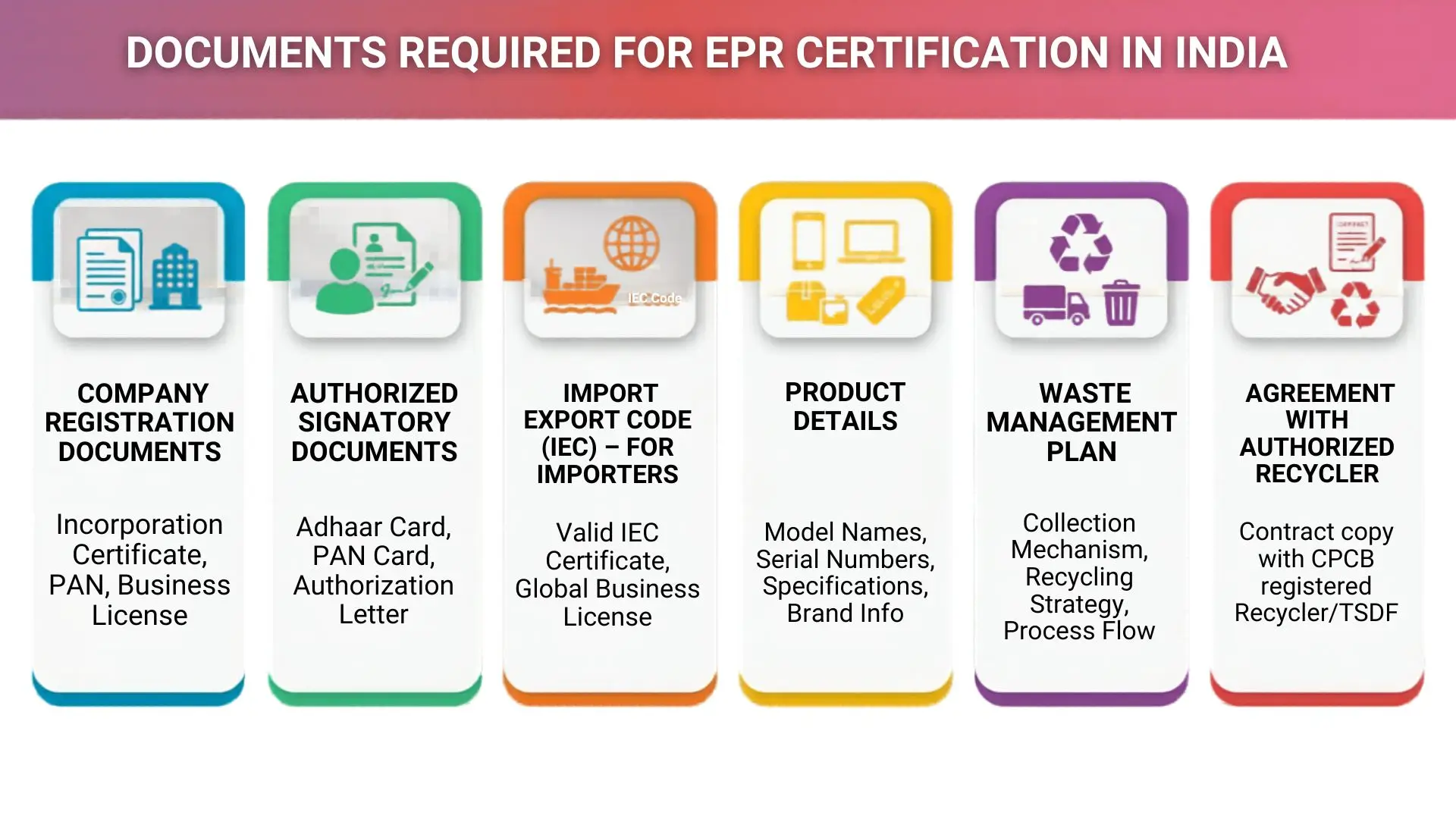
Submission of complete and accurate documents is essential to avoid delays or rejection of the EPR application.
Read More
| Cost Component | Description |
|---|---|
| Government Fees | Nominal statutory charges, if applicable (varies based on waste category and application type). |
| Consultancy Fees | Professional charges for preparing documents, filing applications, and handling CPCB queries. |
| EPR Target Fulfilment Cost | Cost of recycling or obtaining recycling credits depending on waste type (plastic, e-waste, batteries, tyres, used oil). |
| Annual Return Filing Charges | Fees for yearly compliance reporting on the CPCB EPR Portal. |
| Renewal or Amendment Charges | Costs associated with renewing the EPR Certificate or updating details (product categories, sales data). |
Note: The total EPR Certification cost in India varies based on product category, annual sales volume, and compliance strategy adopted (e.g., direct recycling vs. recycler credit purchase). Professional consultancy can help estimate accurate costs before application.
Timely compliance with EPR regulations is essential to avoid penalties and ensure uninterrupted business continuity.
| Aspect | Details |
|---|---|
| Validity of EPR Authorization | EPR Certificates are typically valid for a defined period (commonly 1–5 years) as per applicable waste rules and CPCB guidelines. |
| Renewal Process of EPR Certificate | Renewal applications must be filed through the CPCB EPR Portal before expiry, including updated sales data and compliance documents. |
| Amendments and Modifications in EPR | Changes in product categories, sales volumes, or business details require amendment applications on the EPR Portal. |
| Compliance During Validity Period | Continuous adherence to targets, annual return filing, and documentation updates are required throughout the certificate validity period. |
Silvereye Certifications helps businesses achieve smooth and compliant EPR Certification without regulatory risk.
EPR Certification is no longer a paperwork exercise—it is a core business compliance that directly impacts imports, sales continuity, and brand credibility. Whether you need EPR Registration for Plastic Waste, Electronic Waste, Battery Waste, Tyre Waste, or Used Oil, timely and accurate compliance is essential.
If you want your EPR License done right the first time, with zero regulatory risk, Silvereye Certifications can guide you through every step—strategically, compliantly, and efficiently.
EPR Certification is a mandatory approval that authorises producers, importers, and brand owners to comply with Extended Producer Responsibility rules for managing post-consumer waste in India.
The EPR full form is Extended Producer Responsibility. It is important because it legally makes businesses responsible for collecting and recycling the waste generated from their products.
The EPR Certificate is issued by the Central Pollution Control Board (CPCB) through its online EPR Portal after successful application and review.
Yes, Any importer introducing plastic packaging, electronics, batteries, tyres, or used oil into India must obtain EPR Registration before selling or distributing products.n
EPR applies to plastic packaging, electronic and electrical equipment, batteries, tyres, and used oil, as notified under respective waste management rules.
EPR targets are calculated based on the quantity of products or packaging placed in the Indian market, using declared annual sales data.
No. EPR targets must be fulfilled only through CPCB-authorized recyclers or valid recycling credits generated on the EPR Portal.
Failure to meet EPR targets can result in environmental compensation charges, regulatory notices, and possible suspension of EPR Registration.
EPR Certificates are generally issued for a fixed period, commonly ranging from 1 to 5 years, subject to continuous compliance and annual return filing.
While not mandatory, EPR Registration Consultation is strongly recommended due to complex waste categorisation, target calculations, and strict CPCB scrutiny.