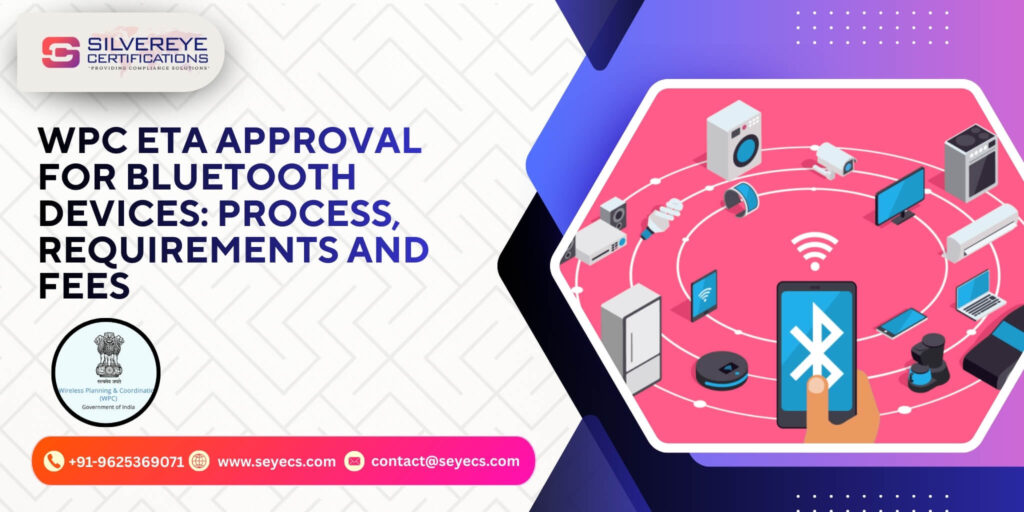
- WPC ETA Approval for Bluetooth devices are mandatory in India, governed by the Wireless Planning & Coordination Wing under DoT to regulate de-licenced frequency usage in the 2.4 GHz band.
- Most Bluetooth products qualify for the simplified "Self-Declaration" route, but importing without proper WPC certification leads to customs seizures, penalties up to ₹5 lakh, and product confiscation.
- The approval process involves NABL-accredited RF testing, AIR appointment, Saral Sanchar portal registration, and certificate download—typically completed in 4–6 weeks with correct documentation.
Introduction
A Delhi-based electronics importer once shared how a single shipment of 5,000 Bluetooth earbuds got stuck at Mumbai customs for 47 days. The reason? Missing WPC ETA Approval documentation. By the time the certification was sorted, the festive sales window had closed, costing the company over ₹12 lakh in lost revenue and demurrage charges.
This isn't an isolated incident. Since the Ministry of Communications tightened wireless equipment regulations in 2021, hundreds of businesses have faced similar roadblocks. Whether you're importing smartwatches from Shenzhen, launching a made-in-India speaker brand, or sourcing BLE fitness trackers for retail chains—understanding WPC ETA Approval for Bluetooth Devices isn't optional anymore. It's the difference between smooth customs clearance and regulatory nightmares.
Here's what most importers miss: Bluetooth operates on India's de-licenced frequency spectrum. The government doesn't charge you for using these airwaves, but there's a tradeoff. You must prove your device won't interfere with critical communication infrastructure—airports, defence networks, emergency services. That's where the Wireless Planning and Coordination Wing steps in, and why the WPC Certificate has become non-negotiable for market access.
What is WPC ETA Approval and Why Do Bluetooth Devices Need It?
WPC ETA (Equipment Type Approval) as India's regulatory passport for wireless devices. Without it, your Bluetooth product is technically illegal to import, sell, or even possess in commercial quantities. The approval confirms your device meets prescribed technical standards and won't cause radio frequency chaos in India's increasingly crowded wireless spectrum.
Understanding the Role of the Wireless Planning & Coordination (WPC) Wing
The WPC functions under India's Department of Telecommunications as the national radio frequency manager. Their job? Allocating spectrum, preventing interference, and enforcing compliance for anything that transmits or receives wireless signals—from satellite phones to your neighbour's Wi-Fi router.
For Bluetooth devices, WPC doesn't just rubber-stamp applications. They verify your product operates within the 2400–2483.5 MHz band limits, uses permissible transmission power (typically ≤100 mW EIRP for general devices), and employs proper frequency-hopping or adaptive techniques to minimize interference. The WPC test report from accredited labs becomes the technical foundation for this verification.
Why Bluetooth Devices Fall Under "De-Licenced" Frequency Bands?
India designates certain frequency ranges as "de-licenced"—meaning you don't need individual licences to operate devices there, unlike telecom operators who pay billions for 4G/5G spectrum. Bluetooth's 2.4 GHz band sits in this category, shared with Wi-Fi, microwave ovens, and various IoT gadgets.
But de-licenced doesn't mean unregulated. The National Frequency Allocation Plan 2022 clearly states that equipment using these bands must obtain WPC Approval. Why? Because the 2.4 GHz band is crowded. Poor-quality Bluetooth products with excessive power output or improper shielding can interfere with medical devices in hospitals, disrupt airport communications, or even affect military installations near borders.
A Bengaluru startup learned this the hard way when their cheap Bluetooth speakers from an uncertified supplier started causing Wi-Fi dropouts in a corporate campus. The issue? The devices exceeded power limits and lacked proper filtering. WPC certification would have caught this during pre-market testing.
Which Bluetooth Products Require WPC Certification?
The short answer: nearly all Bluetooth-enabled devices meant for commercial sale in India need approval. But the devil lives in technical specifications.
Common Categories: Headphones, Speakers, Smartwatches, and BLE Tags
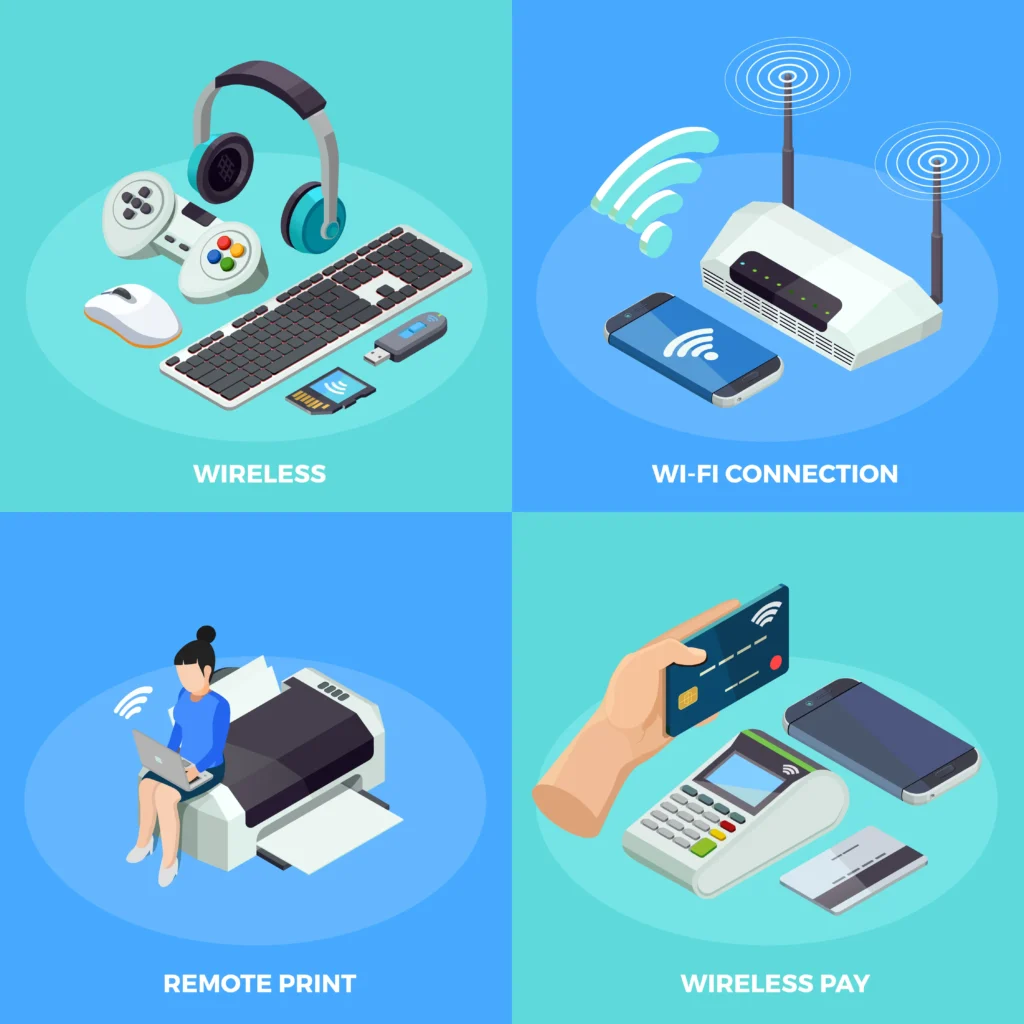
Wireless earbuds have become the poster child for WPC compliance issues. Here's what falls under mandatory certification:
Audio Devices:
- TWS (True Wireless Stereo) earbuds, over-ear headphones, neckband designs, and gaming headsets—all require WPC ETA Approval regardless of brand positioning or price point
- Bluetooth speakers face identical regulatory scrutiny whether you're importing ₹500 mini portable speakers or ₹50,000 premium home theatre systems with multi-channel audio
- Even hybrid devices combining wired and wireless modes need certification since the Bluetooth radio operates independently of cable connectivity
Wearable Technology:
- Smartwatches and fitness bands with Bluetooth connectivity fall squarely under WPC jurisdiction, covering everything from basic step trackers to advanced health monitors with ECG capabilities
- Devices with multiple radios—Bluetooth plus Wi-Fi or cellular—require separate approval consideration for each wireless technology, not bundled certification
- Smart rings, smart glasses, and other emerging wearable categories with Bluetooth communication must obtain WPC clearance before market entry
Industrial and IoT Applications:
- BLE (Bluetooth Low Energy) tags used for asset tracking, inventory management, or warehouse logistics need certification despite their low-power, seemingly innocuous nature
- Pet collars with Bluetooth tracking, elderly care monitoring devices, and smart locks with BLE connectivity cannot bypass WPC requirements
- One pharmaceutical company learned this expensively when they imported temperature loggers with BLE for cold chain monitoring, assuming "it's just a sensor" exempted them from wireless regulations—customs disagreed, and three months of regulatory back-and-forth delayed a critical vaccine distribution project, costing the company both time and credibility
Does the Bluetooth Version (4.0, 5.0, 5.2) Affect Approval?
Version-Agnostic Approval:
- Bluetooth version doesn't create separate approval categories—Classic Bluetooth, Bluetooth 4.0 LE, and the latest 5.3 with LE Audio all operate in the 2.4 GHz ISM band and require identical WPC ETA Approval
- WPC focuses on radio frequency transmission characteristics, not protocol features or codec choices, so upgrading from Bluetooth 4.2 to 5.0 doesn't fundamentally change the certification pathway
Testing Considerations by Version:
- Newer Bluetooth versions may require adjusted RF testing protocols—Bluetooth 5.0's optional 2 Mbps PHY mode receives more rigorous lab scrutiny due to higher data rates affecting spectrum usage
- Bluetooth 5.2's LE Audio with LC3 codec doesn't impact WPC requirements since codec processing happens after radio transmission, though labs verify the radio performance under audio streaming loads
Multi-Radio Devices Need Multiple Approvals:
- Dual-mode devices combining Bluetooth with other wireless technologies require separate approvals for each radio—a smart speaker with Bluetooth + Wi-Fi needs certification for both frequency bands
- Your WPC Certificate will explicitly list multiple operating frequencies (2.4 GHz for Bluetooth, 2.4/5 GHz for Wi-Fi), with each radio tested and approved independently even though they share the same physical device
The "ETA through Self-Declaration" Scheme for Bluetooth
This simplified pathway has transformed Bluetooth device approvals in India since its 2021 introduction. Understanding it properly saves both time and money.
Difference Between Regular ETA and Self-Declaration
| Aspect | Traditional WPC ETA | Self-Declaration Route |
| Processing | Manual verification by WPC officials with multiple review rounds | Automated system processing through Saral Sanchar portal |
| Timeline | 3–6 months | 48–72 hours (near-instant) |
| Review | Individual technical assessment for each application | Automated validation with minimal manual intervention |
| Eligibility | All wireless devices including high-power and specialized equipment | Low-risk devices in de-licenced bands (Bluetooth ≤100 mW EIRP in 2.4 GHz) |
| Documentation | RF test reports, technical specs, business docs, AIR authorization | Identical requirements—same documentation needed |
| Surveillance | Standard market compliance audits | Enhanced post-market audit rights—WPC can verify declarations anytime |
| Non-Compliance | Standard penalties under Wireless Telegraphy Act | Severe penalties for false declarations including certificate revocation |
Eligibility Criteria for Self-Declaration (2.4 GHz Band Limits)
Your Bluetooth device qualifies for Self-Declaration if it meets these technical parameters:
Frequency and Power Requirements:
- Operating frequency must fall entirely within 2400–2483.5 MHz—most Bluetooth devices use 2402–2480 MHz, comfortably within limits
- Power output cannot exceed 100 mW EIRP (Equivalent Isotropic Radiated Power) or 20 dBm—standard Bluetooth Class 2 devices transmit at 2.5 mW, well below the threshold
- Device must employ proper frequency-hopping spread spectrum (FHSS) or adaptive frequency hopping (AFH) as per Bluetooth SIG specifications, confirmed in your RF test report
Additional Compliance Evidence:
- Products must carry valid FCC or CE certification from their country of origin—this acts as preliminary evidence of design compliance before WPC approval
- International certifications demonstrate the device already passed rigorous testing in established regulatory frameworks
Devices Outside Self-Declaration Scope:
- Combo devices with high-power radios—Bluetooth + cellular modems above 250 mW—typically require regular ETA with individual technical review
- Specialized equipment like Bluetooth-enabled medical devices, aviation communication tools, or defence applications often need traditional ETA pathway with deeper technical scrutiny
Step-by-Step Process to Get WPC ETA Approval
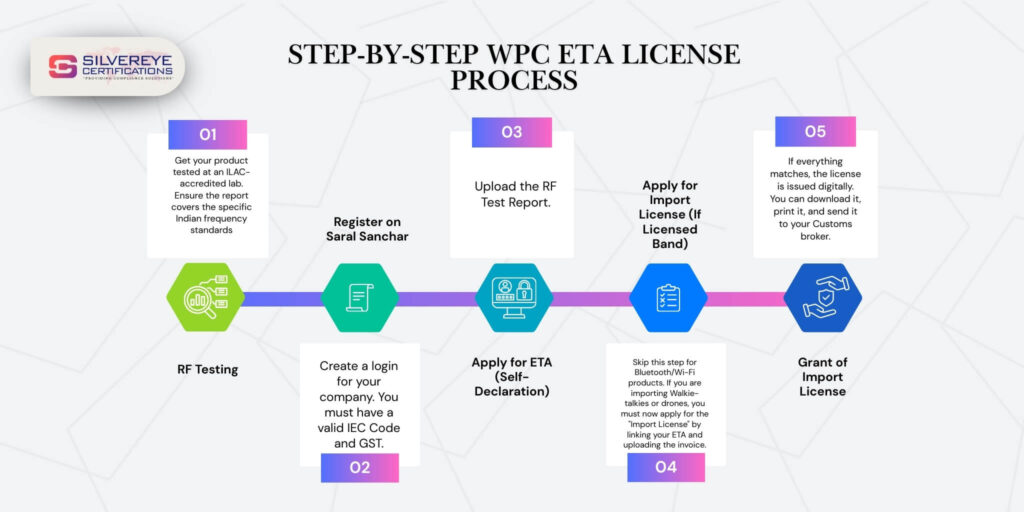
Step 1: RF Testing from an Accredited Lab
Before applying, your Bluetooth device must undergo Radio Frequency (RF) testing. This cannot be done just anywhere; you must use a laboratory accredited by NABL (India) or ILAC (International).
- Standards: Testing typically follows ETSI EN 300 328 or FCC Part 15 protocols.
- The Goal: The lab will generate a test report confirming compliance with India’s National Frequency Allocation Plan. Ensure the report explicitly covers WPC technical parameters to avoid rejection.
Step 2: Appointing an Authorized Indian Representative (AIR)
Foreign manufacturers cannot file for WPC approval directly. You must appoint an Authorized Indian Representative (AIR) to take legal responsibility for the device's conformity.
- Who can be an AIR? A local office, importer, distributor, or a compliance agency like Silvereye Certifications.
- Requirements: The AIR must hold a valid GST registration and an Import Export Code (IEC). You will need to provide a formal Letter of Authorization (LoA) to nominate them.
Step 3: Registering on the Saral Sanchar Portal
All applications are processed digitally through the Saral Sanchar portal. First-time applicants must create a company profile using their PAN, GST, and IEC details.
- Category Selection: Once registered and logged in, navigate to the "ETA through Self-Declaration" section and select the "RF Equipment in De-licensed Band" category specifically for Bluetooth devices.
- Note: Ensure your GSTN authentication is successful, as this validates the profile.
Step 4: Application Submission and Government Fees
Fill in the technical details (frequency, power output in dBm) exactly as they appear in your RF test report. Upload the required PDFs, including the test report, product technical literature, and the signed LoA.
- Government Fees: The standard fee for ETA Self-Declaration is typically ₹10,000. (Note: Fee structures may vary for specific import categories, so verify the latest notification).
- Submission: Once paid, the system generates a unique Application Reference Number for tracking.
Step 5: Final Verification and Certificate Download
The WPC system runs an automated verification of the submitted data. Since the "Self-Declaration" route is streamlined, successful applications are processed quickly (often within 48-72 hours).
- The Certificate: Once approved, you can download the WPC ETA Certificate directly from the portal.
- Usage: The certificate includes a unique ID (e.g., WPC/ETA/SD/XXXXX). This ID must be present on your product packaging and is mandatory for customs clearance and listing on e-commerce platforms.
Checklist of Required Documents for WPC ETA Approval
Getting your paperwork right the first time is crucial to avoid application rejections. The WPC wing is strict about documentation; even a small typo in a model number or a missing signature can cause delays.
Technical Documents
These are the most critical documents. They prove your device actually works within the allowed Bluetooth frequencies.
- RF Test Report: This must come from an ILAC or NABL accredited laboratory. It should specifically cover the 2.4 GHz spectrum (Bluetooth band) and reference standards like ETSI EN 300 328 or FCC Part 15.
- Tip: Ensure the report includes the "Measurement of Radio Emissions" and clearly states the Output Power and Frequency Range.
- Technical Data Sheet (Specification Sheet): A document detailing the technical characteristics of the device. It must explicitly list:
- Frequency Range (e.g., 2402 – 2480 MHz)
- Modulation Type (e.g., GFSK for BLE)
- Output Power (in dBm)
- Antenna Gain
Business & Legal Documents (For the Applicant)
Since a foreign manufacturer cannot apply directly, these documents validate the Indian entity (Authorized Indian Representative) applying on their behalf.
- GST Registration Certificate: Proof of the Indian applicant's tax registration.
- Import Export Code (IEC): Mandatory for anyone importing goods into India.
- Company PAN Card: The Permanent Account Number of the Indian company.
- Authorized Signatory ID: A government-issued ID (Aadhar Card, Passport, or Voter ID) of the person authorized to sign the application on the company's behalf.
Authorization Documents
If the manufacturer is outside India, they must formally authorize the Indian party to handle the compliance.
- Letter of Authorization (LoA): A formal letter on the foreign manufacturer’s letterhead. It must:
- Be addressed to the WPC Wing.
- Clearly state that the Indian company is authorized to apply for ETA on their behalf.
- Include the specific model numbers being applied for.
- Be signed and stamped by a senior executive of the manufacturing company.
Product Identification
- Product Photos: Clear images of the device.
- Label/Marking Photo: A close-up photo showing the product label where the model number and brand name are printed.
- User Manual: A PDF copy of the manual (English) is often requested to cross-verify features.
Common Challenges and How to Avoid Them
Avoiding these three common pitfalls can save you weeks of delay and prevent application rejection.
Invalid Test Reports: Why Lab Choice Matters
Not all ILAC or NABL accredited labs are equal. WPC frequently rejects reports that technically meet international standards but fail to address India’s specific National Frequency Allocation Plan (NFAP) clauses.
- The Fix: Verify that your lab’s accreditation scope explicitly covers "wireless communication equipment testing in the 2.4 GHz band."
- Recency Rule: While WPC technically accepts reports up to 2 years old, reports older than 12 months face higher scrutiny. Always submit fresh data to ensure smooth processing.
Frequency & Power Mismatches
Precision is non-negotiable. A common reason for rejection is a discrepancy between the values in the Test Report and the values entered in the Application Form.
- Frequency: Do not generalize. If your test report says 2402–2480 MHz, enter exactly that. Do not simply write "2.4 GHz" or a center frequency like "2450 MHz."
- Power Output: Do not round up figures. If the report shows 18.5 dBm (approx 70 mW), declare exactly that. Rounding up to "100 mW" creates a data mismatch that the system will flag as a compliance violation.
Delays Due to Incorrect AIR Nomination
Many importers mistakenly appoint freight forwarders as their Authorized Indian Representative (AIR). Since forwarders lack technical knowledge, they cannot answer WPC’s technical queries, causing applications to stall.
- GST Risk: The AIR must have an active GST registration. If the AIR’s GST is suspended (even for unrelated reasons), your application is automatically rejected.
- The Fix: Appoint a specialized compliance consultant or a technically capable distributor who understands the product specs and maintains valid legal standing.
WPC ETA Approval: Timeline & Cost
| Stage / Activity | Estimated Time | Estimated Cost (INR) | Notes |
| 1. RF Testing (Lab) | 2 – 3 Working Days | ₹15,000 – ₹50,000 | Depends on the lab (NABL/ILAC) and device complexity. |
| 2. Documentation Setup | 1 – 2 Days | -- | Time to organize LoA, Technical Data Sheets, and AIR nomination. |
| 3. WPC Official Fee | Instant (Online) | ₹10,000 per model | This is the statutory fee paid to the Govt of India (BharatKosh). |
| 4. Application Processing | 48 – 72 Hours | -- | For "Self-Declaration" route, approval is automated and fast. |
| 5. Professional / AIR Fees | N/A | ₹10,000 – ₹25,000 | Optional. Fees charged by consultants to handle the process or act as AIR. |
WPC ETA Validity & Renewal Guidelines
| Aspect | Status / Rule |
| Certificate Validity | Lifetime (No Expiry Date). The certificate remains valid as long as the product model and technical specifications are unchanged. |
| Renewal Requirement | Not Applicable. There is no annual renewal fee or process for WPC ETA. |
| Change in Model Name | New ETA Required. Even if the internal hardware is identical, a new model name requires a fresh application. |
| Change in Hardware/RF | New ETA Required. Any change in the Bluetooth chipset, antenna, or frequency output voids the old certificate. |
| Transferability | Allowed. Once an ETA is generated for a specific model, other importers can use the same ETA to import that device without applying again. |
Conclusion: Streamlining Your Bluetooth Product Launch in India
Obtaining WPC ETA Approval doesn't have to be a regulatory headache. With the Self-Declaration pathway, proper lab selection, and accurate documentation, most Bluetooth products can clear certification smoothly in 4–6 weeks.
View this certification not just as a legal requirement, but as your "regulatory insurance." A valid ETA ensures frictionless customs clearance, enables immediate listing on e-commerce platforms like Amazon and Flipkart, and protects your brand from post-market legal complications.
Ready to Simplify Compliance?
Silvereye Certifications has guided over 200 electronics companies through WPC approvals since 2018. Whether you are launching TWS earbuds or industrial BLE sensors, we handle the complex testing, AIR nomination, and submission process so you can focus on your market launch.
Frequently Asked Questions
Is WPC approval mandatory for Bluetooth devices?
Yes. Even though Bluetooth uses a "de-licensed" band (2.4 GHz), importing or selling these devices in India requires an ETA Certificate to prove they don't cause interference.
Can foreign manufacturers apply directly?
No. You must appoint an Authorized Indian Representative (AIR)—a local entity with a valid GST and Import Code (IEC)—to apply and hold the certificate on your behalf.
What is "ETA through Self-Declaration"?
It is a fast-track digital process for Bluetooth/Wi-Fi devices. You upload your test report to the Saral Sanchar portal, and the certificate is auto-generated without manual technical evaluation.
Do I need to send samples to India for testing?
Not usually. WPC accepts reports from international ILAC-accredited labs. However, if your report misses specific Indian clauses, you will need to re-test at an NABL lab in India.
Does the certificate expire?
No. WPC ETA has lifetime validity for that specific model. You only need a new one if you change the hardware or model name.
Will Customs clear my shipment without it?
No. Customs officers track wireless imports. Without a valid ETA number on your paperwork, shipments are detained or seized.
How long does the process take?
The government approval takes 48–72 hours. However, preparing documents and testing (if needed) usually makes the full timeline 2–3 weeks.
Is WPC different from BIS Certification?
Yes. WPC checks radio frequency, while BIS checks electrical safety. Most Bluetooth gadgets (speakers, earbuds) need both.
Can I import a single unit without WPC?
Technically, yes, under a personal exemption. But to list products on Amazon/Flipkart or import commercially, you strictly need the full ETA.
One certificate for all models?
No. WPC approval is model-specific. Every unique model name requires its own separate application and fee, even if the internal tech is similar.