+91-9625369071 +91-9625369071 contact@seyecs.com
India

BIS ISI Certification

All Product Categories, Process, Fees & 2026 Regulatory Updates — Complete Guide

BIS ISI Certification is a mandatory product quality licence issued by the Bureau of Indian Standards (BIS) under the BIS Act, 2016. It certifies that a product complies with the applicable Indian Standard (IS) and meets the required quality, safety, and performance requirements. Manufacturers of regulated products—including cement, steel, electrical cables, LPG cylinders, automobile tyres, and water supply pipes—must obtain BIS ISI Certification before selling their products in India. Products covered under Quality Control Orders (QCOs) are legally required to carry the ISI Mark, ensuring compliance with Indian regulations and consumer safety standards.

Service product image

+91-9711509500

Meenakshi Rawat

Compliance Expert

IN  +91
Home Service BIS ISI Certification
BIS ISI Mark Scheme — Compulsory Certification

What Is BIS ISI Certification and Why Does It Matter?

The ISI Mark — standing for Indian Standards Institute — is India's most recognised quality mark for manufactured goods. Administered by the Bureau of Indian Standards (BIS) under the BIS Act 2016, ISI certification tells buyers that a product has been manufactured and tested against a specific Indian Standard (IS). It is not voluntary for the products covered under Quality Control Orders (QCOs). If your product falls under a mandatory category, you cannot legally manufacture or sell it in India without the ISI licence.

BIS ISI Mark Scheme Products – Compulsory Certification Categories

Product categories under mandatory ISI certification as per Bureau of Indian Standards · Updated 2026

S.No. Product Category Coverage Status
1 Cement All varieties manufactured or sold in India (OPC, PPC, PSC, SRC, HAC, composite, white, hydrophobic, oil well, rapid hardening, low heat, microfine, refractory, etc.) Active
2 Household electrical goods Circuit breakers, RCCB/RCBO, energy meters, CFL lamps, electric irons, immersion heaters, room heaters, electric stoves, domestic switches, tungsten filament lamps, PVC insulated cables, elastomer insulated cables Active
3 Batteries Multi-purpose dry batteries Active
4 Food & Related Products Infant formula, follow-up formula, processed cereal-based complementary foods (de-notified from compulsory BIS certification in 2024; now regulated under FSSAI) De-notified
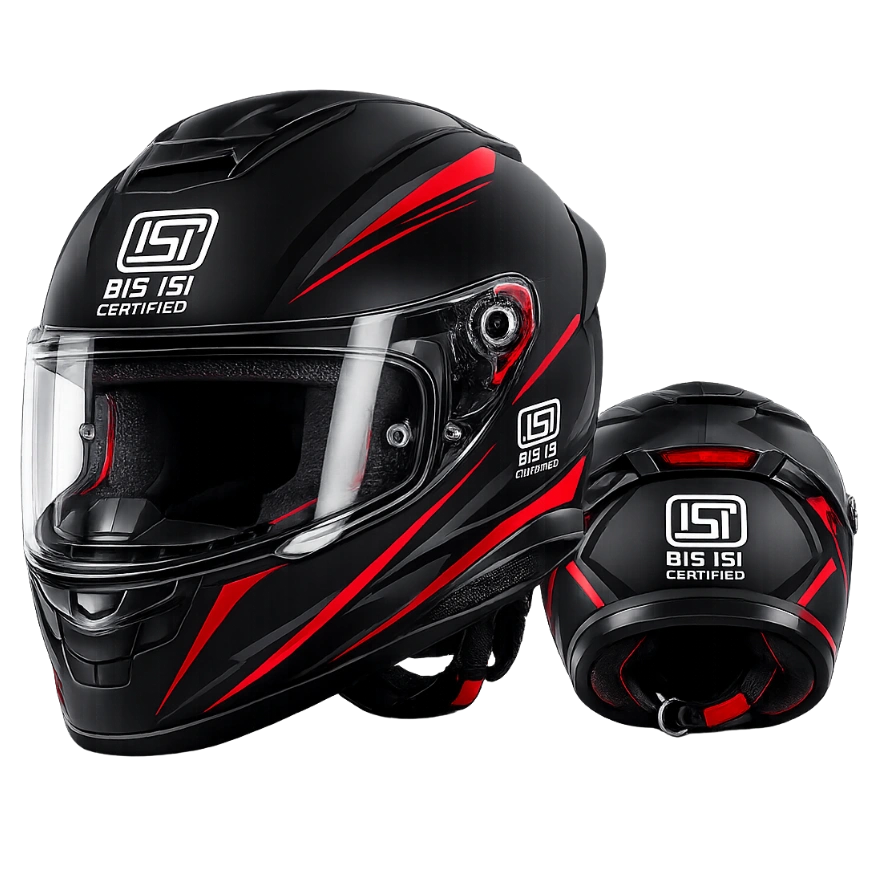
5 Automobile & Accessories Automotive safety glass, seat belts, tyres (two-wheelers, passenger cars, trucks), automotive lighting, reflective devices, helmets Active
6 Steel & Steel Products Hot rolled steel strips/plates/sections, cold rolled strips, reinforcement bars (TMT bars), galvanised steel sheets, stainless steel utensils, LPG cylinders Active
7 Chemicals & Fertilizers Chemical fertilizers (urea, SSP, CAN, MOP), industrial alcohol, calcium carbide, industrial grade hydrogen peroxide Active
8 Water Supply & Sanitation PVC pipes, HDPE pipes, DI pipes, valves, water meters, sanitary ware, plastic fittings for potable water Active
9 LPG Equipment LPG cylinders, valves, pressure regulators, hoses for domestic & commercial use Active
10 Packaged Drinking Water & Natural Mineral Water Packaged drinking water, natural mineral water (de-notified from compulsory BIS certification in 2024; now regulated under FSSAI) De-notified
11 Medical Devices & Safety Equipment Surgical dressings, condoms, blood bags, protective helmets Active
12 Domestic Gas Appliances LPG domestic cooking stoves, hot plates, gas meters Active
13 Electrical Transformers & Power Equipment Distribution transformers, current transformers, voltage transformers, power cables (HV), switchgear Active
14 Textiles & Rubber Products Conveyor belts, rubber hoses, rubber footwear, safety footwear Active
Note on the Above Tables The product categories and IS standards listed above are sourced from the BIS official list of products under Scheme I (ISI Mark Scheme), as published on bis.gov.in. The list is periodically updated via gazette notifications. Always verify the exact notification applicable to your product before proceeding with certification. Silvereye Certifications reviews these updates regularly and can confirm the current status for your specific product category.

Who Needs BIS ISI Certification?

ISI certification is required for any manufacturer, importer, or brand owner whose product falls under a category notified under a Quality Control Order (QCO) issued by the Government of India. Here is a practical breakdown:

Indian manufacturers producing any product listed in the mandatory categories above


Importers bringing notified products into India — the BIS licence must be obtained before customs clearance
Foreign manufacturers supplying Indian buyers, OEM buyers, or government tenders for regulated products
Repackers or brand owners whose products are manufactured under contract but sold under their label
Public sector undertakings and government contractors supplying cement, steel, pipes, or electrical items in infrastructure projects
Domestic vs. Foreign Manufacturer Domestic manufacturers apply for ISI licences through BIS regional offices. Foreign manufacturers must apply through the BIS Foreign Manufacturers Certification Scheme (FMCS). The process, fees, and factory inspection requirements differ. Silvereye Certifications handles both domestic and FMCS applications.

What Does the ISI Mark Look Like?

The ISI Mark is a registered trademark of the Bureau of Indian Standards. It appears as the letters 'ISI' enclosed within a diamond shape, accompanied by the applicable IS number and the BIS licence number. Each ISI Mark on a product must be:

Clearly embossed, stamped, or printed on the product or its packaging
Followed by the IS number (e.g., IS 1786 for TMT steel bars)
Accompanied by the BIS licence number issued to the manufacturer
Legible and permanent — temporary or removable marks are not acceptable

Step-by-Step: How to Get BIS ISI Certification

The ISI certification process under BIS Scheme I involves the following structured steps. The typical timeline for domestic manufacturers ranges from 45 to 90 days depending on product complexity and factory readiness.

Step Activity Who Does It Typical Time
1 Identify the applicable IS standard and QCO for your product category Applicant / Consultant 1–2 days
2 Prepare your factory for BIS audit — production process, in-house testing, quality records Applicant 2–4 weeks
3 Submit online application on the BIS portal (manak.bis.gov.in) with required documents and fee Applicant / Consultant 1–3 days
4 BIS Factory Audit — a BIS officer inspects manufacturing facilities, raw material controls, and QC systems BIS Officer 1–3 days on-site
5 Sample collection — BIS officer draws product samples for testing at BIS-recognised laboratories BIS Officer During audit
6 Product testing against applicable IS standard BIS Lab / Recognised Lab 2–4 weeks
7 Evaluation of audit report + test results by BIS regional office BIS Regional Office 2–4 weeks
8 Grant of ISI licence if all parameters are satisfactory — licence number issued BIS 1 week
9 Applicant imprints ISI Mark with licence number on all certified products Manufacturer Ongoing

Documents Required for BIS ISI Certification

Having all documents ready before applying significantly reduces back-and-forth with BIS and speeds up grant of licence. Below is the standard document checklist:

S.No. Document Details / Notes
1 Duly filled BIS application form Form available on BIS portal — specific to product category
2 Proof of establishment / incorporation Certificate of incorporation, partnership deed, or proprietorship declaration
3 Factory address proof Ownership deed, lease agreement, or NOC from local authority
4 Plant and machinery list Complete list with make, model, and capacity of production equipment
5 In-house testing equipment list List with calibration certificates — must match requirements of the IS standard
6 Flowchart of manufacturing process Step-by-step production process from raw material to finished goods
7 Raw material test reports Recent test reports of incoming materials used in production
8 In-house product test reports Self-test results against the applicable IS standard
9 Layout plan of factory Floor plan showing production line, QC lab, raw material and finished goods storage
10 Qualified personnel details Details of technical staff handling QC and production — qualifications required
11 Bureau fee payment proof Online payment receipt from BIS portal
12 Any existing BIS licence (if renewal) Previous licence copy for renewal applications

BIS ISI Certification Fees

BIS ISI certification involves two main fee components: an application/grant fee and an annual licence fee based on turnover. Fees vary by product category. Below are approximate indicative ranges; actual fees should be confirmed from the BIS official fee schedule.

Fee Head Domestic Manufacturer Foreign Manufacturer (FMCS)
Application Fee ₹1,000 – ₹15,000 (varies by category) USD 1,000 – USD 5,000
Marking Fee (Annual) 0.1% – 0.5% of turnover of licensed product Same basis
Testing Charges ₹5,000 – ₹50,000+ (depends on IS standard) Same + travel costs
Factory Audit Fee ₹10,000 – ₹30,000+ (domestic travel) USD 2,000 – 5,000 + travel
Renewal Fee As per BIS schedule As per BIS FMCS schedule
2026 Fee Note BIS revises its fee schedule periodically. The indicative figures above are based on publicly available information as of June 2026. Always confirm current fees from the official BIS portal at manak.bis.gov.in before making payment. Silvereye Certifications can provide a complete, product-specific fee estimate as part of our initial consultation.

Licence Validity and Renewal for BIS ISI Certification

A BIS ISI Certification licence issued under Scheme-I is generally valid for one year from the date of grant and must be renewed periodically to maintain compliance. Manufacturers are required to continue meeting the applicable Indian Standard (IS), pay marking fees, and comply with BIS surveillance requirements. Timely renewal helps avoid interruptions in production, sales, and use of the ISI Mark.

Aspect Details
Initial Validity 1 year from the date of grant (renewals are annual)
Renewal Window Apply for renewal 30–60 days before expiry to avoid interruption
Renewal Basis Compliance with IS standard, satisfactory surveillance findings, and marking fee payment
Surveillance BIS conducts periodic factory surveillance and market sample testing during the licence period
Cancellation BIS can suspend or cancel licence for non-compliance, substandard products, or misuse of the ISI Mark
Re-grant After Cancellation Fresh application required; cancellation history is taken into account

Penalties for Selling Without BIS ISI Certification

Manufacturing or selling a product that is notified under a QCO without a valid ISI licence is a criminal offence under the BIS Act 2016. The consequences are serious:

Imprisonment up to 2 years, or a fine up to ₹2 lakh, or both — for first conviction
Repeat offenders face enhanced penalties under the BIS Act
Products can be seized, seized stocks destroyed, and entire consignments confiscated
Sellers, distributors, and brand owners can all be held liable — not just the manufacturer
E-commerce platforms are increasingly being monitored by BIS for non-compliant listings of mandatory products
Market Enforcement is Intensifying in 2026 BIS has stepped up enforcement operations across physical markets, construction sites, and e-commerce platforms. Products found without valid ISI licences — including steel bars, electrical cables, PVC pipes, and helmets — are being seized in surprise inspections. Ensure your products and your suppliers' products are properly licensed.

How Silvereye Certifications Makes BIS ISI Certification Smoother

Getting a BIS ISI licence involves regulatory paperwork, factory readiness, laboratory coordination, and BIS correspondence — all at the same time. For most manufacturers, especially first-time applicants or those expanding product lines, this is where delays and rejections happen.

Silvereye Certifications has worked with manufacturers across cement, electrical, steel, automotive, and LPG categories to successfully obtain ISI licences. Our team brings direct experience of BIS audit processes, IS standard requirements, and regional office procedures.

What We Do How It Helps You
Product & QCO Eligibility Check We confirm whether your product needs ISI certification and which IS standard applies — before you spend time on the wrong path.
Factory Gap Assessment We audit your current production setup against BIS requirements and tell you exactly what needs to be fixed before the BIS officer arrives.
Document Preparation We prepare and review your complete application package — reducing rejections due to missing or incorrect paperwork.
Application Filing on BIS Portal We file the online application, coordinate fee payments, and manage all BIS communication on your behalf.
Lab Coordination We arrange product testing at BIS-recognised labs and ensure test reports meet format and content requirements.
Audit Support Our team prepares your QC team for the BIS factory audit — reducing surprises and improving first-time pass rates.
Follow-up to Licence Grant We track your application status and follow up with BIS offices to ensure timely grant of licence.
Renewal & Compliance Support We remind you before licence expiry and manage annual renewals so your production is never disrupted.

Frequently Asked Questions — BIS ISI Certification

No. ISI certification is mandatory only for product categories notified under a Quality Control Order (QCO) by the Government of India. For non-notified products, ISI certification is voluntary. The complete list of mandatory categories is published on the BIS website.

No. Packaged drinking water has been de-notified from BIS compulsory ISI certification. It is now regulated under FSSAI (Food Safety and Standards Authority of India). You need an FSSAI licence, not a BIS ISI licence, for packaged water.

For domestic manufacturers, the typical timeline is 45 to 90 days from application submission, assuming the factory is audit-ready and test reports are satisfactory. Foreign manufacturers under FMCS may take 3 to 6 months due to overseas inspection scheduling.

Yes, but the BIS licence must be valid. E-commerce platforms including Amazon India, Flipkart, and IndiaMART are required to verify BIS compliance for mandatory product categories. BIS has been actively monitoring and directing removal of non-compliant listings.

BIS (Bureau of Indian Standards) is the authority. ISI is the specific certification scheme (Scheme I) under BIS for industrial and consumer products. The ISI Mark is the quality mark that appears on products once certified. BIS also runs other schemes like CRS (for electronics) and FMCS (for foreign manufacturers).

If you are importing products that fall under a mandatory ISI category, you need to ensure the foreign manufacturer has a valid BIS FMCS licence before the goods arrive at the Indian port. Customs authorities check BIS compliance for notified products. Importing without a valid ISI licence can result in goods being held or confiscated.

Yes. Each BIS ISI licence is specific to a manufacturing location. If you produce the same product at two factories, you need two separate licences — one for each plant.

You must immediately stop affixing the ISI Mark and stop selling products as ISI certified. You will need to apply fresh for reinstatement. BIS may impose conditions before granting a new licence. Continued use of the ISI Mark after cancellation is a criminal offence.

ISI certification is a requirement for the Indian domestic market. For exports, the requirement depends on the importing country's regulations. Some countries and buyers do recognise the ISI Mark as a quality indicator. BIS also has bilateral MoU arrangements with some countries' standards bodies.

Total costs depend on your product category, factory size, and whether additional lab testing is needed. A typical domestic ISI certification engagement costs between ₹50,000 and ₹3,00,000 including all government fees, lab charges, and audit costs. Silvereye Certifications provides a product-specific estimate after an initial review.

Talk To Our Regulatory Compliance

Speak directly with our compliance experts and get professional guidance for BIS, BEE, CDSCO, EPR, WPC, TEC/MTCTE, EMI/EMC Testing and other regulatory approvals.

OUR PRODUCTS

Featured Products

Explore our certification and compliance solutions.

Fixed General Purpose LED Luminaires BIS

Learn More →

BIS Certification for Bottled Water Dispensers

Learn More →

Class A Medical Device Registration List India

Learn More →

BIS Certification for Vacuum Cleaners in India

Learn More →

Which Plastic Packaging Products Under EPR

Learn More →

BIS Certification for Electronic Products

Learn More →
Client Testimonials

Trusted By Businesses Across India

See what our clients say about our compliance and certification services.

Verified Customer
★★★★★

Silvereye helped us complete our BIS Certification quickly and professionally.

Rajesh Kumar
Electronics Manufacturer
Verified Customer
★★★★★

Their CDSCO team handled all documentation and approvals without delays.

Amit Sharma
Medical Device Importer
Verified Customer
★★★★★

Excellent support for EPR Registration and annual compliance management.

Priya Verma
Brand Owner
Verified Customer
★★★★★

Very responsive team. Our registration was completed before expected timelines.

Deepak Singh
Startup Founder
Verified Customer
★★★★★

Silvereye helped us complete our BIS Certification quickly and professionally.

Rajesh Kumar
Electronics Manufacturer
Verified Customer
★★★★★

Their CDSCO team handled all documentation and approvals without delays.

Amit Sharma
Medical Device Importer