Home
›
CDSCO Cosmetic Registration
What Is CDSCO Cosmetic Registration?
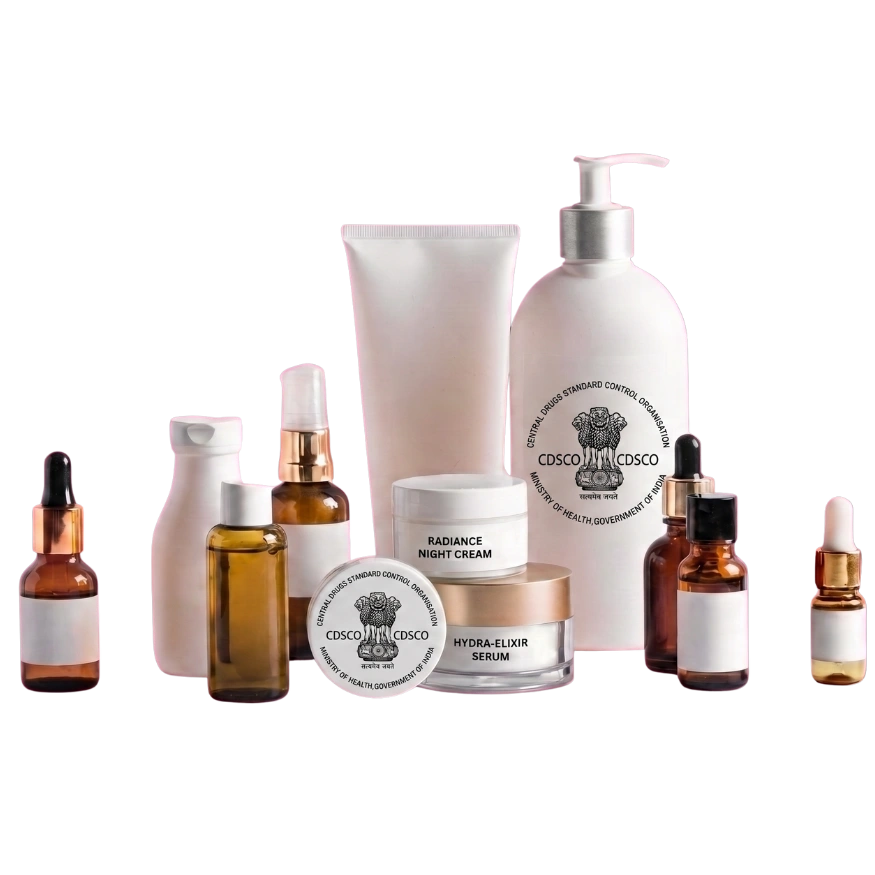
CDSCO Cosmetic Registration is the formal licensing and approval process that every cosmetic business — whether a foreign brand importing into India or a domestic manufacturer — must complete before placing products in the Indian market. It is administered under the Drugs and Cosmetics Act, 1940 and the New Drugs and Cosmetics Rules, 2020, which replaced the older 1945 rules and brought a significantly more structured regulatory framework for cosmetics.
The Central Drugs Standard Control Organization sits at the apex of cosmetic regulation in India. For domestic manufacturers, the day-to-day licensing is managed by State Licensing Authorities (SLAs) under the oversight of CDSCO. For importers, CDSCO's Central Licence Approving Authority (CLAA) directly issues and manages import licences.
In 2026, the importance of getting this right has only grown. India's cosmetics market crossed USD 20 billion and continues expanding. The government has tightened enforcement at ports, increased market surveillance of cosmetic products, and regularly updates the list of prohibited ingredients and restricted substances. Operating without a valid cosmetic registration is not just a commercial risk — it is a criminal offence under the Drugs and Cosmetics Act, with penalties including imprisonment and fines.
2026 Regulatory Note
The New Cosmetics Rules, 2020 introduced a completely revamped framework for cosmetic licences. If you are operating under an older licence issued under the 1945 rules, verify its validity and whether migration to the new framework is required. Silvereye Certifications can review your existing registration and advise accordingly.
What Qualifies as a Cosmetic Under Indian Regulations?
Common Product Categories Classified as Cosmetics in India
Skin care products — creams, lotions, gels, serums, toners, moisturisers, sunscreens (SPF-based products may need additional review)
Hair care products — shampoos, conditioners, hair oils, hair dyes, relaxers, straighteners
Colour cosmetics — lipsticks, foundations, concealers, eye shadows, mascara, nail polishes
Oral care — toothpastes, mouthwashes (note: some oral care products may be classified as drugs depending on therapeutic claims)
Perfumes and deodorants — eaux de toilette, body sprays, roll-ons, antiperspirants
Baby cosmetics — baby oils, baby lotions, baby shampoos, baby powders
Men's grooming — shaving creams, aftershaves, beard oils
Herbal and ayurvedic cosmetics — if not making therapeutic claims; otherwise regulated as Ayurvedic drugs under separate rules
Borderline Products Warning
Products that combine cosmetic and drug characteristics — such as anti-dandruff shampoos with medicated actives, sunscreens with SPF above 30 making UV protection claims, or skin lightening creams with prescription actives — may be regulated as drugs rather than cosmetics. Always get a regulatory classification opinion before filing.
CDSCO Cosmetic Licence Forms: COS-1, COS-2, COS-5, COS-8, and COS-9 Explained
The New Cosmetics Rules, 2020 introduced a standardised form-based system for cosmetic licences. Each form corresponds to a specific type of applicant and activity. Using the wrong form is one of the most common mistakes that leads to application rejection. Here is a clear breakdown of all five forms:
Import Licence for Cosmetics —
Single Importer
COS-1 is the application form for obtaining an import licence for cosmetics by a company or individual who acts as the importer in India. The licence is issued by CDSCO's Central Licence Approving Authority. Any foreign brand that wants to import and sell cosmetics in India needs either a COS-1 licence or must appoint a licenced Indian importer. The COS-1 licence authorises the importer to import specified cosmetic products from specified foreign manufacturers.
Import Licence for Cosmetics —
Multi-Product / Multiple Manufacturers
COS-2 is used when the importer sources cosmetics from multiple overseas manufacturers or wants a consolidated import licence covering several product lines. It functions similarly to COS-1 but is designed for broader import operations. It is also used when an Indian entity acts as an authorised distributor for multiple foreign cosmetic brands.
Manufacturing Licence for Cosmetics —
New Applicant
COS-5 is the primary form for obtaining a manufacturing licence for cosmetics from the State Licensing Authority (SLA). Any company setting up a new cosmetic manufacturing facility in India must apply in COS-5. This licence covers the categories of cosmetics that the manufacturer is approved to produce and is tied to the specific premises and equipment.
Renewal of Cosmetic
Manufacturing Licence
COS-8 is the renewal form for an existing cosmetic manufacturing licence obtained under COS-5 or under the older 1945 rules framework. Manufacturing licences must be renewed periodically, and COS-8 triggers that process. The SLA reviews the current compliance status, any inspection findings, and updated product scope before issuing the renewed licence.
Cosmetic Loan Licence —
Contract Manufacturing
COS-9 is for cosmetic loan licences, which allow a brand owner or marketing company to manufacture cosmetics through a third-party licensed manufacturer without owning a factory. Under a loan licence arrangement, the loan licensee (brand owner) takes regulatory responsibility for the product while the actual manufacturer (the lender of the licence) carries out production. This is especially common among startup brands and D2C cosmetic companies in India.
COS Form Quick Reference Table
| Form |
Purpose |
Who Applies |
Issuing Authority |
Activity |
| COS-1 |
Import Licence (single importer) |
Indian importer / authorised agent |
CDSCO (Central) |
Import |
| COS-2 |
Import Licence (multiple products/manufacturers) |
Indian importer with multiple brands |
CDSCO (Central) |
Import |
| COS-5 |
New Manufacturing Licence |
Cosmetic manufacturer (new) |
State Licensing Authority |
Manufacture |
| COS-8 |
Manufacturing Licence Renewal |
Existing cosmetic manufacturer |
State Licensing Authority |
Manufacture |
| COS-9 |
Loan Licence (contract mfg) |
Brand owner / marketing company |
State Licensing Authority |
Manufacture (via 3rd party) |
Cosmetic Product Categories Covered Under CDSCO Registration
The Cosmetics Rules 2020 provide a comprehensive Schedule of cosmetic categories. Each category has specific labelling requirements, ingredient restrictions, and — in some cases — pre-market approval requirements. The table below covers the major categories regulated under CDSCO:
| S.No |
Product Category |
Examples |
Key Restriction/Note |
Licence Required |
| 1 |
Skin Care |
Creams, lotions, serums, gels, toners, face packs |
Restricted colourants and preservatives apply |
COS-1/COS-5 |
| 2 |
Sunscreen Products |
Sunscreen lotions, SPF sprays, UV protection creams |
Approved UV filters only; SPF claims monitored |
COS-1/COS-5 |
| 3 |
Hair Care |
Shampoos, conditioners, hair oils, serums |
Prohibited actives list applies (e.g. certain amines) |
COS-1/COS-5 |
| 4 |
Hair Colour & Dye |
Permanent/semi-permanent dyes, henna, bleaches |
Approved colourant list; allergy warning mandatory |
COS-1/COS-5 |
| 5 |
Colour Cosmetics |
Lipsticks, foundations, eye shadows, blushes, nail polish |
Lead/heavy metal limits; colourant approval needed |
COS-1/COS-5 |
| 6 |
Perfumes & Fragrances |
Eaux de parfum, colognes, body sprays, roll-ons |
IFRA compliance expected; prohibited allergens list |
COS-1/COS-5 |
| 7 |
Deodorants & Antiperspirants |
Underarm sprays, sticks, roll-ons |
Aluminium salt levels monitored |
COS-1/COS-5 |
| 8 |
Oral Care |
Toothpastes, mouth rinses, whitening strips |
Fluoride level restrictions; no therapeutic claims |
COS-1/COS-5 |
| 9 |
Shaving Products |
Shaving creams, gels, foams, aftershave lotions |
Standard preservative and fragrance rules apply |
COS-1/COS-5 |
| 10 |
Baby Cosmetics |
Baby oils, lotions, shampoos, powders |
Strictest ingredient standards; parabens monitored |
COS-1/COS-5 |
| 11 |
Herbal/Natural Cosmetics |
Ayurvedic creams, herbal shampoos, essential oil blends |
Must not make therapeutic claims; if claims made, may be drug |
COS-1/COS-5 |
| 12 |
Intimate Hygiene Products |
Intimate washes, wipes |
pH and fragrance restrictions; not for internal use |
COS-1/COS-5 |
| 13 |
Men's Grooming |
Beard oils, post-shave balms, male hair care |
Standard cosmetics rules apply |
COS-1/COS-5 |
| 14 |
Nail Care |
Nail polishes, removers, nail strengtheners |
Solvent restrictions; specific colourant rules |
COS-1/COS-5 |
| 15 |
Cosmetic Raw Materials |
Actives, emulsifiers, preservatives (imported) |
Must conform to Cosmetics Rules 2020 Schedule |
COS-1/COS-2 |
Who Needs CDSCO Cosmetic Registration? Eligibility Criteria
For Import Licences (COS-1 / COS-2)
Indian Importers — Any Indian company, LLP, or individual importing cosmetics from overseas for commercial sale in India.
Authorised Distributors & Agents — Indian authorised distributors, agents, or subsidiaries of foreign cosmetic brands.
E-commerce Importers — E-commerce sellers who import cosmetics directly from foreign manufacturers for resale on Indian platforms.
Foreign Cosmetic Brands — Foreign brands that want to sell directly in India through a registered Indian entity must ensure the Indian entity holds a valid COS-1 or COS-2 licence.
For Manufacturing Licences (COS-5 / COS-8)
Cosmetic Manufacturers — Any company or individual operating a cosmetic manufacturing facility in India, whether for domestic sale or export.
Good Manufacturing Practices (GMP) — The manufacturing premises must comply with the Good Manufacturing Practices (GMP) as prescribed under the Cosmetics Rules 2020.
Qualified Technical Staff — A qualified Technical Staff member must be on record with the State Licensing Authority.
Factory Infrastructure — The factory must have adequate space, equipment, and quality control infrastructure as per the schedule requirements.
For Loan Licences (COS-9)
Brand Owners & Marketing Companies — Brand owners, marketing companies, or entrepreneurs who want to sell cosmetics under their own brand without owning a manufacturing facility.
Licensed Cosmetic Manufacturer — The loan licensee must appoint a licensed cosmetic manufacturer (the lender of the licence) who has a valid COS-5 licence for the relevant category.
Regulatory Responsibility — The loan licensee retains full regulatory and quality responsibility for the finished product, even though manufacturing is outsourced.
D2C & Private Label Brands — Many D2C cosmetic brands, private label sellers, and startup beauty companies in India operate under the COS-9 loan licence model.
Documents Required for CDSCO Cosmetic Registration
Documents for COS-1 / COS-2 (Import Licence)
| S.No. |
Document |
Details / Notes |
| 1 |
Application Form COS-1 or COS-2 |
Filled and signed on the SUGAM / CDSCO online portal |
| 2 |
Certificate of Incorporation / MOA |
Company registration documents of the Indian importer entity |
| 3 |
Manufacturing Site Certificate from country of origin |
Issued by the competent authority of the exporting country; must confirm GMP compliance of the foreign factory |
| 4 |
Free Sale Certificate (FSC) / Certificate of Pharmaceutical Product (CoPP) |
Confirms the product is freely marketed in the country of origin; must be apostilled or notarised |
| 5 |
Product Composition / Formula |
Full ingredient list with INCI names, concentrations, and function of each ingredient |
| 6 |
Label Draft |
Proposed Indian market label complying with Cosmetics Rules 2020 labelling requirements |
| 7 |
Product Safety Data / Safety Assessment Report |
Evidence of safety evaluation; may include clinical or dermatological test data |
| 8 |
Stability Data |
Real-time or accelerated stability study results supporting claimed shelf life |
| 9 |
Certificate of Analysis (CoA) |
Product-wise CoA from the manufacturer's quality control lab |
| 10 |
Authorisation Letter from Foreign Manufacturer |
If the Indian entity is not the manufacturer — authorising the Indian importer to import the products |
| 11 |
Power of Attorney |
If the application is filed through a consultant or CRO on the importer's behalf |
| 12 |
Treasury Challan / Fee Payment Receipt |
Paid through the SUGAM portal at the time of application |
Documents for COS-5 (Manufacturing Licence)
| S.No. |
Document |
Details / Notes |
| 1 |
Application Form COS-5 |
Submitted to the State Licensing Authority (SLA) of the state where the factory is located |
| 2 |
Factory Layout Plan |
Detailed floor plan showing production areas, QC lab, raw material and finished goods storage, utilities |
| 3 |
Site Plan / Premises Proof |
Ownership or lease deed of the manufacturing premises |
| 4 |
Qualification of Technical Staff |
Educational certificates and experience proof of the designated Technical Staff member |
| 5 |
List of Manufacturing Equipment |
Make, model, capacity, and calibration status of all major equipment |
| 6 |
Manufacturing Process Description |
Step-by-step SOP for each cosmetic category applied for |
| 7 |
List of Cosmetics to be Manufactured |
With category, formulation references, and intended market |
| 8 |
Water Analysis Report |
Potable water test report, and purified water (if used in formulation) analysis |
| 9 |
Affidavit by Applicant |
Declaring compliance with Cosmetics Rules 2020 and Good Manufacturing Practices |
| 10 |
Application Fee Challan |
Paid to the State Government treasury as per the state-specific fee schedule |
Additional Documents for COS-9 (Loan Licence)
Loan Licence Agreement — Loan Licence Agreement between the brand owner (loan licensee) and the licensed manufacturer (licence lender).
Manufacturer's COS-5 Licence — Copy of the manufacturer's valid COS-5 licence covering the product categories to be manufactured under the loan arrangement.
Product Formula & Manufacturing SOP — Product formula and manufacturing SOP agreed upon between both parties.
Label Draft — Label draft showing the loan licensee's name as the brand and the manufacturer's name and licence number as the contract manufacturer.
CDSCO Cosmetic Registration Process: Step-by-Step Guide for 2026
Process for Import Licence (COS-1 / COS-2)
1. Regulatory Classification Check: Confirm your product is classified as a cosmetic (and not a drug) under the Drugs and Cosmetics Act. Borderline products must be classified before applying.
2. Document Preparation: Compile all required documents listed in the COS-1/COS-2 checklist. Source the Free Sale Certificate and Manufacturing Site Certificate from the foreign manufacturer's country.
3. SUGAM Portal Registration: The Indian importer registers on CDSCO's SUGAM online portal (sugam.gov.in). This portal is now the exclusive gateway for cosmetic import licence applications.
4. Online Application Submission: Fill in Form COS-1 or COS-2, upload supporting documents, and pay the prescribed application fee online through the portal.
5. CDSCO Scrutiny and Review: CDSCO officials examine the application and uploaded documents. Queries or deficiencies are communicated through the portal. The applicant must respond within the stipulated time.
6. Licence Issuance: On satisfactory review, CDSCO's Central Licence Approving Authority issues the import licence. The licence specifies the approved cosmetic products, the foreign manufacturer, and the Indian importer.
CDSCO Cosmetic Registration Process: Step-by-Step Guide for 2026
Process for Import Licence (COS-1 / COS-2)
1. Regulatory Classification Check: Confirm your product is classified as a cosmetic (and not a drug) under the Drugs and Cosmetics Act. Borderline products must be classified before applying.
2. Document Preparation: Compile all required documents listed in the COS-1/COS-2 checklist. Source the Free Sale Certificate and Manufacturing Site Certificate from the foreign manufacturer's country.
3. SUGAM Portal Registration: The Indian importer registers on CDSCO's SUGAM online portal (sugam.gov.in). This portal is now the exclusive gateway for cosmetic import licence applications.
4. Online Application Submission: Fill in Form COS-1 or COS-2, upload supporting documents, and pay the prescribed application fee online through the portal.
5. CDSCO Scrutiny and Review: CDSCO officials examine the application and uploaded documents. Queries or deficiencies are communicated through the portal. The applicant must respond within the stipulated time.
6. Licence Issuance: On satisfactory review, CDSCO's Central Licence Approving Authority issues the import licence. The licence specifies the approved cosmetic products, the foreign manufacturer, and the Indian importer.
Process for Manufacturing Licence (COS-5)
7. Premises Finalisation: Secure a manufacturing facility that complies with GMP requirements — adequate space, clean rooms for relevant categories, QC lab, and utility infrastructure.
8. Technical Staff Appointment: Appoint a qualified Technical Staff member as required under the Cosmetics Rules 2020. Their qualifications must be approved by the SLA.
9. Application to State Licensing Authority: Submit Form COS-5 along with all required documents to the SLA of the state where the factory is located. Some states now accept online submissions through state-specific portals.
10. Factory Inspection by SLA Inspector: The SLA deputes an inspector to physically inspect the manufacturing premises, check GMP compliance, verify equipment, and assess the quality control setup.
11. Deficiency Rectification: If the inspector notes any gaps, the manufacturer must rectify them and request a re-inspection. Common gaps include inadequate water purification, missing equipment calibration records, and insufficient QC lab facilities.
12. Licence Grant by SLA: On satisfactory inspection, the State Licensing Authority issues the manufacturing licence in Form COS-6 (the grant form). The licence specifies the approved categories and the premises address.
Loan Licence Process (COS-9)
For COS-9, the loan licensee first executes a formal loan licence agreement with a licensed cosmetic manufacturer. Both parties then file Form COS-9 with the relevant State Licensing Authority. The SLA verifies the manufacturer's existing COS-5 licence and the agreement's completeness before issuing the loan licence. No factory inspection of the loan licensee's premises is required since manufacturing happens at the lender's facility.
Timeline for CDSCO Cosmetic Registration
| Licence Type |
Form |
Typical Timeline |
Key Variable |
| Import Licence |
COS-1 / COS-2 |
45 – 90 working days |
Completeness of FSC and foreign GMP certificate |
| Manufacturing Licence |
COS-5 |
60 – 120 working days |
Factory inspection and GMP readiness |
| Manufacturing Licence Renewal |
COS-8 |
30 – 60 working days |
No pending compliance issues |
| Loan Licence |
COS-9 |
45 – 75 working days |
Validity of manufacturer's COS-5 licence |
CDSCO Cosmetic Registration Fees
Cosmetic registration fees in India are governed partly by the central schedule (for import licences) and partly by state-specific fee schedules (for manufacturing licences). Here is an overview of the fee structure as of 2026:
| Licence Type |
Form |
Govt. Fee (Indicative) |
Remarks |
| Import Licence |
COS-1 |
INR 3,000 per product (approx.) |
Paid online via SUGAM portal; subject to revision |
| Import Licence (Multi) |
COS-2 |
INR 3,000 per product (approx.) |
Same fee structure as COS-1 but for multiple products |
| Manufacturing Licence |
COS-5 |
INR 3,500 – 15,000+ (state-wise) |
Varies by state and number of categories applied for |
| Manufacturing Renewal |
COS-8 |
INR 2,000 – 10,000+ (state-wise) |
Lower than fresh application in most states |
| Loan Licence |
COS-9 |
INR 2,500 – 8,000+ (state-wise) |
Tied to the number of product categories |
| Late Renewal Penalty |
All renewal forms |
10% – 25% surcharge |
Applied if renewal is filed after expiry date |
Note:
The above fees are government fees only and do not include consultant or professional fees, testing costs, or compliance infrastructure costs. Always confirm the current fee schedule on the SUGAM portal or with your State Licensing Authority before filing.
CDSCO Cosmetic Licence Validity and Renewal Requirements
Cosmetic licences in India are not lifetime approvals. They carry a defined validity period and must be renewed before expiry to maintain legal status.
| Licence |
Form |
Validity Period |
Renewal Trigger |
| Import Licence |
COS-1 / COS-2 |
3 years from date of issue |
File renewal at least 60 days before expiry |
| Manufacturing Licence |
COS-5 / COS-8 |
5 years (post-2020 rules) |
File COS-8 at least 60 days before expiry |
| Loan Licence |
COS-9 |
Co-terminus with manufacturer's COS-5 |
Renew both simultaneously to avoid misalignment |
What Triggers a Renewal vs. Fresh Application
Change of manufacturing premises or significant change in plant layout — fresh COS-5 application required.
Change of foreign manufacturer for imported products — amendment to existing import licence or fresh COS-1/COS-2.
Addition of new product categories beyond the existing licence scope — amendment application required.
Change of Technical Staff for manufacturing licence — intimation to SLA and approval of new staff credentials.
Expiry of the lender's manufacturing licence under a COS-9 arrangement — loan licence automatically invalid until manufacturer renews.
Cosmetic Labelling Requirements Under Cosmetics Rules 2020
Getting the licence is only half the compliance equation. Every cosmetic product legally sold in India must carry a label that complies with the Cosmetics Rules 2020. Non-compliant labels are a common reason for market surveillance action even after licence grant.
Mandatory Label Elements for Indian Market Cosmetics
Name of the cosmetic product
Name and address of the manufacturer (for domestic products) or importer and manufacturer (for imported products)
Batch number or lot number
Date of manufacture and best before / expiry date
Net content by weight or volume
List of ingredients in INCI nomenclature in descending order of concentration
Direction of use and any precautions or warnings
Country of origin (for imported cosmetics)
Import licence number (for imported cosmetics)
Manufacturing licence number (for domestic cosmetics)
MRP inclusive of all taxes
Label Compliance Note
All mandatory text on cosmetic labels must appear in English. Translated text in Indian regional languages may be added but cannot replace the English text. Labels that use therapeutic claims ('cures', 'treats', 'heals') convert the product's regulatory classification from cosmetic to drug — a classification that requires completely different approvals.
Role of an Indian Representative for Foreign Cosmetic Brands
Foreign cosmetic brands entering India face a structural compliance requirement: CDSCO does not issue import licences directly to overseas entities. The import licence (COS-1 or COS-2) must be held by an Indian entity — a company, LLP, or individual registered in India. This Indian entity is often referred to as the Authorised Indian Representative (AIR) or the Responsible Person in India. This is the legal bridge between the foreign brand and Indian regulators.
What the Indian Representative / AIR Handles
Holding the COS-1 or COS-2 import licence in their name on behalf of the foreign brand.
Filing import licence applications and renewals on the SUGAM portal.
Maintaining product records, batch-wise import logs, and Free Sale Certificate currency.
Responding to CDSCO show-cause notices, market surveillance queries, and adverse event reports.
Coordinating label compliance review and updating labels when regulations change.
Managing post-market safety obligations including consumer complaint handling.
Many foreign brands appoint a professional regulatory consultant as their Indian Representative rather than setting up a wholly-owned subsidiary. This gives them compliance coverage in India without the overhead of incorporating a local entity. Silvereye Certifications regularly serves as the Authorised Indian Representative and SUGAM-registered filing agent for foreign cosmetic brands entering India.
Benefits of Getting CDSCO Cosmetic Registration
Legal market access: Without a valid cosmetic licence, your products cannot legally clear Indian customs or be sold through any retail or online channel. Registration is the basic entry ticket.
Avoids seizure and penalties: Market surveillance by CDSCO and state drug authorities routinely results in seizure of cosmetics that lack valid licences. Fines and criminal proceedings follow.
Builds retailer and platform confidence: Major Indian e-commerce platforms (Nykaa, Amazon, Flipkart) and organised retail chains require proof of valid cosmetic licence before listing your brand.
Protects brand reputation: Selling unlicensed cosmetics can result in public recall orders, which cause irreversible brand damage in a market where consumer trust is hard to rebuild.
Opens government and institutional tenders: Government hospitals, defence canteens, and institutional buyers specifically require cosmetics sourced from CDSCO-registered manufacturers or importers.
Foundation for business growth: A valid COS-5 licence allows you to scale manufacturing, add product categories, and supply to export markets — all of which require a clean domestic regulatory track record.
Common Mistakes That Delay CDSCO Cosmetic Registrations
Misclassification of product: Filing a cosmetic application for a product that regulators classify as a drug (due to therapeutic claims or active ingredients) leads to outright rejection. Always get a classification opinion first.
Free Sale Certificate from the wrong authority: The FSC must be issued by a competent government authority in the country of origin. Documents from trade associations or private certification bodies are not accepted.
INCI names not used in the ingredient list: CDSCO requires ingredient names in INCI (International Nomenclature of Cosmetic Ingredients) format. Common names, trade names, or IUPAC names are not acceptable substitutes.
No stability data for claimed shelf life: Claiming a 36-month shelf life without providing real-time or accelerated stability data is a common deficiency that triggers queries and delays.
Label draft missing mandatory fields: Especially common for imported products — missing import licence number field, wrong MRP format, or regional language text replacing rather than supplementing English text.
Loan licence agreement not signed by both parties: A COS-9 application filed without a properly executed loan licence agreement between the brand owner and the manufacturer is automatically deficient.
Why Cosmetic Businesses Choose Silvereye Certifications
We have guided cosmetic businesses — from first-time entrepreneurs launching D2C brands to multinational cosmetic groups entering India — through every type of CDSCO cosmetic registration. What we bring is not just form-filling; it is regulatory intelligence built from years of handling these exact applications.
When you engage us for a COS-1 import licence, we begin with a regulatory classification review of your product portfolio before we touch a single form. We verify that your Free Sale Certificate meets CDSCO's current acceptance standards — including apostille requirements — and that your product formulas are checked against India's restricted and prohibited ingredient lists. We have seen applications rejected months in for using a colourant that appears harmless internationally but is on India's prohibited list. We catch those issues before they become your problem.
For manufacturers applying under COS-5, we conduct a pre-inspection GMP gap assessment at your facility before the SLA inspector visits. This means the inspector finds a plant that is already ready, not one that needs follow-up visits. Our record of first-attempt inspection clearance is strong precisely because we do not skip this step.
If you are a brand owner considering the COS-9 loan licence route, we help you identify the right licensed manufacturer partner, structure the loan licence agreement to protect your brand interests, and navigate the SLA process in your state. For foreign brands, we also serve as your Authorised Indian Representative, handling all SUGAM portal filings and post-licence compliance obligations so you can focus on building your market presence.
Our broader regulatory practice also means that when your cosmetic business evolves — adding food-based beauty products that need FSSAI, or wellness devices that touch CDSCO's medical device framework — we already understand your business. You are not starting from scratch with a new consultant each time.
We work with straightforward, milestone-based fees, and we keep you informed at every stage. If CDSCO raises a query, you hear from us within 24 hours with a proposed response. If there is a regulatory change that affects your licence, we notify you proactively — not after you have already received a notice.
Frequently Asked Questions on CDSCO Cosmetic Registration
Yes. Any cosmetic product manufactured in India or imported into India for commercial sale must be covered under a valid CDSCO cosmetic licence. For domestic manufacturing, this means a COS-5 licence from the State Licensing Authority. For imports, this means a COS-1 or COS-2 licence from CDSCO. Selling without a licence violates the Drugs and Cosmetics Act and attracts penalties including seizure of goods, fines, and criminal prosecution.
COS-1 is for a single Indian importer importing cosmetics from one or more specified foreign manufacturers under a consolidated application. COS-2 covers situations where the importer is dealing with multiple foreign manufacturers or multiple product ranges and needs a broader licence structure. Both are issued by CDSCO's Central Licence Approving Authority. In practice, growing importers often start with COS-1 and migrate to COS-2 as their portfolio expands.
No. Foreign brands cannot directly hold CDSCO cosmetic import licences. An Indian entity — a company, LLP, or individual registered in India — must hold the COS-1 or COS-2 import licence. Foreign brands typically work through an Indian subsidiary, an authorised distributor, or appoint a regulatory consultant as their Authorised Indian Representative (AIR) to hold and manage the licence on their behalf.
For a well-prepared COS-1 or COS-2 application with complete documents and conforming test reports, CDSCO typically takes 45 to 90 working days. Applications with missing documents, non-compliant Free Sale Certificates, or formula queries from CDSCO can take significantly longer — sometimes 6 to 12 months if multiple query rounds are needed. Preparation quality is the single biggest determinant of your approval timeline.
A COS-9 loan licence allows a brand owner (loan licensee) to have their cosmetics manufactured by a third-party licensed manufacturer (the licence lender) without owning a factory. The brand owner holds the regulatory responsibility for the product; the manufacturer physically produces it under agreed-upon specifications. This model is ideal for D2C brands, private label cosmetic sellers, and marketing companies that want to launch their own brand without investing in manufacturing infrastructure.
The Good Manufacturing Practices for cosmetics under the Cosmetics Rules 2020 include: adequate and separate manufacturing zones for different categories, controlled environment where required (for sterile or sensitive products), calibrated and maintained equipment, qualified Technical Staff, documented SOPs for manufacturing and QC, water quality compliant with specified standards, pest control, and batch-wise record keeping. The State Licensing Authority inspector verifies all of these during the factory inspection.
Under COS-1, the licence specifies the products and the foreign manufacturers. If you want to add a new foreign manufacturer to your import portfolio, you typically need to file an amendment to the existing licence or file a fresh COS-2 application covering the expanded manufacturer list. CDSCO has specific procedures for amendments, and these should not be treated as automatic or self-executing — a formal amendment request must be filed and approved.
Herbal and natural cosmetics that make only cosmetic claims (cleansing, moisturising, beautifying) fall under the Cosmetics Rules 2020 and need a standard CDSCO cosmetic licence. However, if the product makes any therapeutic or disease-related claims ('treats eczema', 'cures dandruff', 'heals psoriasis'), it is likely to be classified as an Ayurvedic drug under the Drugs and Cosmetics Act and requires a separate Ayurvedic drug manufacturing or import licence rather than a cosmetic registration.
The Cosmetics Rules 2020 include a Schedule of prohibited substances that cannot be used in any cosmetic product sold in India. This includes certain azo dyes, specific hair dye chemicals, chloroform, mercury compounds, lead compounds above permitted levels, and several other substances. Additionally, there are restricted substances that can be used only within specified concentration limits. Before filing any cosmetic application, every formula should be screened against the current prohibited and restricted lists.
Selling cosmetics without a valid licence is an offence under the Drugs and Cosmetics Act, 1940. The consequences include: seizure and destruction of the unlicensed products, monetary fines, prosecution of the responsible persons in the company, and potential imprisonment for repeat offences or where public health harm is established. E-commerce platforms also regularly delist unlicensed cosmetic sellers following CDSCO market surveillance reports.