EPR Registration for Plastic Waste
Introduction
EPR registration for plastic waste is a mandatory approval that Producers, Importers and Brand Owners (PIBOs) must obtain from the Central Pollution Control Board (CPCB) under the Plastic Waste Management Rules, 2016, before selling any product with plastic packaging in India. It is filed on CPCB’s Centralized EPR Portal (or the State PCB portal for single/two-state operations) and covers four packaging categories — rigid, flexible, multilayered and compostable.
Registration requires company KYC, product and packaging details, and payment of a slab-based application fee. Once registered, PIBOs must meet annual recycling and recycled-content targets, file annual returns, and pay a yearly processing fee to stay compliant.
What Is EPR Registration for Plastic Waste?
Extended Producer Responsibility, or EPR, is the principle that a company selling plastic-packaged goods stays responsible for that packaging even after it leaves the shop shelf and reaches the customer. In practice, this means every business that produces, imports, or brands products wrapped in plastic must ensure that an equivalent quantity of plastic packaging waste is collected and sent for recycling, energy recovery, or composting each year.
EPR registration for plastic waste is the formal process through which this obligation is recorded with the Central Pollution Control Board (CPCB). Once registered, a business receives a unique EPR registration number, which must also appear on product packaging through QR code or barcode labelling. Without this registration, a company is technically not permitted to introduce plastic packaging into the Indian market.
Legal Framework Governing Plastic EPR in India
Plastic EPR is governed by the Plastic Waste Management Rules, 2016, issued by the Ministry of Environment, Forest and Climate Change (MoEF&CC). The rules have been amended several times to strengthen enforcement:
Plastic Waste Management (Amendment) Rules, 2022 — Inserted the Schedule II EPR Guidelines on 16 February 2022, making EPR registration and targets mandatory and creating the centralised CPCB portal
2024 clarifications — Widened the definition of “importer” to also cover importers of plastic raw materials such as resins, pellets and intermediate materials
Rule 11 labelling mandate — From 1 July 2025, all plastic packaging must carry the PIBO’s name, CPCB EPR registration number and related details through a QR code, barcode or unique number
Plastic Waste Management (Amendment) Rules, 2026 (G.S.R. 237(E), notified 31 March 2026) — Introduced defined End-of-Life categories, mandatory recycled-content labelling under IS 14534:2023, phased recycled-content targets from FY 2025-26, verification by Registered Environment Auditors, and a formalised certificate trading mechanism
Because the rules have been revised as recently as 2026, businesses that registered under the older 2022 framework should review their category classification and recycled-content obligations to avoid gaps in compliance.
Who Needs EPR Registration for Plastic Waste?
CPCB’s EPR Guidelines require the following entities to register on the centralised portal:
| Entity |
Description |
| Producer (P) |
Manufactures plastic packaging, carry bags, multilayered packaging or plastic sheets using resin/granules as raw material |
| Importer (I) |
Imports plastic packaging, packaged goods, or plastic raw material (resin, pellets, intermediates) into India |
| Brand Owner (BO) |
Sells goods under its own brand using plastic packaging, including online marketplaces and retail chains (barring MSME-classified micro and small brand owners) |
| Plastic Waste Processor (PWP) |
Engaged in recycling, waste-to-energy, waste-to-oil, or industrial composting of plastic waste |
PIBOs operating in one or two States/Union Territories register with the concerned State Pollution Control Board (SPCB) or Pollution Control Committee (PCC), while those operating in more than two States/UTs register directly with CPCB.
Understanding Plastic Packaging Categories (Category I to IV)
Every application must classify packaging correctly, since targets, fees and certificate requirements are calculated separately for each category. Misclassification is one of the most common reasons applications are objected to or delayed.
| Category |
What It Covers |
| Category I — Rigid Plastic Packaging |
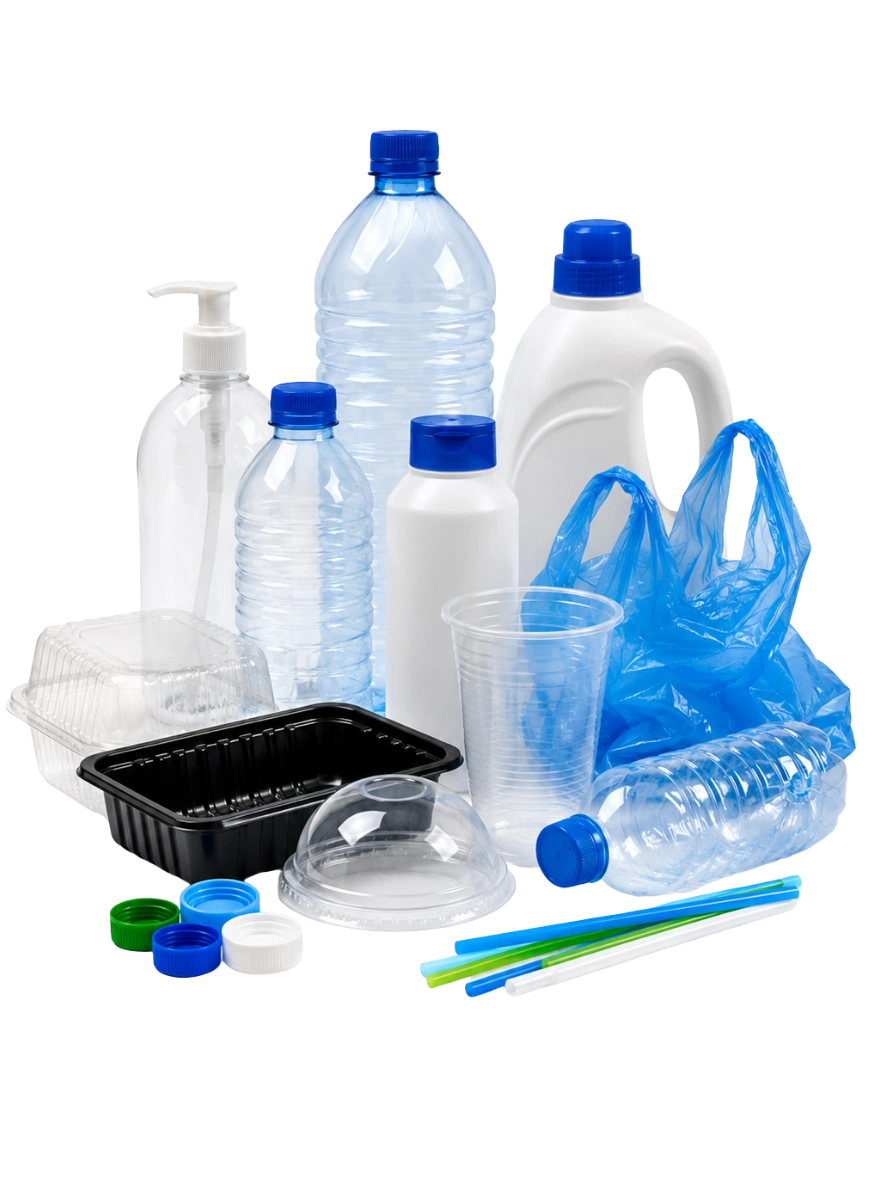
Rigid containers, bottles, jars, crates and similar rigid plastic packaging |
| Category II — Flexible Plastic Packaging |
Single-layer or multilayer flexible packaging made of the same plastic type, plastic sheets, carry bags, sachets and pouches |
| Category III — Multilayered Packaging |
Packaging with at least one layer of plastic and at least one layer of a different material (e.g., laminated pouches combining plastic and foil/paper) |
| Category IV — Compostable Plastic Packaging |
Plastic sheets, covers and carry bags made from certified compostable plastic |
Recycled-content norms, effective from FY 2025-26 and verified against IS 14534:2023, now sit alongside the recycling targets: Category I packaging needs a minimum recycled-plastic share that rises from 30% toward 60% by 2028-29; Category II moves from roughly 10% toward 20%; Category III moves from roughly 5% toward 10%. A one-time carry-forward of up to three years is permitted for any FY 2025-26 shortfall. Because exact percentages are revised periodically, always confirm the current figures on the CPCB portal before filing your annual return.
Eligibility Criteria and Exemptions
EPR registration for plastic waste applies to nearly every business that places plastic-packaged goods on the Indian market. Two categories are exempted:
Export-oriented units — Goods manufactured purely for export are exempt from fulfilling EPR obligations
Micro and small brand owners — Brand owners meeting the MSME criteria for micro or small enterprises are exempt from the EPR obligation, though registration requirements should still be checked against your specific operations
If your business is both an importer and a brand owner — for example, you import finished goods and also sell them under your own brand — you must register as a brand owner first and declare the imported packaging quantities there. Once done, your importer-side liability is set off against the same quantity, so you are not taxed twice for the same packaging.
Documents Required for EPR Registration
A complete KYC and application package speeds up CPCB/SPCB review considerably. Typical documents include:
Company PAN, CIN (for MCA-registered companies) and GST registration, including combined GST invoice details for every State/UT where the business operates
PAN and Aadhaar of the authorised signatory
Proprietorship and partnership firms may submit PAN and GST in place of CIN
Consent to Operate/Establish under the Air and Water Acts, for producers and for brand owners with their own manufacturing facilities
District Industries Centre (DIC) registration certificate, where applicable
Details of the type and quantity of plastic-packaged products produced or marketed
Representative images of plastic packaging, covering each EPR category the business deals in
Previous registration certificate (PDF), in the case of renewal applications
A separate email ID is required for each sub-category if your entity registers under more than one PIBO category, though the company KYC documents remain the same across categories.
Step-by-Step EPR Registration For Plastic Waste Process
Create an account on CPCB’s Centralized EPR Portal for Plastic Packaging (or the relevant State PCB/PCC portal if operating in one or two States/UTs).
Select the correct PIBO category — Producer, Importer, Brand Owner, or Plastic Waste Processor — and, within that, the applicable plastic packaging category (I-IV).
Upload company KYC documents (PAN, CIN/GST, authorised signatory PAN and Aadhaar) along with consents under the Air and Water Acts, where applicable.
Declare product and packaging quantities by category, and upload representative packaging images.
Pay the applicable application fee based on your plastic waste generation slab.
Respond to any portal queries or clarification requests from CPCB/SPCB within the stipulated time to avoid rejection.
Receive your EPR registration certificate and unique registration number once the application is approved.
Embed the registration number in your product packaging via QR code/barcode labelling, as required under Rule 11.
File quarterly and annual returns declaring plastic waste introduced, collected and recycled, along with the certificates procured to meet your target.
What’s New: Regulatory Updates for 2025-2026
Application Fee for PIBOs (based on plastic waste generation)
| Generation Slab (TPA) |
Application Fee (Rs.) |
| Less than 1,000 TPA |
10,000 |
| 1,000 – 10,000 TPA |
20,000 |
| More than 10,000 TPA |
50,000 |
Application Fee for Plastic Waste Processors (based on production capacity)
| Production Capacity Slab (TPA) |
Application Fee (Rs.) |
| Less than 200 TPA |
5,000 |
| 200 – 2,000 TPA |
20,000 |
| More than 2,000 TPA |
50,000 |
Renewal fee is the same as the original application fee, and an Annual Processing Fee equal to 25% of the application fee is payable every year by both PIBOs and PWPs to keep the registration active.
EPR Targets, Recycled Content and Annual Returns
Your EPR target is the quantity of plastic packaging (in metric tonnes) that you introduce into the market during a financial year — this is the baseline against which your recycling obligation is calculated, category by category. You can meet this obligation by:
Directly collecting plastic waste and handing it over to a registered Plastic Waste Processor (PWP)
Purchasing EPR/recycling certificates from registered PWPs against verified quantities they have processed
Engaging a Producer Responsibility Organisation (PRO) that manages collection and recycling on your behalf and transfers certificates to your portal account
Procuring surplus EPR credits from local bodies or other registered PIBOs
Certificate pricing on the CPCB portal is market-driven, with no statutory floor or ceiling — unlike the banded certificate markets for e-waste and battery waste. Annual returns declaring quantities introduced, collected and recycled are due by 30 June following the close of the obligation year, and quarterly filings are also expected on the portal.
Environmental Compensation and Penalties for Non-Compliance
A shortfall against your annual target does not go unpaid — it draws Environmental Compensation under CPCB guidelines: Rs. 5,000 per tonne for a first-year shortfall, Rs. 10,000 per tonne if the shortfall continues into a second consecutive year, and Rs. 20,000 per tonne for a third consecutive year. Paying compensation does not cancel the underlying obligation; the shortfall carries forward for up to three years, and a portion of the compensation is typically refunded once the target is eventually met.
Beyond financial compensation, sustained non-compliance can lead to:
Cancellation of EPR registration, which legally bars you from introducing plastic packaging into the market
Public listing on CPCB’s non-compliance disclosure portal, which can affect brand reputation and investor confidence
Difficulty renewing Consent to Operate certificates with your State PCB, disrupting manufacturing
Complications with environmental clearances for plant expansions or new projects
Loss of contracts with institutional buyers, retailers and export partners that require ESG compliance documentation
What’s New: Regulatory Updates for 2025-2026
Rule 11 QR/barcode labelling became mandatory from 1 July 2025 for all plastic packaging sold in India
Recycled-content mandates took effect from FY 2025-26, with minimum recycled-plastic shares specified for Categories I, II and III, verified against IS 14534:2023
The Plastic Waste Management (Amendment) Rules, 2026 (notified 31 March 2026) introduced defined End-of-Life categories and brought in Registered Environment Auditors to verify recycling certificates
CPCB audits in 2024 uncovered a large volume of fraudulent recycling certificates, prompting the 2026 amendment’s tightened verification and a more formalised certificate trading mechanism
Enforcement activity has intensified through 2026, with CPCB reporting over 14,000 registered entities — but a large share of eligible brand owners and importers still unregistered
Benefits of Getting EPR Registration for Plastic Waste
Legal permission to manufacture, import or sell plastic-packaged products in India without risk of enforcement action
Access to registered recyclers, PWPs and PROs through the CPCB portal to systematically meet annual targets
Stronger standing with institutional buyers, e-commerce marketplaces and export partners that now demand proof of EPR compliance
Reduced exposure to Environmental Compensation, customs delays and clearance rejections
Demonstrable ESG and ISO 14001-aligned environmental credentials that support investor and stakeholder confidence
Why Choose Silvereye Certifications for EPR Registration
Silvereye Certifications works across India’s regulatory compliance landscape — CDSCO, BIS, BEE, PESO, FSSAI, DPIIT/QCO and environmental approvals — which means your EPR registration is handled with a clear view of how it connects to your other product and import compliances. Our team manages category classification, documentation, portal filing, fee computation, and ongoing annual return support, so your business stays compliant without diverting internal resources to track every regulatory update.
Get Your EPR Registration Started
Talk to Silvereye Certifications for end-to-end support on EPR registration for plastic waste — from category classification and documentation to portal filing, annual returns and renewal.
Contact our compliance team today to get your CPCB EPR registration for plastic waste sorted without delays.
Frequently Asked Questions — BIS ISI Certification
It is the mandatory CPCB approval that Producers, Importers and Brand Owners must obtain under the Plastic Waste Management Rules, 2016, before introducing plastic-packaged products into the Indian market.
Producers, Importers, Brand Owners (including online marketplaces and retail chains) and Plastic Waste Processors engaged in recycling, waste-to-energy, waste-to-oil or industrial composting.
Micro and small brand owners, as classified under MSME criteria, are exempt from the EPR obligation, though Producers and Importers generally do not get this exemption.
If you operate in more than two States/UTs, you register with CPCB. If you operate in one or two States/UTs, you register with the concerned State Pollution Control Board or Pollution Control Committee.
Category I is rigid plastic packaging, Category II is flexible single or multilayer plastic packaging including carry bags and pouches, Category III is multilayered packaging combining plastic with another material, and Category IV is packaging made from certified compostable plastic.
Company PAN, CIN/GST, authorised signatory PAN and Aadhaar, Air and Water Act consents where applicable, product and packaging quantity details, and representative images of packaging by category.
PIBO application fees range from Rs. 10,000 to Rs. 50,000 depending on your plastic waste generation slab; Plastic Waste Processors pay Rs. 5,000 to Rs. 50,000 based on production capacity. An annual processing fee of 25% of the application fee also applies.
A complete, correctly classified application is typically processed in 15 to 30 working days. Incomplete documents or portal queries can extend this to 45-60 days.
You are liable for Environmental Compensation — Rs. 5,000 per tonne for a first-year shortfall, rising to Rs. 10,000 and then Rs. 20,000 per tonne for consecutive shortfalls, with the underlying obligation carried forward for up to three years.
PIBOs and PWPs must pay an annual processing fee (25% of the application fee) and file annual returns each year to keep their registration active; a full renewal, at the same fee as initial registration, applies when required by CPCB or upon category changes.