Home
›
Medical Device Wholesale License Registration
Introduction
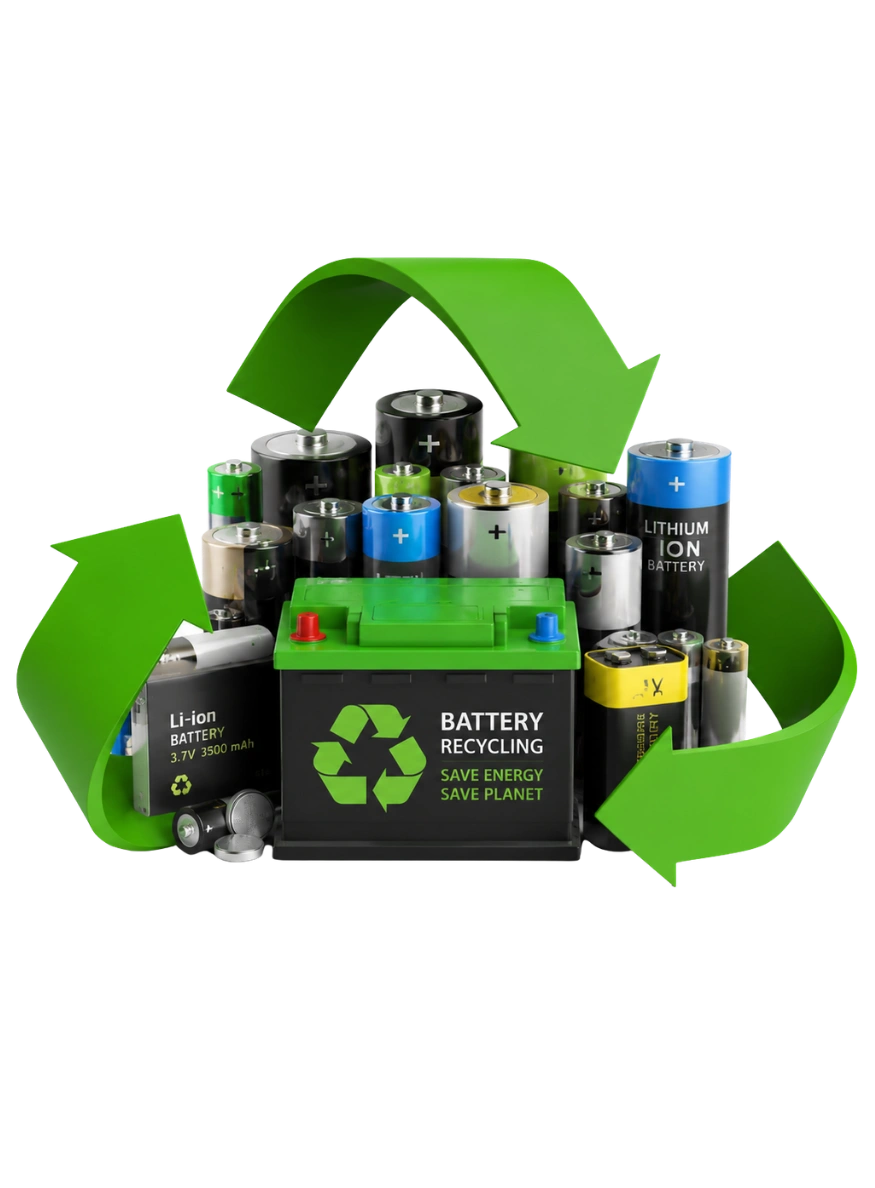
EPR Registration for Battery Waste is a mandatory authorization under the Battery Waste Management (BWM) Rules, 2022, required for every producer, importer, and brand owner who manufactures, imports, or sells batteries in India.
Registration is done through the CPCB centralized EPR portal using Form 1(A) and applies to all battery types — lead-acid, lithium-ion, nickel-cadmium, nickel-metal hydride, and button cells. Once approved, the registration is valid for five years, and producers must meet annual collection and recycling targets under Schedule II, obtain EPR certificates from authorized recyclers, and file yearly compliance returns to avoid environmental compensation penalties.
What Is EPR Registration for Battery Waste?
EPR Registration for Battery Waste is the legal authorization that the Central Pollution Control Board (CPCB) grants to a battery producer, importer, or brand owner under the Battery Waste Management Rules, 2022. It formally recognizes an entity's Extended Producer Responsibility (EPR) — the obligation to collect, recycle, or refurbish the batteries it places in the Indian market once they reach end of life.
The Battery Waste Management Rules, 2022 replaced the older Batteries (Management and Handling) Rules, 2001, and were notified by the Ministry of Environment, Forest and Climate Change (MoEFCC) on 22 August 2022. Unlike the earlier rules, which focused mainly on lead-acid batteries, the 2022 rules apply to all battery types regardless of chemistry, shape, volume, weight, material composition, or use — making battery EPR registration relevant to a far wider set of businesses, from automotive battery makers to consumer electronics brands and EV manufacturers.
Legal Framework Governing Battery EPR Registration
Battery EPR registration in India is governed by the Battery Waste Management Rules, 2022, issued under the Environment (Protection) Act, 1986. The rules are implemented and monitored by the Central Pollution Control Board (CPCB) at the national level, with State Pollution Control Boards (SPCBs) and Pollution Control Committees (PCCs) overseeing recyclers and refurbishers regionally.
Rule 4 mandates registration of every Producer through the CPCB's online centralized portal using Form 1(A).
Rule 9 requires Recyclers and Refurbishers to register with the concerned SPCB/PCC on the same centralized portal.
Schedule II lays down the year-wise EPR collection and recycling targets that producers must meet.
Section 15 of the Environment (Protection) Act, 1986 provides the penal framework for non-compliance.
Who Needs EPR Registration for Battery Waste?
Under the BWM Rules, 2022, the term 'Producer' is defined broadly, and EPR registration is not limited to large battery manufacturers alone. The following categories of businesses are typically required to register on the CPCB Battery EPR portal:
| Entity Type |
EPR Registration Requirement |
| Battery Manufacturers |
Must register as Producer under Form 1(A) for every battery manufactured and sold in India. |
| Importers of Batteries |
Must obtain fresh CPCB registration to import batteries or equipment containing batteries. |
| Brand Owners |
Entities selling batteries manufactured by others under their own brand name must register as Producers. |
| EV & Electronics OEMs |
Manufacturers using lithium-ion cells in EVs, laptops, phones, and power banks fall under EPR obligations. |
| Refurbishers |
Must register if refurbished batteries are sold under the refurbisher's own brand name. |
| Recyclers |
Must register separately with the concerned SPCB/PCC on the same centralized CPCB portal. |
Note :
Consumers and end-users of batteries are not required to register or file returns under the BWM Rules, 2022 — the compliance burden rests entirely with producers, importers, brand owners, refurbishers, and recyclers.
Types of Batteries Covered Under EPR Registration
One of the most important aspects of the Battery Waste Management Rules, 2022 is its universal scope — it applies to all battery types regardless of chemistry, shape, size, or application. This is a major shift from the earlier lead-acid-only framework. Below are the major battery categories covered under battery EPR registration in India:
| Battery Type |
Common Applications |
| Lead-Acid Batteries |
Automobiles, two-wheelers, inverters, UPS systems, and backup power units. |
| Lithium-ion Batteries |
Electric vehicles, laptops, smartphones, power banks, and energy storage systems. |
| Nickel-Cadmium (Ni-Cd) Batteries |
Industrial equipment, emergency lighting, and power tools. |
| Nickel-Metal Hydride (Ni-MH) Batteries |
Hybrid vehicles, cordless appliances, and rechargeable consumer devices. |
| Zinc-Carbon & Alkaline Batteries |
Portable electronics, remotes, toys, torches, and household gadgets. |
| Button Cell / Coin Cell Batteries |
Watches, hearing aids, calculators, and small electronic devices. |
| Industrial & EV Traction Batteries |
Electric buses, forklifts, telecom towers, and large-scale storage. |
Because coverage is chemistry-agnostic, businesses often assume niche or low-volume battery categories are exempt — they are not. Any battery placed in the Indian market by a producer, regardless of type, requires EPR registration and compliance with the applicable collection and recycling targets.
Benefits of EPR Registration for Battery Waste
Registration is mandatory to legally manufacture, import, or sell batteries in India.
Avoids environmental compensation charges and legal action under the Environment (Protection) Act, 1986.
Builds trust with retailers, e-commerce platforms, and B2B buyers who require EPR compliance proof.
Enables participation in the EPR credit trading mechanism between producers and recyclers.
Supports India's circular economy goals through structured collection and material recovery.
Smooths customs clearance for battery and battery-equipment imports.
Eligibility Criteria for Battery EPR Registration
Eligibility for battery EPR registration is based on the role a business plays in the battery supply chain rather than its size. You are required to register if your business falls into any of the following categories:
You manufacture batteries of any chemistry and sell them under your own brand name in India.
You import batteries or equipment containing batteries into India for sale.
You sell batteries manufactured by another party under your own brand name.
You supply batteries directly to bulk consumers as the original manufacturer.
You refurbish waste batteries and sell them under your own brand.
Manufacturers who supply batteries to other manufacturers or dealers — where those dealers sell the batteries under their own brand — are generally not liable for EPR obligations directly, since the responsibility shifts to the brand owner placing the battery in the market.
Documents Required for Battery EPR Registration
| Document |
Purpose |
| PAN, CIN & GST Certificate |
Establishes the legal identity of the Producer or Manufacturer. |
| Company Incorporation Certificate |
Confirms registered business entity status. |
| Authorized Signatory Details |
PAN and authorization letter of the person filing on the company's behalf. |
| Consent to Operate (CTO) |
Issued by SPCB/PCC, required if the applicant operates a manufacturing facility. |
| District Industries Centre (DIC) Certificate |
Applicable for eligible small-scale manufacturing units. |
| GSTR-9 / Financial Statements |
Balance sheet or annual return of the previous financial year. |
| Details of Battery Types & Brand Names |
List of battery categories and brand names placed in the market. |
| Sales & Import Data |
Quantity of batteries manufactured, imported, or sold, used to calculate EPR targets. |
Step-by-Step Process for EPR Registration for Battery Waste
Sign Up on the CPCB EPR Portal: Create an account on the CPCB's centralized EPR portal for battery waste management and verify it through OTP.
Fill Form 1(A): Submit company details, battery type information, sales/import data, and battery material composition in the prescribed application.
Upload Supporting Documents: Attach PAN, CIN, GST, CTO (if applicable), and financial documents as per the checklist.
Pay the Application Fee: Complete payment through the payment gateway integrated into the CPCB portal.
CPCB Review & Verification: CPCB scrutinizes the application and documents, and may raise queries for clarification or correction.
Grant of Registration Certificate (Form 1(B)): On approval, CPCB issues the EPR Registration Certificate, valid for five years.
Submit EPR Plan (Form 1(C)): File the EPR plan describing how collection and recycling targets will be met for the relevant financial year.
EPR Targets and Ongoing Compliance Obligations
Registration is only the starting point — the core of EPR compliance lies in meeting the collection and recycling targets defined in Schedule II of the BWM Rules, 2022. These targets are calculated as a percentage of the quantity of batteries a producer places in the market and increase progressively year over year to push higher material recovery.
Obtain EPR certificates from CPCB-registered recyclers proportional to the batteries recycled on the producer's behalf.
Use the EPR credit trading mechanism on the portal to buy or transfer EPR certificates between producers and recyclers.
Track collection, recycling, and refurbishment data throughout the year against portal-reported figures.
File annual returns confirming quantities sold, collected, and recycled, generally due by 30th June each year.
Submit the EPR Plan (Form 1(C)) outlining how targets will be achieved for the applicable financial year.
Fees for EPR Registration for Battery Waste
The Battery Waste Management Rules, 2022 empower CPCB to prescribe application and annual processing fees for Producers, Recyclers, and Refurbishers, payable online through the payment gateway integrated into the EPR portal at the time of application. Renewal fees are charged at the same rate as the original registration fee, and application fees are exclusive of any bank or transaction charges.
Because fee slabs are periodically revised by CPCB and vary by applicant category and scale of operations, it is best to confirm the current applicable fee directly on the CPCB EPR portal or through a compliance consultant before submitting your application, rather than relying on a fixed figure.
Validity, Renewal, and Compliance Timeline
| Milestone |
Timeline |
| Registration Validity |
5 years from the date of grant by CPCB. |
| Renewal Application Window |
To be filed at least 60 days before the expiry of the current registration. |
| CPCB Processing Time (Renewal) |
Renewal is typically granted within 15 working days of receiving complete documents. |
| EPR Plan Submission (Form 1C) |
To be filed for the batteries introduced in the relevant financial year. |
| Annual Return Filing |
Generally due by 30th June following the close of the financial year. |
Why Choose Silvereye Certifications for Battery EPR Registration
Silvereye Certifications works with battery manufacturers, importers, and brand owners across India to simplify EPR registration end-to-end — from documentation and Form 1(A) filing to EPR plan preparation, target tracking, and timely renewals. Our team stays current with CPCB portal updates and Schedule II target revisions so your compliance never falls behind.
Get Your Battery EPR Registration Done Right — Talk to Silvereye Certifications
Silvereye Certifications helps battery producers, importers, and brand owners across India complete CPCB EPR registration, prepare EPR plans, track annual targets, and manage renewals — without the paperwork stress.
Connect with our regulatory consultants today for end-to-end EPR compliance support for battery waste management.
Frequently Asked Questions on EPR Registration for Battery Waste
It is the mandatory CPCB authorization under the Battery Waste Management Rules, 2022, that recognizes a producer's Extended Producer Responsibility to collect and recycle the batteries it places in the Indian market.
Battery manufacturers, importers, brand owners selling batteries under their own name, refurbishers selling under their own brand, recyclers, and companies supplying batteries directly to bulk consumers.
All battery types are covered regardless of chemistry, shape, volume, weight, or material composition — including lead-acid, lithium-ion, nickel-cadmium, nickel-metal hydride, and button cell batteries.
Producers apply through the CPCB centralized EPR portal by submitting Form 1(A) along with company, battery, and sales details, plus supporting documents such as PAN, GST, and CTO, followed by fee payment.
Once granted, the registration certificate (Form 1B) is valid for five years from the date of issue.
Renewal applications should be filed at least 60 days before the existing registration expires, along with pending returns and updated documents.
Yes. Importers are treated as Producers under the BWM Rules, 2022, and must obtain their own CPCB registration to import batteries or battery-containing equipment.
No. Consumers and end-users of batteries have no registration or return-filing obligations; compliance responsibility rests with producers, importers, brand owners, refurbishers, and recyclers.
CPCB or the concerned SPCB can levy environmental compensation charges, and repeated non-compliance can lead to suspension or cancellation of the EPR registration.
Typically PAN, CIN, GST certificate, Consent to Operate (if applicable), DIC registration (if applicable), financial statements, and details of battery types and brand names.