Introduction
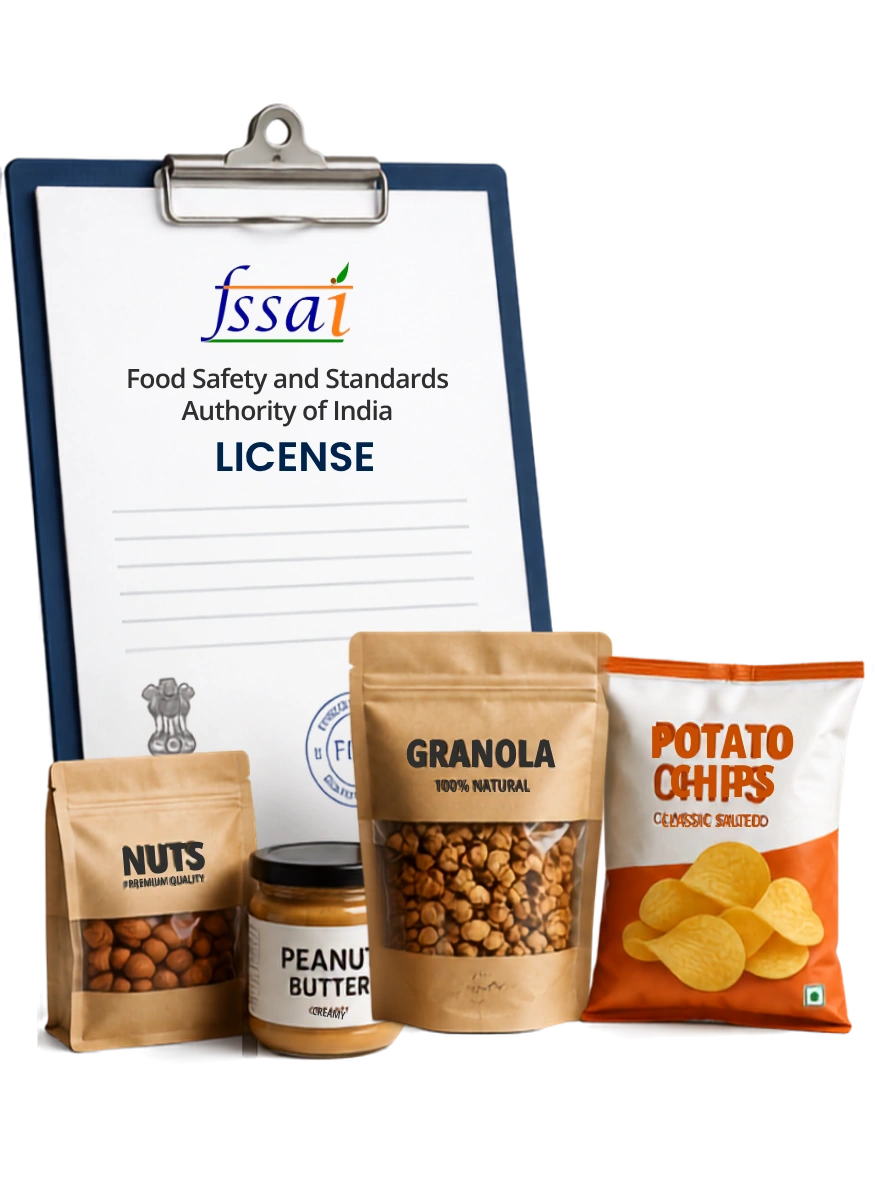
FSSAI State License Registration is the mid-tier food safety certification from the Food Safety and Standards Authority of India, required for medium-sized food businesses operating within a single state. Under FSSAI's official order dated 13 March 2026 (effective 1 April 2026), a State License applies to food businesses with annual turnover above Rs. 1.5 crore and up to Rs. 50 crore.
It covers restaurants, hotels, mid-sized manufacturers, transporters, and traders, and involves more documentation and a premises inspection compared to Basic Registration. Licences issued under the 2026 amendment carry perpetual validity, subject to risk-based inspections..
What Is FSSAI State License Registration?
FSSAI State License Registration is the mid-tier certification issued by the Food Safety and Standards Authority of India (FSSAI) under the Food Safety and Standards Act, 2006. It is meant for medium-sized Food Business Operators (FBOs) whose annual turnover falls between the Basic Registration and Central License thresholds, and whose operations are confined to a single state.
The application is filed using Form B on the FoSCoS (Food Safety Compliance System) portal, with the application reviewed and the licence issued by the respective State Food Safety Department rather than FSSAI's central authority.
Once approved, the business receives a 14-digit registration number that must be displayed at the business premises, on food packaging, and on relevant menus or signage. A State License carries the same legal standing as a Central License for businesses that fall within its turnover and activity criteria.
2026 Regulatory Update: Revised Turnover Threshold for State License
On 13 March 2026, FSSAI's Regulatory Compliance Division issued an official order (F. No. RCD-01002/1/2021-Regulatory-FSSAI-Part(1)) implementing the Food Safety and Standards (Licensing and Registration of Food Businesses) Amendment Regulations, 2026. This followed recommendations from NITI Aayog's High-Level Committee on Non-Financial Regulatory Reforms, with approval from the Food Authority and the Ministry of Health and Family Welfare.
For State License specifically, the order brings two key changes:
Turnover threshold revised: State License now applies to food businesses with annual turnover above Rs. 1.5 crore and up to Rs. 50 crore, effective 1 April 2026
Perpetual validity introduced: State Licenses granted under the amended regulations carry perpetual validity, subject to risk-based inspections, rather than the earlier fixed 1-to-5-year validity period requiring renewal
| Category |
Revised Turnover Threshold (Effective 01.04.2026) |
| Registration (Basic) |
Turnover up to Rs. 1.5 crore |
| State License |
Turnover above Rs. 1.5 crore and up to Rs. 50 crore |
| Central License |
Turnover above Rs. 50 crore |
Source Note: The revised turnover threshold and perpetual-validity provision above are drawn directly from FSSAI's official order dated 13 March 2026 (Gazette Notification No. RCD-01002/1/2021-Regulatory-FSSAI-Part(1), effective 01.04.2026). Practical details — such as whether an annual fee or return filing continues to apply to maintain perpetual validity, and how existing State License holders transition under the new rules — are still being clarified across official guidance. Confirm the latest procedural requirements on the FoSCoS portal or with our compliance team before relying on them.
Types of FSSAI Registration and License: Where State License Fits
FSSAI classifies every food business into one of three categories based on annual turnover and business activity:
1. FSSAI Basic Registration (Form A)
For small food businesses with annual turnover up to Rs. 1.5 crore under the revised 2026 threshold. Covers petty food manufacturers, small retailers, home-based food businesses, and hawkers.
2. FSSAI State License (Form B)
For medium-sized food businesses with turnover above Rs. 1.5 crore and up to Rs. 50 crore. Applies to mid-sized manufacturers, transporters, marketers, hotels, restaurants, and traders operating within a single state — the focus of this guide.
3. FSSAI Central License (Form B)
For large food businesses with turnover above Rs. 50 crore, and mandatory regardless of turnover for import/export, 100% export-oriented units, businesses supplying food to Central Government agencies, or operations spanning multiple states.
If your food business turnover crosses the Rs. 50 crore mark, or if you begin operating in more than one state, you would need to move from a State License to a Central License. Tracking your turnover and business footprint against these thresholds each year keeps you in the correct category.
Benefits of FSSAI State License Registration
Legal compliance for growing businesses: allows medium-sized food businesses to operate lawfully as they scale beyond Basic Registration limits
Broader business scope: supports restaurants, catering businesses, hotels, and manufacturing units with higher production or sales volumes
Strengthens credibility with vendors and lenders: a State License signals a more established, verified food business to banks, suppliers, and institutional partners
Enables state-wide distribution: supports supply and distribution activity across multiple locations within the same state
Builds consumer and platform trust: required by most food delivery platforms and retail chains for mid-sized food brands
Clear growth pathway: positions the business for a smoother transition to a Central License if it later expands into other states or export markets
Who Is Eligible for FSSAI State License Registration?
FSSAI State License Registration generally applies to:
Mid-sized food manufacturers and processors: with turnover above Rs. 1.5 crore and up to Rs. 50 crore
Restaurants, hotels, catering businesses, and cloud kitchens: operating at a larger scale within one state
Food transporters, wholesalers, distributors, and marketers: within the applicable turnover range
Storage and warehousing units: handling food products at a mid-scale level
Food businesses operating multiple outlets: within a single state under one legal entity
If your business involves food import/export, supply to Central Government agencies, or operations across multiple states, you would need a Central License instead, regardless of turnover — these activity-based triggers override the State License turnover range.
Documents Required for FSSAI State License Registration
Passport-size photographs and government ID proof: of the proprietor, partners, or directors
Business constitution proof: (partnership deed, LLP agreement, or company incorporation certificate, as applicable)
Proof of business premises: (ownership document, rent/lease agreement of at least 6 months validity, or NOC from the property owner)
Layout plan: of the processing/manufacturing/storage unit
List of machinery and equipment installed: with their capacity
List of food category and products: to be manufactured, processed, or sold
Water test report: from a recognised laboratory (for manufacturing units)
Food safety management system plan
NOC from the local municipal or health authority: where applicable
Turnover declaration: supporting the licence category applied for
FSSAI State License Registration Process: Step-by-Step
Step 1 — Confirm Eligibility and Category
Assess your annual turnover against the revised Rs. 1.5 crore to Rs. 50 crore range and confirm your business activity doesn't trigger a mandatory Central License instead.
Step 2 — Register on the FoSCoS Portal
Create an account on foscos.fssai.gov.in using your business email and mobile number, and complete OTP verification.
Step 3 — Select 'New License' and State Category
Choose 'New License/Registration', select your state, and specify your Kind of Business (KoB), which determines the exact documentation required.
Step 4 — Fill Form B
Complete Form B with business details, proprietor/partner/director information, food product categories, and turnover declaration.
Step 5 — Upload Supporting Documents
Upload layout plans, equipment lists, premises proof, water test reports, and other supporting paperwork as clear scanned copies.
Step 6 — Pay the Applicable Fee
Pay the government fee online, based on your specific business category and the licence duration selected.
Step 7 — Scrutiny and Inspection
The State Food Safety Department reviews the application; a Food Safety Officer typically inspects the premises before the licence is granted.
Step 8 — Certificate Issuance
Once approved, the State License certificate with your unique 14-digit registration number is issued for display at your business premises.
FSSAI State License Registration Fees
The government fee for a State License sits between Basic Registration and Central License, commonly reported in the range of roughly Rs. 2,000 to Rs. 5,000 per year depending on the specific business type and licence duration selected. This figure does not include professional or consultancy charges. Because fee schedules can be revised and the exact ongoing fee structure under the new perpetual-validity system is still being clarified, we recommend confirming the current applicable fee on the FoSCoS portal or with our compliance team before budgeting.
FSSAI State License Validity and Renewal
| Aspect |
Details |
| Validity (from 01.04.2026 amendment) |
Perpetual validity for licences issued under the amended regulations, subject to risk-based inspections, per FSSAI's official 13 March 2026 order |
| Previous system |
Earlier State Licenses were valid for a chosen period of 1 to 5 years and required renewal before expiry |
| Existing licence holders |
Businesses currently holding a fixed-term State License should verify with FSSAI/FoSCoS whether their licence transitions to perpetual validity at next renewal or through a separate process |
| Category change |
If turnover crosses Rs. 50 crore, or operations expand to another state, the business must move to a Central License |
| Ongoing compliance |
Continued validity is subject to risk-based inspections; specific ongoing obligations should be confirmed on FoSCoS, as reporting on this varies across sources |
Why Choose Silvereye Certifications for FSSAI State License Registration
FSSAI State License applications involve more documentation and a premises inspection compared to Basic Registration, which means small errors in layout plans, equipment lists, or category selection can lead to real delays. Silvereye Certifications manages the entire process so your growing food business stays compliant without disruption.
Accurate category assessment: we confirm your turnover and business activity against the revised 2026 thresholds before filing, so you apply under the correct category the first time
Complete documentation support: preparation and review of Form B, layout plans, equipment lists, water test coordination, and food safety management plans
Inspection readiness guidance: practical support in preparing your premises and paperwork ahead of the Food Safety Officer's visit
FoSCoS portal filing and tracking: end-to-end application submission, status tracking, and query resolution
Growth-ready planning: if your turnover is approaching Rs. 50 crore or you're expanding to another state, we help you plan a smooth transition to a Central License
Multi-domain regulatory experience: our team also supports CDSCO, BIS, BEE, PESO, and EPR compliance, useful for food businesses managing packaging or environmental compliance alongside FSSAI
Get Expert FSSAI State License Support Whether you're upgrading from Basic Registration as your business grows, or opening a new restaurant, manufacturing unit, or distribution business, Silvereye Certifications can confirm your licensing category, prepare your complete documentation, and manage your FoSCoS State License application from start to finish.
Frequently Asked Questions on FSSAI State License Registration
FSSAI State License Registration is the mid-tier food safety certification from the Food Safety and Standards Authority of India for medium-sized food businesses operating within a single state.
Effective 1 April 2026, FSSAI State License applies to food businesses with annual turnover above Rs. 1.5 crore and up to Rs. 50 crore, per FSSAI's official order dated 13 March 2026.
Mid-sized food manufacturers, restaurants, hotels, catering businesses, transporters, and traders operating within one state with turnover in the applicable range.
Key documents include business constitution proof, premises proof, layout plans, equipment lists, water test reports, and a food safety management plan.
Yes. State License applications typically involve inspection of the business premises by a Food Safety Officer before approval.
The government fee for a State License is commonly reported in the range of roughly Rs. 2,000 to Rs. 5,000 per year, though the current exact fee should be confirmed on the FoSCoS portal.
Under the 2026 amendment, licences issued carry perpetual validity, subject to risk-based inspections, replacing the earlier 1-to-5-year validity system.
You would need to upgrade from a State License to a Central License once your turnover crosses the Rs. 50 crore threshold.
Yes. Restaurants and hotels operating at a scale beyond Basic Registration limits, within a single state, typically apply for a State License.
Yes. All FSSAI State License applications are filed through the FoSCoS portal at foscos.fssai.gov.in using Form B.